
Strumigenys buddhista
- 学名
- Strumigenys buddhista
- 族
- Attini
- 亚科
- Myrmicinae
- 命名者
- De Andrade, 2007
- 地理分布
- 分布于 0 个国家/地区
物种引言
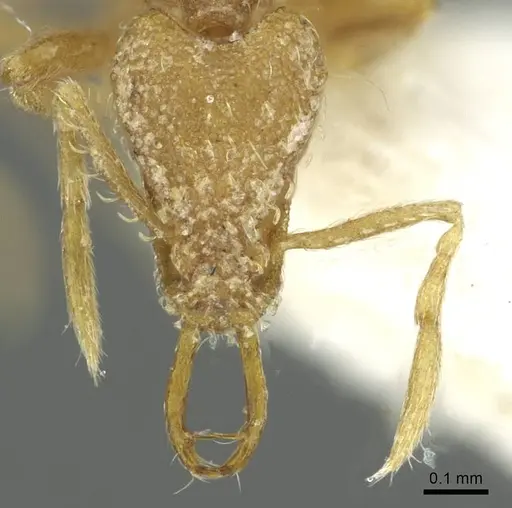
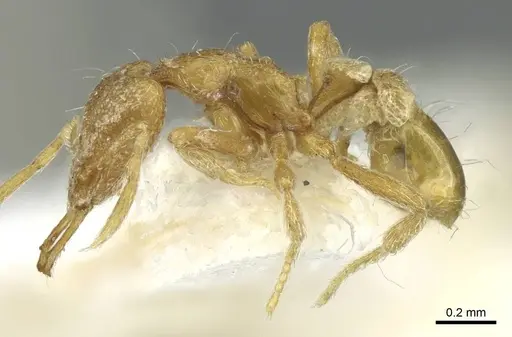
Strumigenys buddhista is a minute ant species known only from a single worker collected in Nepal and described in 2007 . Workers measure 1.96 mm in total length and are light brown in color . They belong to the Strumigenys godeffroyi group and can be identified by the specific arrangement of standing hairs on the head dorsum (4,2,2 hairs) . This species is endemic to Nepal, found at 820 m elevation near Pokhara . Nothing is known about the biology or behavior of Strumigenys buddhista . As a member of the tribe Attini (which includes fungus-growing ants), this species is a predator that uses its trap‑jaw mandibles to capture tiny prey . The lack of any documented colony structure, founding method, or care data makes this a species for expert keepers only.
Quick Summary
- Difficulty: Expert
- Origin & Habitat: Endemic to Nepal, collected in the Pokhara area of Kaski district at 820 m elevation [2]. The climate is subtropical with wet and dry seasons, but specific microhabitat preferences are unknown.
- Colony Type: Unknown, no data on queen number or colony structure
- Size & Growth:
- Antkeeping:
- Temperature: No specific data. Keep at room temperature (20-25°C) and avoid extremes. Provide a gentle gradient if possible.
- Humidity: No specific data. Likely high, keep nest substrate moist but not waterlogged. Use a test tube with a water reservoir.
- Diapause: Unknown, no data on seasonal requirements. Given the subtropical origin, a winter cooling period may not be necessary, but this is unconfirmed.
- Nesting: Use small‑scale setups matched to their 2 mm size: test tubes (10-12 mm diameter) with a water reservoir and cotton plug. Avoid large formicariums, these ants do not use open spaces.
- Behavior: No behavioral data exists for this species. Based on genus‑level patterns, Strumigenys are generally timid, slow‑moving, and secretive. They hunt live prey using rapid mandible strikes. Their tiny size means escape prevention is critical, use fine mesh (≤0.5 mm) and seal all gaps.
- Common Issues: no biological data exists, all care advice is speculative and unverified, tiny size makes escape prevention extremely difficult, gaps invisible to the naked eye are passable, requires live micro‑prey (e.g., springtails), will not accept seeds or sugar water, susceptible to desiccation, high humidity must be maintained without causing mold, likely slow growth and small colonies, any disturbance can easily wipe out a young colony
Housing and Setup
Because no specific housing data exists for Strumigenys buddhista, keepers must extrapolate from genus patterns. Use small test tubes (10-12 mm diameter) with a water reservoir blocked by cotton, this provides a stable humid chamber. Cover the tube with a dark sleeve to reduce stress. Avoid large formicariums, these ants are tiny and will not use open spaces. Ensure all connections are sealed with fine mesh (≤0.5 mm) to prevent escapes. Keep the nest area dimly lit. [1]
Feeding and Diet
Strumigenys buddhista is a predator of tiny arthropods. The only documented prey is unknown, but related species hunt springtails, fruit fly larvae, and other soft‑bodied micro‑invertebrates. Offer live springtails as a staple. Do not provide sugar water or honey, Strumigenys are obligate predators and do not consume carbohydrates. Prey should be smaller than the ants themselves (under 2 mm). Feed every 3-5 days and remove leftovers after 24 hours to prevent mold. [1]
Temperature and Humidity
No specific temperature or humidity data exists. Based on the subtropical origin (820 m elevation in Nepal), keep the colony at room temperature (20-25°C) and avoid fluctuations. Use a small heat mat on one side to create a gradient if desired. Humidity should be high: keep the nest substrate consistently moist but not waterlogged. A test tube with a water reservoir and wet cotton works well. Ensure good ventilation to prevent mold, but avoid drafts. [2]
Colony Development
Absolutely no data exists on colony development for Strumigenys buddhista. The only known specimen is a worker, and queens have never been described. All statements about growth rates, founding, or timeline are guesswork. Keepers should expect slow progress and be prepared for failure even with optimal care. Do not disturb the colony unnecessarily, as stress is likely fatal. [1]
Behavior and Temperament
No behavioral observations have been published. Based on genus patterns, Strumigenys buddhista is likely timid and slow‑moving, using its trap‑jaw mandibles to ambush tiny prey. Workers probably hunt alone and do not form visible trails. They are not aggressive toward humans and cannot sting through skin. However, they are extremely sensitive to vibrations and disturbance. Handle the setup gently and avoid tapping or sudden movements. [1]
Frequently Asked Questions
How long does it take for Strumigenys buddhista to produce first workers?
Unknown, no data exists on development time. Unlike most ants, even the queen has not been described, so no egg‑to‑worker estimate can be given.
Can I keep Strumigenys buddhista in a test tube?
Yes, a test tube is the best option given the tiny size and unknown requirements. Use a 10-12 mm diameter tube with a water reservoir and cotton plug. Cover it to provide darkness.
What do Strumigenys buddhista eat?
They are predators of small arthropods. Offer live springtails and similar micro‑prey. They will not accept dead insects or sugary foods.
Are Strumigenys buddhista good for beginners?
No. This species is for expert keepers only because absolutely nothing is known about its biology. Even experienced keepers will face extreme difficulty.
How big do Strumigenys buddhista colonies get?
Unknown. No data exists. Based on related Strumigenys, colonies are likely small (under 100 workers), but this is speculation.
Do Strumigenys buddhista need hibernation?
Unknown, no data exists. Given the subtropical habitat, a true diapause may not be required, but keepers should monitor activity during winter and reduce temperatures slightly if the colony slows down.
Why are my Strumigenys buddhista dying?
Common causes in related species include starvation (lack of live prey), desiccation (humidity too low), overheating, or escape through tiny gaps. Check that all barriers are sealed and prey is available. Wild‑caught colonies may also carry pathogens.
When should I move Strumigenys buddhista to a formicarium?
Only move when the test tube becomes overcrowded or moldy. For a tiny species this may be at 30-50 workers, but since colony size is unknown, observe the ants' behavior. Provide a gradual transition to a humid, dark nest.
Can I keep multiple Strumigenys buddhista queens together?
No data exists on colony structure. It is safest to house foundresses separately. Combining unrelated queens may lead to aggression, but this is speculation.
Report an Issue
The current care sheet is based fully on literature. See inconsistencies, or something that's incorrect? Please , it will be resolved after review from an admin. Contributing to the blogs tab also helps providing information, to make us be able to further improve the caresheets. Thank you for your support!
References

此饲养指南授权协议为 CC BY-SA 4.0 .
社区博客
CASENT0912868
在 AntWeb 上查看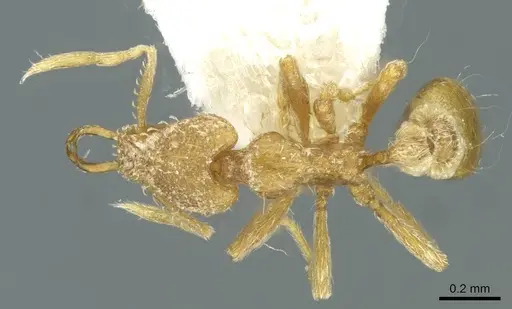
科学文献
正在加载分布地图...正在加载商品...