
Stigmatomma kangba
- 学名
- Stigmatomma kangba
- 族
- Amblyoponini
- 亚科
- Amblyoponinae
- 命名者
- Xu & Chu, 2012
- 地理分布
- 分布于 0 个国家/地区
物种引言
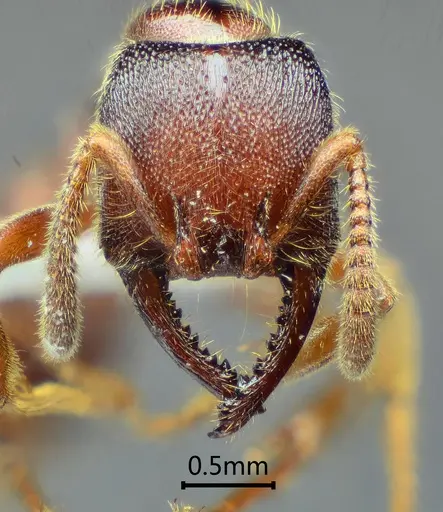
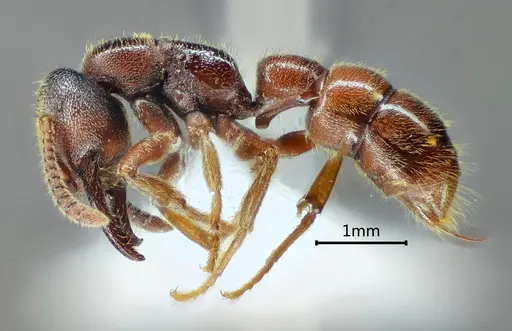
Stigmatomma kangba is a medium-sized ant with workers measuring 6.5-7.0mm in total length . Workers have a square head that is as wide as it is long, with a weakly concave back of the head and bluntly angled corners. Their mandibles are long and thin, with specialized teeth arranged in two rows. The body is reddish brown, the back of the head is blackish brown, and the antennae and legs are a lighter yellowish brown . This species was first described in 2012 from forest soil samples in Tibet and Yunnan, China, at elevations between 1480 and 1750 meters . Like other Amblyoponinae, Stigmatomma kangba has a functional sting. Almost nothing else is known about its biology - colony size, queen characteristics, founding behavior, and nuptial flight timing are all unrecorded .
Quick Summary
- Difficulty: Expert
- Origin & Habitat: Native to southwestern China (Tibet and Yunnan) and recently reported from Bhutan. Found in forest habitats at elevations of 1480-1750m, specifically in Pinus yunnanensis forest in Tibet and Cyclobalanopsis glaucoides forest in Yunnan [1][2].
- Colony Type: Unknown, only the worker caste has been described. The colony structure (single-queen, multiple-queen) has not been documented.
- Size & Growth:
- Queen: Unknown, queen caste has not been described [1]
- Worker: 6.5-7.0mm total length [1]
- Colony: Unknown, no colony size data available
- Growth: Unknown
- Development: Unknown, development has not been studied (No data available on egg-to-worker timeline. Based on related Amblyoponinae species, expect 6-10 weeks at optimal temperature, but this is an estimate.)
- Antkeeping:
- Temperature: Based on its high-elevation forest habitat in Tibet and Yunnan (1480-1750m) [1], this species likely prefers cooler temperatures than tropical ants. Start around 18-22°C and observe colony activity. Avoid overheating.
- Humidity: Based on forest soil nesting in relatively humid environments, provide moderate to high humidity. Keep the nest substrate consistently moist but not waterlogged.
- Diapause: Likely, high-elevation origins in Tibet suggest a cold tolerance. Expect a winter rest period, but specific requirements are unconfirmed.
- Nesting: In nature they nest in forest soil. A naturalistic setup with soil or a plaster nest with moisture retention would be appropriate. Provide a deep soil layer for potential burrowing.
- Behavior: Behavior is unstudied, but related Amblyoponinae species are typically predatory, using their sting to subdue prey. They likely hunt small invertebrates. Escape prevention should be moderate, these are medium-sized ants with a functional sting, so secure housing is important. Activity level is unknown.
- Common Issues: almost no biological data exists, keepers will be pioneering captive care for this species, colony size and growth rate are completely unknown, making it difficult to plan housing, queen and founding behavior unconfirmed, may require specific conditions, high-elevation origin means temperature management is critical, avoid overheating, wild-caught colonies may have parasites or diseases with no known treatment
Discovery and Taxonomy
Xu and Chu first described Stigmatomma kangba in 2012 under the name Stigmatomma kangba. Yoshimura and Fisher later transferred it to the genus Stigmatomma in 2014 [1]. The species name honors the Kangba people, an ethnic group living in southwestern Tibet [1]. The type specimens were collected from forest soil samples: the holotype from Tibet's Zayu County at 1750m elevation in a Pinus yunnanensis forest, and paratypes from both Tibet and Yunnan's Xichou County at 1480m in a Cyclobalanopsis glaucoides forest [1]. This is a recently described species, and much of its biology remains unknown.
Identification and Morphology
Workers measure 6.5-7.0mm total length and have a square head that is as wide as it is long [1]. The back of the head is weakly concave with bluntly angled corners. Their most distinctive feature is the long, thin mandibles with a very short chewing margin that has only 3 simple teeth, while the inner margin has two rows of curved teeth,6 in each row [1]. The antennae are 12-segmented and short, reaching only about two-thirds of the distance from the antennal sockets to the back of the head. The eyes are small, with only about 9 lenses [1]. The body is reddish brown, and the back of the head is blackish brown, while the antennae and legs are yellowish brown. Workers have a strong, extruding sting [1].
Distribution
The species is known from southwestern China, specifically Tibet (Zayu County) and Yunnan Province [1]. It has also been reported from Bhutan, which is the first record of the genus Stigmatomma in that country [2]. The elevational range spans 1480-1750m, suggesting it prefers cooler, high-altitude forest environments. The habitat includes montane forests with trees like Pinus yunnanensis and Cyclobalanopsis glaucoides [1]. This distribution suggests the species may be adapted to temperate forest conditions rather than tropical ones.
Known Biology
Almost nothing is known about the biology of Stigmatomma kangba. The species has only been collected from forest soil samples, and only the worker caste has been described [1]. No queen, male, or whole colony samples have been documented. Based on related species in the Amblyoponinae subfamily, we can make educated guesses: they are likely predatory on small invertebrates, probably have a functional sting for subduing prey, and may exhibit claustral founding (the queen seals herself in a chamber to raise the first workers alone). However, these are inferences, not confirmed observations. This lack of data makes captive husbandry challenging.
Keeping Considerations
Since this is a recently described species with no established care protocols, keeping Stigmatomma kangba is pioneering work. Based on its high-elevation forest origin in Tibet and Yunnan [1], provide cooler temperatures than most tropical ants, aim for 18-22°C. The forest soil habitat suggests moderate to high humidity needs. A naturalistic setup with a deep soil layer mimics its natural nesting environment. For feeding, offer small live prey like fruit flies, pinhead crickets, or small worms, predatory Amblyoponinae typically hunt small invertebrates. Escape prevention is important because they have a functional sting. Since so little is known about this species, document your observations carefully and consider contributing to citizen science to help build knowledge.
Frequently Asked Questions
How do I keep Stigmatomma kangba ants?
Since this is a recently described species with no established care protocols, you will be pioneering its captive husbandry. Based on its high-elevation forest origin [1], keep temperatures cool (18-22°C), provide moderate to high humidity, and offer small live prey. A naturalistic setup with soil works well. Document your observations carefully, there is no published husbandry guidance for this species.
What do Stigmatomma kangba ants eat?
While not directly studied, related Amblyoponinae species are predatory on small invertebrates. Offer small live prey such as fruit flies, small crickets, or mealworms. Their small eyes and short antennae [1] suggest they may rely on chemical cues to locate prey.
How big do Stigmatomma kangba colonies get?
Unknown, colony size has not been documented. Only workers have been collected, and no colony samples exist in scientific literature. Related species in the genus typically form small to moderate colonies.
Do Stigmatomma kangba ants sting?
Yes, workers have a strong extruding sting [1]. Stigmatomma belongs to Amblyoponinae, a subfamily known for having functional stings. While not studied in this specific species, assume they can sting and handle with proper caution.
Where is Stigmatomma kangba found?
This species is native to southwestern China (Tibet and Yunnan) at elevations of 1480-1750m, and has also been reported from Bhutan [1][2]. It lives in montane forests with Pinus yunnanensis and Cyclobalanopsis glaucoides trees.
Can beginners keep Stigmatomma kangba?
This species is not recommended for beginners. Almost no biological data exists, colony size, growth rate, queen behavior, and specific care requirements are completely unstudied. Keeping this species requires a pioneering spirit and careful documentation. It is best suited for experienced antkeepers who can contribute to building husbandry knowledge.
Does Stigmatomma kangba need hibernation?
Likely yes, the high-elevation Tibetan and Yunnan origins (1480-1750m) suggest adaptation to seasonal temperature changes. Expect a winter rest period, though specific diapause requirements are unconfirmed. Reduce temperatures gradually in autumn and provide a cool period around 10-15°C for several months.
How long does it take for Stigmatomma kangba to develop from egg to worker?
Unknown, development has not been studied in this species. Based on related Amblyoponinae species, expect 6-10 weeks at optimal temperature, but this is a rough estimate. The cool mountain habitat may result in slower development than tropical species.
What is the best nest type for Stigmatomma kangba?
Based on forest soil nesting in the wild, a naturalistic setup with a deep soil layer works best. Plaster or nests with moisture retention can also work. Provide a humid environment with access to water. Avoid dry, airy setups.
Is Stigmatomma kangba aggressive?
Not studied, but related Amblyoponinae are typically not highly aggressive toward humans, they are more secretive and predatory on invertebrates. However, they have a functional sting and will use it defensively if threatened. Handle with care and use proper escape prevention.
Report an Issue
The current care sheet is based fully on literature. See inconsistencies, or something that's incorrect? Please , it will be resolved after review from an admin. Contributing to the blogs tab also helps providing information, to make us be able to further improve the caresheets. Thank you for your support!
References

此饲养指南授权协议为 CC BY-SA 4.0 .
社区博客
ANTWEB1060489
在 AntWeb 上查看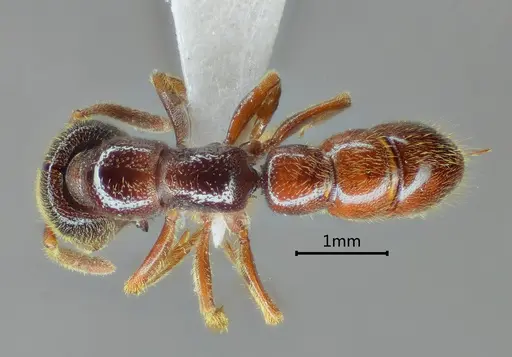
科学文献
正在加载分布地图...正在加载商品...