
Protanilla tibeta
- 学名
- Protanilla tibeta
- 族
- Leptanillini
- 亚科
- Leptanillinae
- 命名者
- Xu, 2012
- 地理分布
- 分布于 0 个国家/地区
物种引言
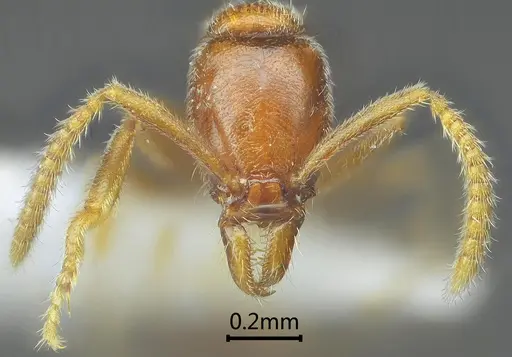
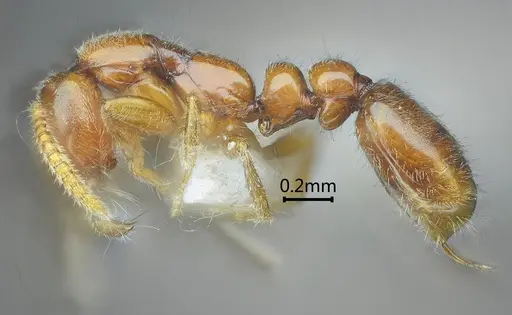
Protanilla tibeta is a species of ant in the subfamily Leptanillinae, native to Tibet, China. Workers have a total length of 2.6 to 2.7 mm . They are reddish-brown with brownish-yellow mandibles, antennae, and legs . The head has tooth-like projections at the front corners, and the petiolar node is broader than long . The species was collected from soil samples in a valley tropical rainforest at 1200 m elevation in Medog County . Biological information is extremely limited; no data exists on colony structure, founding behavior, or diet .
Quick Summary
- Difficulty: Expert
- Origin & Habitat: Tibet, China (Medog County, Damu Town, Damu Village) at 1200 m elevation. Collected from soil samples in valley tropical rainforest [1][2].
- Colony Type: Unknown, no data on colony structure.
- Size & Growth:
- Antkeeping:
- Temperature: Unknown. Based on the tropical rainforest habitat at 1200 m elevation [1], they likely prefer warm conditions around 24-26°C. Start in this range and monitor colony activity.
- Humidity: Unknown. Based on the valley tropical rainforest origin [1], they likely require high humidity. Keep nest substrate consistently moist but not waterlogged.
- Diapause: Unknown, no data on seasonal behavior.
- Nesting: Unknown. Collected from soil samples [1], so likely nest in soil. In captivity, use small test tube setups or soil nests with tight chambers scaled to their tiny size.
- Behavior: Not documented. They possess a functional sting that extrudes [1], but their small size makes stinging humans unlikely. Escape prevention is critical due to their tiny size [1].
- Common Issues: escape prevention is critical due to their tiny size, they can escape through standard gaps., no established care guidelines exist, this is an expert-level species for experienced keepers., colony founding behavior is unknown., humidity requirements are unconfirmed, risk of desiccation is high for unestablished colonies., no known food acceptance data, feeding may require experimentation.
Species Identification and Morphology
Protanilla tibeta workers are tiny ants with a total length of 2.6 to 2.7 mm [1]. They have a reddish-brown body with brownish-yellow mandibles, antennae, and legs [1][2]. The head is longer than broad with the anterior third distinctly narrowed forward [1]. The anterolateral corners of the head form prominent, tooth-like projections [1][2]. The mandibles are elongated and down-curved, with about 12 peg-like teeth [1]. The petiolar node is nearly trapezoidal and broader than long [1][2]. The postpetiolar node is strongly inclined forward [1]. A functional sting is present and extrudes [1]. This species is most similar to Protanilla rafflesi but differs in having an evenly convex posterodorsal corner of the propodeum and a blunt anterodorsal corner on the petiolar node [1].
Distribution and Habitat
Protanilla tibeta is known only from Tibet, China. The type locality is in Medog County, Damu Town, Damu Village at approximately 1200 m elevation [1][2]. This area features valley tropical rainforest habitat, and specimens were collected from soil samples [1]. The species represents one of the northernmost records for the Leptanillinae subfamily in China [3].
Biology and Care Assumptions
The Leptanillinae subfamily is poorly studied, and detailed biological data for Protanilla tibeta is lacking [1][2]. Based on the collection from soil samples in a tropical rainforest, they likely nest in soil or rotting wood and may prey on small invertebrates, but no specific diet or colony data exists. Care requirements must be inferred from their habitat, with no established captive protocols available.
Housing and Setup Recommendations
Given the lack of captive data, recommendations are based on inference from their natural habitat. Use a small test tube setup or soil nest with tight chambers scaled to their tiny size [1]. Keep the substrate consistently moist but not waterlogged, based on their rainforest origin [1]. Escape prevention is critical, use fine mesh barriers and seal all connections [1].
Feeding and Nutrition
No specific feeding data exists for Protanilla tibeta. Diet is unknown, but based on general Leptanillinae patterns, they may prey on small invertebrates or scavenge. In captivity, experiment with tiny live prey like springtails, but acceptance is unconfirmed [1][2].
Frequently Asked Questions
How long does it take for Protanilla tibeta to develop from egg to worker?
Unknown, no development data exists for this species [1][2].
What do Protanilla tibeta ants eat?
Their diet is unconfirmed. Based on Leptanillinae biology, they may prey on small invertebrates, but no data exists for this species [1][2].
Are Protanilla tibeta ants good for beginners?
No. This species is not suitable for beginners due to lack of care data and rarity. Only expert antkeepers should attempt it [1][2].
Do Protanilla tibeta ants sting?
Yes, they possess a functional sting that extrudes [1]. However, their tiny size makes stinging humans unlikely.
What temperature should I keep Protanilla tibeta at?
Temperature requirements are unconfirmed. Based on their tropical rainforest habitat [1], they likely prefer warm conditions around 24-26°C.
How big do Protanilla tibeta colonies get?
Maximum colony size is unknown, no data has been published [1][2].
Can I keep multiple Protanilla tibeta queens together?
Unknown, colony structure has not been documented. Do not combine unrelated queens until more is known.
Do Protanilla tibeta ants need hibernation?
Diapause requirements are unknown, no data on seasonal behavior [1][2].
How do I prevent Protanilla tibeta from escaping?
Use tight-fitting lids, seal connections, and fine mesh ventilation due to their tiny size [1].
Is Protanilla tibeta a rare ant species?
Yes, it is extremely rare in the wild and has never been kept in captivity, making it challenging to care for [1][2].
Report an Issue
The current care sheet is based fully on literature. See inconsistencies, or something that's incorrect? Please , it will be resolved after review from an admin. Contributing to the blogs tab also helps providing information, to make us be able to further improve the caresheets. Thank you for your support!
References

此饲养指南授权协议为 CC BY-SA 4.0 .
社区博客
ANTWEB1060538
在 AntWeb 上查看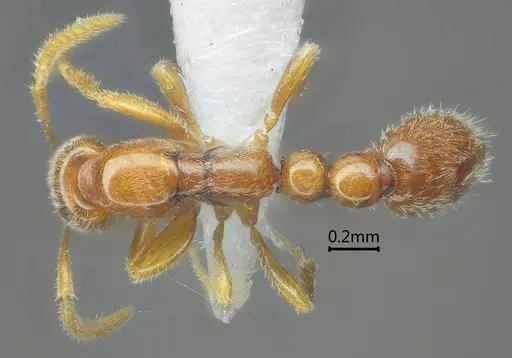
科学文献
正在加载分布地图...正在加载商品...