
Protanilla beijingensis
- 学名
- Protanilla beijingensis
- 族
- Leptanillini
- 亚科
- Leptanillinae
- 命名者
- Man <i>et al.</i>, 2017
- 地理分布
- 分布于 0 个国家/地区
物种引言
Protanilla beijingensis is a tiny ant species from the Leptanillinae subfamily, found in northern China and northern Pakistan. Workers measure 3.9-4.0 mm in total length with a reddish-brown body marked by black on the mesothorax and metathorax, while queens reach 4.6 mm . This species was discovered in 2015 using subterranean pitfall traps at 30-55 cm depth in monsoon deciduous forest at 1247 m elevation . The genus Protanilla is related to Opamyrma, which preys on centipedes .
Quick Summary
- Difficulty: Expert
- Origin & Habitat: Beijing, China and Khyber Pakhtunkhwa, Pakistan at elevations from 1247 m to 2400-2700 m in cold temperate monsoon deciduous forest [1][3]
- Colony Type: Unconfirmed, only three workers and one queen have ever been collected in the wild [1]
- Size & Growth:
- Antkeeping:
- Temperature: Based on high-elevation temperate habitat, likely cool temperatures around 15-20°C [1][3]
- Humidity: Keep nest substrate consistently moist but not waterlogged, based on monsoon forest habitat [1]
- Diapause: Likely requires winter diapause due to temperate range, but unconfirmed [1][3]
- Nesting: Provide deep substrate nesting, as collected at 30-55 cm depth [1]. Use Y-tong, plaster, or soil nests with deep chambers.
- Behavior: Workers are small with a well-developed sting [1]. Escape risk is moderate due to small size, use fine mesh barriers. Aggression level unknown.
- Common Issues: lack of captive care data makes survival uncertain, founding behavior is unconfirmed, colony size in the wild is unknown, difficulty replicating deep subterranean conditions, temperature and diet requirements are uncertain
Discovery and Rarity
Protanilla beijingensis was described in 2017 and is known from only a few specimens. The type specimens were collected using subterranean pitfall traps at 30-55 cm depth in Xiaolongmen Forest Park, Beijing [1]. The species was later found in northern Pakistan at elevations between 2400-2700 m, showing a wide distribution [3].
Identification and Appearance
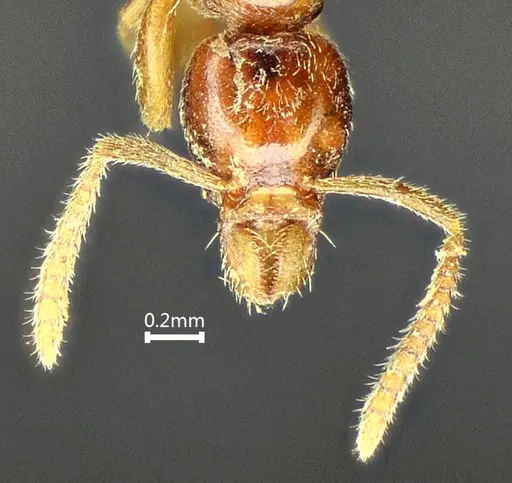
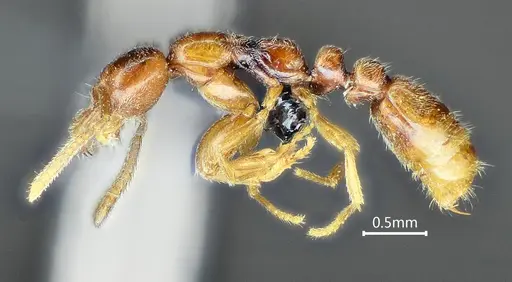
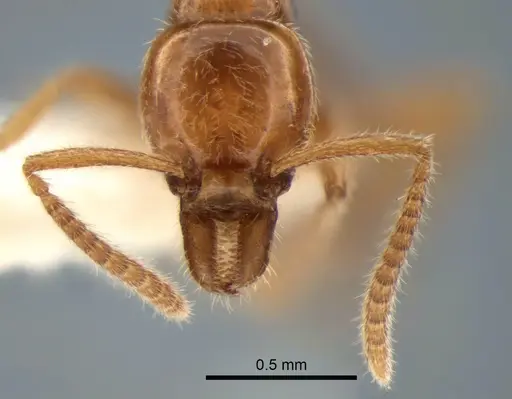
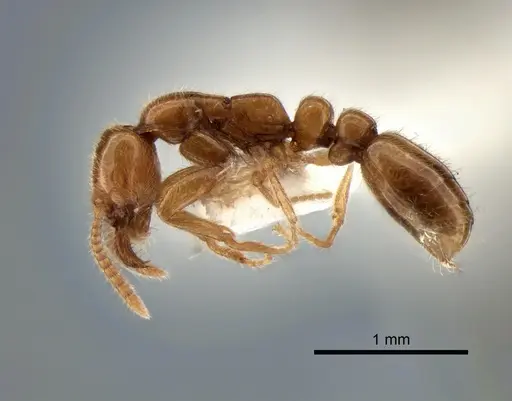
Workers are 3.9-4.0 mm in total length with a reddish-brown body, black on the mesothorax and metathorax, and brownish-yellow on the mandibles, antennae, pronotum, legs, and posterior gaster [1]. Queens are 4.6 mm with yellowish-brown body and brownish-black markings [1]. The petiolar node is trapezoidal, and the subpetiolar process has an elliptical fenestra [1].
Subterranean Lifestyle
This species is highly subterranean, collected at depths of 30-55 cm [1]. Based on related Opamyrma, they may prey on soil arthropods like centipedes [2]. In captivity, provide deep, dark nesting areas to mimic natural conditions.
Temperature and Seasonal Care
Due to their high-elevation temperate habitat, keep temperatures cool around 15-20°C [1][3]. A winter dormancy period may be needed, but this is unconfirmed.
Feeding and Diet
Diet is unknown, but based on related species, they may be predatory on soil arthropods [2]. Offer small live prey like springtails or isopods. Their mandibles have peg-like teeth, suggesting a predatory feeding method [1].
Housing and Nesting
Provide deep nesting substrate, at least 10-15 cm, based on collection depth [1]. Use Y-tong, plaster, or soil nests with dark, humid chambers. A separate outworld for feeding is recommended. Escape prevention is important due to small size.
Frequently Asked Questions
Can I keep Protanilla beijingensis as a pet ant?
This species has never been kept in captivity and is extremely difficult to care for due to lack of data. Only a few wild specimens exist [1].
How do I house Protanilla beijingensis?
Use a deep setup with at least 10-15 cm of moist substrate, as they live underground [1]. Y-tong, plaster, or soil nests work best.
What do Protanilla beijingensis eat?
Diet is unknown, but they may prey on soil arthropods based on related species [2]. Offer small live prey.
What temperature do Protanilla beijingensis need?
Keep them cool at 15-20°C, based on their high-elevation habitat [1][3].
How long do Protanilla beijingensis live?
Unknown, no captive colonies exist to determine lifespan [1].
Do Protanilla beijingensis queens found colonies alone?
Founding behavior is unconfirmed for this species [1].
How big do Protanilla beijingensis colonies get?
Unknown, only isolated individuals have been collected [1].
Does Protanilla beijingensis sting?
Yes, they have a well-developed sting, but it is unlikely to penetrate human skin due to small size [1].
Where is Protanilla beijingensis found?
In Beijing, China and Khyber Pakhtunkhwa, Pakistan at high elevations [1][3].
Is Protanilla beijingensis good for beginners?
No, this is an expert-only species due to rarity and lack of care data [1].
Report an Issue
The current care sheet is based fully on literature. See inconsistencies, or something that's incorrect? Please , it will be resolved after review from an admin. Contributing to the blogs tab also helps providing information, to make us be able to further improve the caresheets. Thank you for your support!
References

此饲养指南授权协议为 CC BY-SA 4.0 .
社区博客
ANTWEB1060533
在 AntWeb 上查看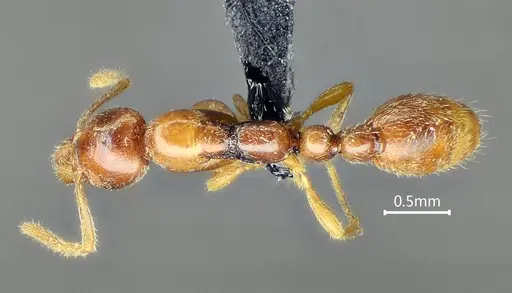
CASENT0842639
在 AntWeb 上查看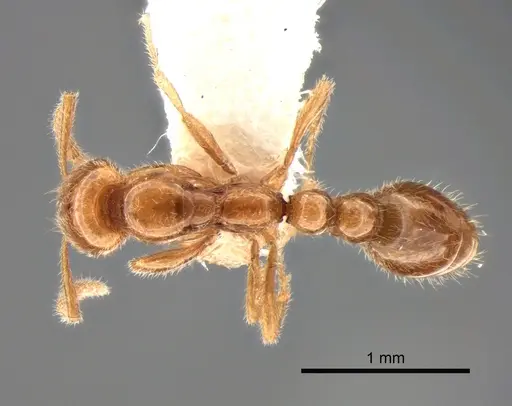
科学文献
正在加载分布地图...正在加载商品...