
Probolomyrmex itoi
- 学名
- Probolomyrmex itoi
- 族
- Probolomyrmecini
- 亚科
- Proceratiinae
- 命名者
- Eguchi <i>et al.</i>, 2006
- 地理分布
- 分布于 0 个国家/地区
物种引言
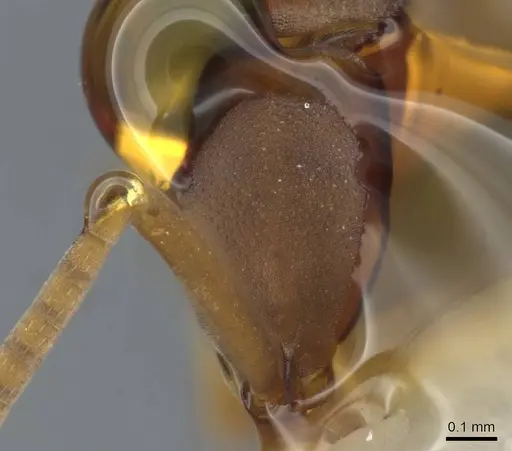
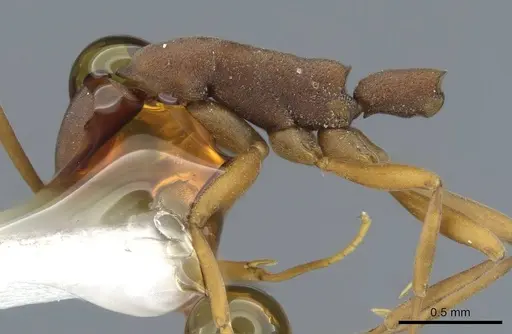
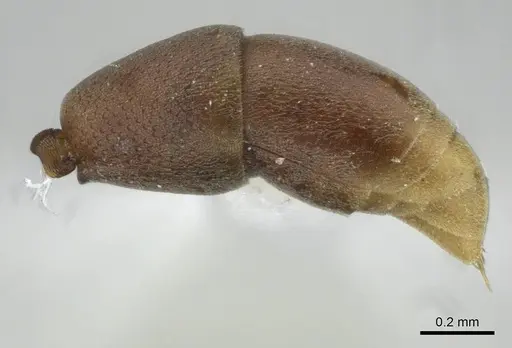
Probolomyrmex itoi is an extremely rare ant species from the Proceratiinae subfamily, found only in Borneo and Sumatra . Workers are among the smallest ants, with a distinctive elongated head and no eyes, while queens have small functional eyes . The body is ferruginous brown with yellow mandibles and paler legs . This species is closely related to Probolomyrmex longiscapus but can be distinguished by its longer scapes and petiole . P. itoi specializes in hunting polyxenids, tiny soil arthropods, and colonies are functionally monogynous with only one queen reproducing even when multiple queens are present . They nest in dead wood on the forest floor and have very small colony sizes, making them challenging to study or keep.
Quick Summary
- Difficulty: Expert
- Origin & Habitat: Borneo and Sumatra, tropical rainforest floor, nesting in dead wood [2][1]
- Colony Type: Functionally monogynous, colonies can have multiple queens but only one reproduces [2]
- Size & Growth:
- Queen: Size data unavailable, no total length measurements provided
- Worker: Size data unavailable, no total length measurements provided
- Colony: Up to 6 workers [2]
- Growth: Unknown, likely slow given small colony sizes
- Development: Unknown, no development data exists (No published data on development timeline.)
- Antkeeping:
- Temperature: Unknown, based on tropical rainforest origin, likely need warm conditions around 24-28°C
- Humidity: Keep substrate consistently moist but not waterlogged, based on their forest floor habitat [2]
- Diapause: No, tropical species do not require diapause
- Nesting: In nature, nest in dead wood on forest floor [2]. In captivity, use small chambers or test tube setup scaled to their tiny size.
- Behavior: Workers are blind and rely on chemical cues. They are specialized predators on polyxenids. Colonies are small and peaceful. Escape prevention is critical due to their minute size. They are not aggressive.
- Common Issues: extreme escape risk due to minute size., no established captive diet, require live polyxenids which are difficult to culture., virtually no information on captive care., small colony size means any losses have major impact., wild-caught colonies may not adapt to captivity.
Why This Species Is So Challenging
Probolomyrmex itoi is one of the most difficult ants to keep in captivity. There are no established keeping protocols for this species. Their extreme small size creates housing challenges that most antkeepers cannot solve. Additionally, they are specialized predators of polyxenids [2], which are difficult to culture. Without a sustainable source of live prey, captive survival is unlikely. This species is best observed in the wild or in scientific collections, not for hobby antkeeping.
Natural History and Distribution
Probolomyrmex itoi is known only from Borneo and Sumatra [1]. The type colony was collected in West Sumatra from dead wood on the forest floor [2]. Colonies are very small, with up to 6 workers, suggesting tiny natural colonies. Workers are blind and navigate using chemical signals [1].
Colony Structure and Reproduction
From two documented wild colonies, P. itoi has multiple queens but only one reproduces. Colony FI92-153 had 2 dealate queens,6 workers, and 2 alate queens, only one queen had active ovaries [2]. Both queens and workers have low ovariole numbers, explaining small colony sizes [2].
Identification and Morphology
Probolomyrmex itoi workers have an extremely elongated head and very long antennal scapes. Workers lack eyes, while queens have small eyes. The body is ferruginous brown with yellow mandibles. This species is similar to Probolomyrmex longiscapus but has longer scapes and petiole [1].
Housing and Care - Theoretical Considerations
Since no one has successfully kept this species, housing advice is theoretical. Based on natural nesting in dead wood [2], a naturalistic setup with humid decaying wood might work. However, their tiny size requires custom small chambers. Temperature should be warm (24-28°C) based on tropical origin, with high humidity. The critical issue is food, they need live polyxenids, which are hard to provide. For these reasons, this species is not recommended for antkeeping.
Frequently Asked Questions
Can I keep Probolomyrmex itoi as a pet ant?
No, this species is not suitable for antkeeping. There is no established captive husbandry information, they require an extremely specialized diet (polyxenids) that cannot be reliably provided, and their minute size creates housing challenges that make them essentially impossible to keep successfully. Even expert antkeepers would struggle with this species.
How big do Probolomyrmex itoi colonies get?
Based on documented wild colonies, they remain very small, up to 6 workers [2]. This suggests they are naturally a small-colony species, likely due to their low reproductive output.
What do Probolomyrmex itoi eat?
They are specialized predators of polyxenids, which are tiny soil arthropods [2]. This specialized diet makes captive feeding extremely difficult, as polyxenids are not commercially available and would be nearly impossible to culture reliably.
Do Probolomyrmex itoi ants sting?
Given their extreme small size, any sting would be virtually imperceptible to humans. Proceratiinae ants do have stingers, but these tiny ants would be unable to penetrate human skin. They are not considered dangerous to humans.
Where does Probolomyrmex itoi live?
This species is known only from Borneo and Sumatra [1]. They nest in dead wood on the tropical rainforest floor [2].
Why don't Probolomyrmex itoi have eyes?
Workers of this species are completely blind, lacking eyes entirely [1]. This is typical for the genus Probolomyrmex and likely an adaptation to their cryptic lifestyle. Queens have small eyes for dispersal.
How many queens do Probolomyrmex itoi colonies have?
Colonies can contain multiple queens (documented with 2 dealate queens), but they are functionally monogynous, only one queen reproduces at a time [2]. The non-reproductive queen has inactive ovaries.
Are Probolomyrmex itoi good for beginners?
Absolutely not. This species is firmly in the expert category, and even experts would find them nearly impossible to keep successfully. There is no captive husbandry information, their size requires custom housing solutions, and their specialized diet cannot be provided in captivity. If you're interested in Probolomyrmex, consider starting with more common species to build experience.
Report an Issue
The current care sheet is based fully on literature. See inconsistencies, or something that's incorrect? Please , it will be resolved after review from an admin. Contributing to the blogs tab also helps providing information, to make us be able to further improve the caresheets. Thank you for your support!
References

此饲养指南授权协议为 CC BY-SA 4.0 .
社区博客
CASENT0911223
在 AntWeb 上查看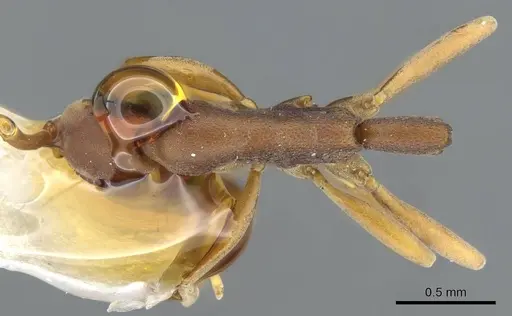
科学文献
正在加载分布地图...正在加载商品...