
Probolomyrmex brevirostris
- 学名
- Probolomyrmex brevirostris
- 族
- Probolomyrmecini
- 亚科
- Proceratiinae
- 命名者
- Forel, 1910
- 地理分布
- 分布于 0 个国家/地区
物种引言
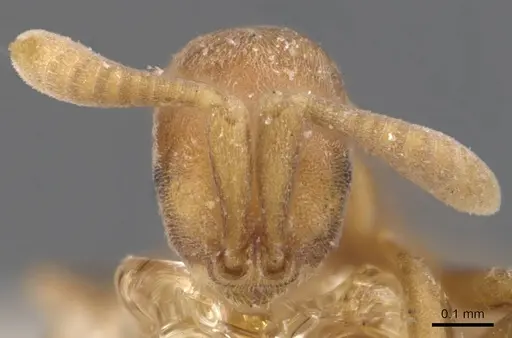
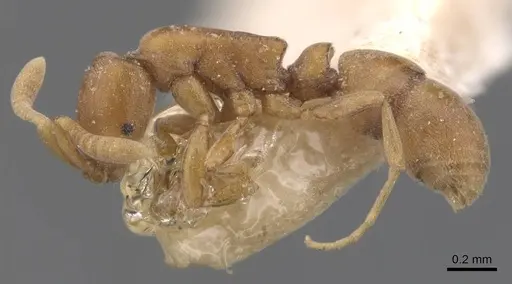
Probolomyrmex brevirostris is an exceptionally rare ant from the subfamily Proceratiinae, known from only a handful of specimens collected in East Africa (Eritrea, Ethiopia, Uganda, Yemen) . Workers are tiny (size data unavailable) and reddish-brown. This species is unique within the genus because workers have well-developed compound eyes – most Probolomyrmex workers are eyeless . The few specimens were found near termites in Eritrea and among humus and leaves in a Ugandan banana plantation, suggesting a cryptic, humid microhabitat .
Quick Summary
- Difficulty: Expert
- Origin & Habitat: East Africa: recorded from Eritrea, Ethiopia, Uganda, and Yemen [1]. Collected near termites in Eritrea and among humus and leaves at the base of a tree in a banana plantation in Uganda [2].
- Colony Type: Unknown – no colony structure data exist.
- Size & Growth:
- Queen: size data unavailable
- Worker: size data unavailable
- Colony: Unknown
- Growth: Unknown
- Development: Unknown – not documented (No data from scientific literature.)
- Antkeeping:
- Temperature: Warm,24–28°C – estimated from tropical distribution [2]. Use a gentle temperature gradient.
- Humidity: High – keep substrate consistently moist. Based on collection notes from humid leaf litter and termite habitats [2].
- Diapause: Unknown – likely no true diapause given tropical range, but may slow down during cooler months [2].
- Nesting: Use a test tube setup or a small plaster/Ytong nest with very tight chambers. In nature found near termites and in leaf litter [2]. Avoid acrylic nests.
- Behavior: Nothing documented for this species. Based on Proceratiinae subfamily, they are secretive, slow-moving predators with functional stingers. Their tiny size demands extreme escape prevention – use fine mesh and tight seals.
- Common Issues: species is almost never available in the hobby – virtually no captive experience exists, no established care protocols – keepers must experiment with caution, escape prevention is critical due to their tiny size – they can squeeze through minute gaps, colony dynamics are unknown, making them vulnerable to stress from unknown causes, high humidity requirements can cause mold if ventilation is inadequate
Why This Species Is So Challenging
Probolomyrmex brevirostris is among the most difficult ants to keep because virtually nothing is known about its life in the wild or in captivity. Only a handful of specimens have ever been collected since its original description in 1910 [1]. This is not a species you will find for sale – it remains one of the rarest ants in the world. Even if you somehow acquire a queen, no care protocols exist. Before attempting this species, you should have extensive experience with other Proceratiinae ants like Proceratium or Discothyrea. Even then, success is far from guaranteed [2].
Housing and Nest Setup
Because the ants are so tiny (size data unavailable) [2], housing must be carefully designed. Use a test tube setup with a very small water reservoir, or a small plaster or Ytong nest with chambers scaled to fit a very small colony. The nest material should hold moisture consistently – plaster with a water reservoir works well. Provide a small outworld for foraging that is easy for the ants to navigate. Escape prevention is absolutely critical: use fine mesh on all openings and ensure lids fit tightly. These ants can squeeze through gaps that other ants cannot. A naturalistic setup with damp soil and small hiding spots may also work, but watch for mold.
Temperature and Humidity
Keep the nest at 24–28°C, matching their tropical East African distribution [1][2]. A gentle temperature gradient lets the ants choose their preferred zone. Humidity should be high – keep the substrate consistently moist but not waterlogged. The collection sites (near termites, in leaf litter and banana plantation humus) [2] indicate a humid environment. Use a water reservoir connected to the nest to maintain humidity. Avoid placing the nest near air conditioning or heating vents that could cause rapid drying.
Feeding and Diet
Diet is unknown for this species. Based on related Proceratiinae, they are thought to be specialized predators that hunt small arthropods like springtails, mites, and other micro-invertebrates (inferred from subfamily characteristics). Offer tiny live prey – ideally no larger than 1–2 mm. Springtails are an excellent choice. Do not rely on sugar sources unless acceptance is confirmed, Proceratiinae are primarily predatory. Feed small amounts of live prey every few days and remove any leftovers to prevent mold. Given their tiny size, even small fruit flies may be too large.
Understanding Their Extreme Rarity
Described from Eritrea in 1910,with the synonym Probolomyrmex brevirostris described from Uganda in 1949,the species was synonymized by Taylor in 1965 [2]. Despite being known for over a century, only a handful of specimens exist. This suggests they are either extremely rare in the wild, live in very cryptic habitats that are rarely sampled, or both. The original collections note the worker was found "bei termiten" (near termites) and the queen was collected "among humus and leaves at the base of a tree with a few bushes forming an island in a banana plantation" [2]. These clues point to damp, shaded areas with organic matter.
Frequently Asked Questions
Is Probolomyrmex brevirostris available in the antkeeping hobby?
No – this species is virtually never available. It is one of the rarest ants in the world, known only from a handful of specimens collected over more than a century [1].
How big do Probolomyrmex brevirostris colonies get?
Colony size is unknown – no data exist. Based on related Probolomyrmex species, colonies are likely small but this is speculation [2].
What do Probolomyrmex brevirostris ants eat?
Diet is undocumented. Based on related Proceratiinae, they likely hunt small micro-arthropods such as springtails and mites (inferred from subfamily). Offer tiny live prey. Sugar acceptance is uncertain.
Do Probolomyrmex brevirostris ants sting?
Proceratiinae ants have functional stingers. Given their tiny size, any sting would be negligible to humans. Their primary defense is likely chemical or hiding.
How do I care for Probolomyrmex brevirostris?
Care protocols are essentially unknown since this species has never been kept in captivity. Based on related species and habitat notes: provide high humidity, warm temperatures (24–28°C), tiny prey, and excellent escape prevention [2]. This species is only for expert antkeepers who are prepared to experiment very carefully.
Where does Probolomyrmex brevirostris live in the wild?
They are found in East Africa: Eritrea, Ethiopia, Uganda, and Yemen [1]. Specimens were collected near termites and in banana plantation leaf litter, indicating humid, shaded areas with organic matter [2].
Why are Probolomyrmex brevirostris workers unusual?
This species is unique within Probolomyrmex because workers have well-developed compound eyes (about 14 facets). Most Probolomyrmex workers are eyeless. The possibility that the holotype is a worker-queen intermediate has been raised but not confirmed [2].
Are Probolomyrmex brevirostris good for beginners?
Absolutely not. This species is for expert antkeepers only – and it may be impossible to obtain at all. No care protocols exist, and their rarity means there is no room for error [1].
Do Probolomyrmex brevirostris need hibernation?
Diapause requirements are unknown but unlikely given their tropical East African distribution [2]. They probably remain active year-round, perhaps with reduced activity during cool periods.
How long does it take for Probolomyrmex brevirostris to develop from egg to worker?
The development timeline has not been documented. Based on related Proceratiinae species and their tiny size, it might take several weeks, but this is pure guesswork.
Report an Issue
The current care sheet is based fully on literature. See inconsistencies, or something that's incorrect? Please , it will be resolved after review from an admin. Contributing to the blogs tab also helps providing information, to make us be able to further improve the caresheets. Thank you for your support!
References

此饲养指南授权协议为 CC BY-SA 4.0 .
社区博客
CASENT0907208
在 AntWeb 上查看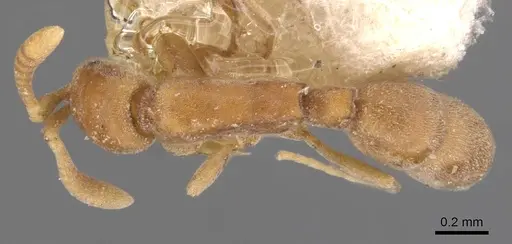
科学文献
正在加载分布地图...正在加载商品...