
Ponera adumbrans
- 学名
- Ponera adumbrans
- 族
- Ponerini
- 亚科
- Ponerinae
- 命名者
- Csősz & Fisher, 2023
- 地理分布
- 分布于 0 个国家/地区
物种引言
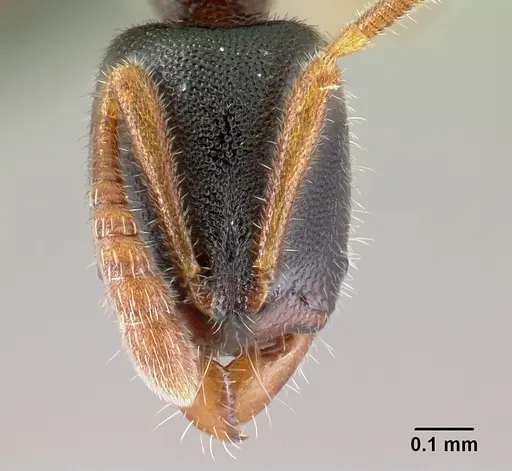
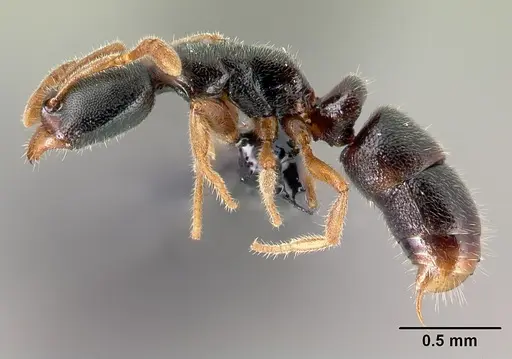
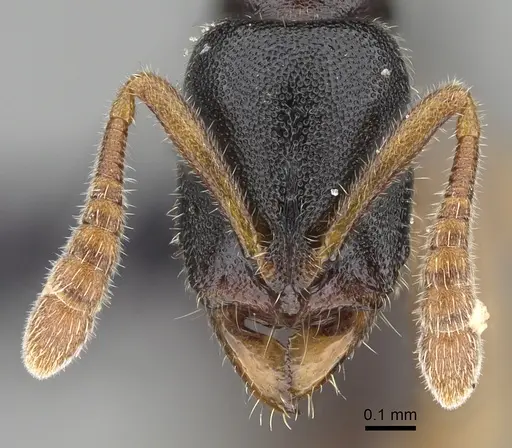
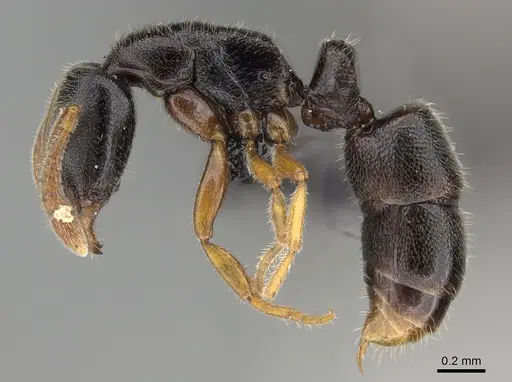
Ponera adumbrans is a small ant species from the Seychelles islands of Silhouette and Mahé. Workers have a dark brown to black body and are among the larger Ponera species in the Malagasy region . They were discovered in forest leaf litter and rotting wood at higher altitudes. This species resembles the Indo-Australian Ponera clavicornis but can be distinguished by its shorter head and longer antennae .
Quick Summary
- Difficulty: Hard
- Origin & Habitat: Endemic to the Seychelles islands (Silhouette and Mahé), found in forest leaf litter and rotting wood at higher altitudes around 445m [1].
- Colony Type: Colony structure is unconfirmed, only known from worker series.
- Size & Growth:
- Queen: Unknown, queen caste has not been described [1]
- Worker: Size data unavailable, no total length measurements provided [1]
- Colony: Unknown, only known from small worker series [1]
- Growth: Unknown
- Development: Unconfirmed, no development data exists [1] (Based on related Ponera species, development may take 2-4 months at warm temperatures)
- Antkeeping:
- Temperature: Unconfirmed, based on tropical origin, aim for 22-26°C and observe colony activity
- Humidity: Keep substrate consistently moist but not waterlogged, based on their forest litter habitat
- Diapause: Unknown, tropical species may not require hibernation, but may slow down during cooler periods
- Nesting: In the wild, they live in decaying wood and leaf litter. In captivity, use a naturalistic setup with moist substrate and small chambers, such as Y-tong or plaster nests [1].
- Behavior: Ponera adumbrans is cryptic and slow-moving, with workers being blind or having few eye facets. They likely rely on chemical trails for navigation. As a small species, escape prevention is critical. They have a sting, as typical for Ponerinae ants.
- Common Issues: no captive care data exists, this is an extremely rare species with no established keeping protocols., tiny size means escapes are likely without fine mesh barriers., wild-caught colonies may have parasites or stress from collection., slow growth and cryptic behavior may make them appear inactive., limited distribution means replacement colonies may be impossible to obtain.
Species Discovery and Rarity
Ponera adumbrans was only described in 2023,making it one of the newest ant species to science. It is known from just a handful of collections on the Seychelles islands of Silhouette and Mahé, all from highland forest areas around 445m elevation. The species name 'adumbrans' means 'obscuring or silhouetting' in Latin, referring to both the obscure origin of this species in the Malagasy region and the type locality on Silhouette Island [1]. This species cannot be confused with other Malagasy Ponera species due to its distinctive dark brown color and larger body size. Worldwide, it most resembles the Indo-Australian Ponera clavicornis, but the two species have non-overlapping morphometric measurements [1].
Identification and Morphology
This is a tiny ant species with workers that have a head longer than broad and no visible eyes, occasionally just a few eye facets may be present. The antennae have a long scape that nearly reaches the midpoint of the head when laid back. The body is dark brown to black, with lighter antennae and legs. The petiole is scale-like and relatively large. The mandibles have three distinct teeth. The mesosoma has a well-developed groove across the dorsum, and the surface is coarsely punctate [1].
Natural Habitat and Nesting
In the wild, Ponera adumbrans has been collected from forest floor litter, specifically sifted leaf mold and rotting wood. This indicates they are cryptic nesters in decaying organic material, similar to many other Ponera species. They occur at higher altitudes on the Seychelles islands, suggesting they prefer slightly cooler, more humid conditions than lowland tropical ants. The forest environment provides consistent moisture and protection from extreme temperatures. For captive care, this suggests they would do best in a naturalistic setup with moist, decaying wood material or a well-humidified plaster or Y-tong nest with small chambers scaled to their tiny size [1].
Care Recommendations (Preliminary)
Since no captive keeping data exists for this species, recommendations must be inferred from related Ponera species and their natural history. Keep them in a naturalistic or semi-naturalistic setup with consistently moist substrate, think damp forest floor conditions. Temperature should be in the low-to-mid 20s Celsius (22-26°C). Feed small live prey appropriate to their tiny size, such as springtails, small fruit flies, or other micro-arthropods. Because they are blind and very small, excellent escape prevention is essential, use fine mesh and tight-fitting barriers. Do not expect rapid colony growth, Ponera colonies typically remain small. This species is extremely rare in the hobby and should be considered a specialist's species for advanced antkeepers willing to experiment with new keeping protocols.
Frequently Asked Questions
Is Ponera adumbrans available in the antkeeping hobby?
No, this is an extremely rare species only described in 2023 and known from just a handful of wild collections. It is unlikely to be available commercially anytime soon [1].
How big do Ponera adumbrans colonies get?
Colony size is unknown, no large colonies have been documented [1].
What do Ponera adumbrans eat?
Diet has not been documented, but Ponera species are typically predatory on small soil arthropods. Feed small live prey like springtails, micro-mites, or tiny fruit flies.
What temperature should I keep Ponera adumbrans at?
Temperature requirements are unconfirmed. Based on their Seychelles origin (tropical island), aim for 22-26°C and adjust based on colony activity.
Do Ponera adumbrans need hibernation?
Diapause requirements are unknown. As a tropical species from the Seychelles, they likely do not require true hibernation but may slow down during cooler periods.
How long does it take for Ponera adumbrans to develop from egg to worker?
Development time is unconfirmed, no captive breeding data exists for this newly described species [1].
Can I keep multiple Ponera adumbrans queens together?
Colony structure is unconfirmed, no queen observations have been documented. Combining unrelated queens is not recommended without data [1].
What is the best nest type for Ponera adumbrans?
In the wild they live in rotting wood and leaf litter. In captivity, a naturalistic setup with moist decaying material or a Y-tong or plaster nest with very small chambers would be most appropriate [1].
Are Ponera adumbrans good for beginners?
No, this species has no captive care data and is extremely rare. It should only be kept by experienced antkeepers willing to develop new protocols [1].
Report an Issue
The current care sheet is based fully on literature. See inconsistencies, or something that's incorrect? Please , it will be resolved after review from an admin. Contributing to the blogs tab also helps providing information, to make us be able to further improve the caresheets. Thank you for your support!
References

此饲养指南授权协议为 CC BY-SA 4.0 .
社区博客
CASENT0159966
在 AntWeb 上查看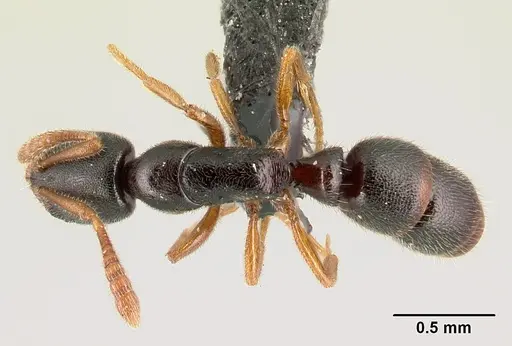
CASENT0160838
在 AntWeb 上查看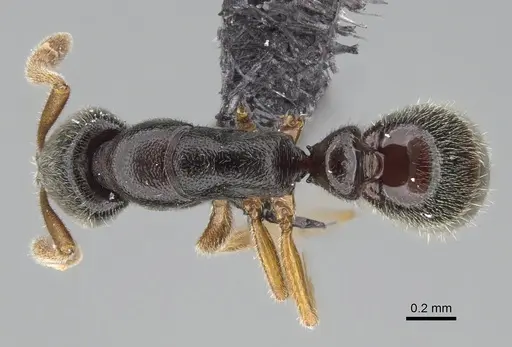
科学文献
正在加载分布地图...正在加载商品...