
Polyrhachis storki
- 学名
- Polyrhachis storki
- 亚属
- Myrmhopla
- 族
- Camponotini
- 亚科
- Formicinae
- 命名者
- Kohout, 2008
- 地理分布
- 分布于 0 个国家/地区
物种引言
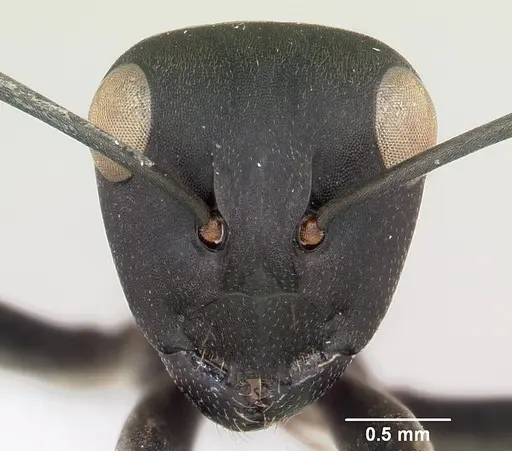
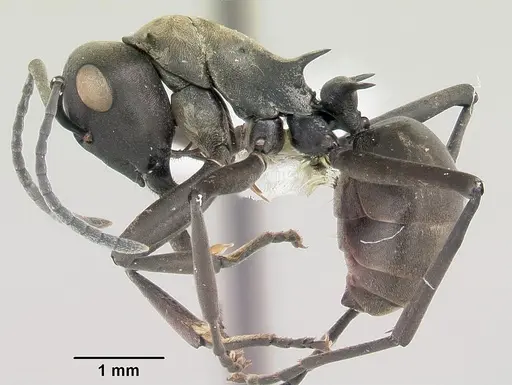
Polyrhachis storki is a medium-sized ant with a total length of 6.4-7.0 mm . It belongs to the flavoflagellata species group within the subgenus Myrmhopla . The body is dark brown-black with a reddish-brown, almost metallic hue, particularly on the legs and mandibular teeth . The head is disproportionately large compared to the rest of the body, and it has short triangular teeth on the pronotal humeri . This species is distributed across Southeast Asia from Peninsular Malaysia through Borneo to Sulawesi, inhabiting tropical forests from lowland to montane areas . P. storki is widespread but uncommon, with specimens collected from diverse habitats including primary forest and cacao plantations at elevations from 60m to 860m . It was described in 2008 and is only known from the worker caste; the queen caste has not been described .
Quick Summary
- Difficulty: Medium
- Origin & Habitat: Southeast Asia, Peninsular Malaysia, Borneo, and Sulawesi. Inhabits tropical forests ranging from lowland to montane areas, with specimens collected at elevations from 60m to 860m [1][4].
- Colony Type: Colony structure is unconfirmed. Only known from worker caste, queen caste has not been described [2].
- Size & Growth:
- Queen: Unknown, no data available
- Worker: 6.4-7.0 mm total length [1]
- Colony: Unknown, no colony size data available
- Growth: Unknown, no development data available
- Development: Estimated 6-10 weeks based on related Polyrhachis species (Development timeline is inferred from genus patterns, no specific data for P. storki.)
- Antkeeping:
- Temperature: Keep warm, roughly 24-28°C, based on tropical habitat [1]. Provide a temperature gradient for self-regulation.
- Humidity: Keep nest substrate consistently moist but not waterlogged, with some drier areas available.
- Diapause: Unknown, tropical species from Southeast Asia, likely no diapause required.
- Nesting: Use Y-tong (AAC) or plaster nests that retain moisture. Ground-nesting setup is suitable, with a dark, quiet location.
- Behavior: Polyrhachis storki is a relatively calm species. As a Formicinae ant, it lacks a functional sting and instead sprays formic acid for defense. Workers are moderately active foragers. Escape prevention should be moderate due to their medium size.
- Common Issues: limited availability, this is a rare species in the antkeeping hobby, no queen description means wild-caught colonies are extremely uncommon, growth rate is unknown, which can make colony management challenging, tropical humidity requirements mean they are prone to mold in poorly ventilated setups, lack of documented captive care means keepers must rely on genus-level husbandry
Housing and Nest Setup
Use Y-tong (AAC) or plaster nests that maintain humidity for P. storki. These nests allow observation and moisture control. Since this species is ground-nesting from tropical forests, keep the nest dark and quiet. Provide an outworld area roughly 2-3 times the size of the nest for foraging. Maintain humidity with a water tube or cotton wick system, ensuring adequate ventilation to prevent mold [1].
Feeding and Diet
Offer sugar water or honey as a constant carbohydrate source. Provide protein such as small insects (e.g., fruit flies, crickets) 2-3 times per week, removing uneaten prey after 24 hours. Fresh water should always be available. Feeding habits are inferred from related Polyrhachis species.
Temperature and Humidity Requirements
Maintain temperatures around 24-28°C, based on the species' tropical habitat [1]. Humidity should be managed by keeping the nest substrate moist but not waterlogged. Avoid prolonged cool periods or drafts.
Handling and Temperament
P. storki is generally calm. Use gentle methods like tapping or blowing to move workers, avoiding aggressive shaking. As a Formicinae ant, it defends by spraying formic acid, not stinging.
Colony Establishment and Growth
Colony establishment is challenging due to limited data. If you obtain a colony, maintain stable conditions and avoid disturbances during founding. Growth rates are unknown and may vary based on care.
Frequently Asked Questions
How long does it take for Polyrhachis storki to produce first workers?
The exact timeline is unknown. Based on related species, estimate 6-10 weeks from egg to worker at warm temperatures.
What do Polyrhachis storki ants eat?
They are omnivorous. Offer sugar water or honey for carbohydrates and small insects for protein,2-3 times per week.
Are Polyrhachis storki ants good for beginners?
This species is not ideal for beginners due to rarity, unknown colony structure, and lack of captive care data. It is better suited for experienced keepers.
What temperature do Polyrhachis storki ants need?
Keep them at roughly 24-28°C, based on their tropical habitat [1].
Can I keep multiple queens together?
The colony structure is unconfirmed. Do not attempt to combine queens without evidence that this species tolerates multiple queens.
How big do Polyrhachis storki colonies get?
Colony size is unknown. No research documents this for the species.
Do Polyrhachis storki need hibernation?
No, as a tropical species, they likely do not require diapause. Activity may reduce in cooler periods, but hibernation is not necessary.
Why is Polyrhachis storki so rare in the antkeeping hobby?
It was described in 2008 and is naturally uncommon. The queen caste is undescribed, making captive breeding difficult [1].
What makes Polyrhachis storki different from Polyrhachis flavoflagellata?
P. storki has a bilobed, emarginate clypeal margin and rounded petiolar dorsum with weak spines, while P. flavoflagellata has a truncate clypeal margin and distinct intercalary teeth [2].
Report an Issue
The current care sheet is based fully on literature. See inconsistencies, or something that's incorrect? Please , it will be resolved after review from an admin. Contributing to the blogs tab also helps providing information, to make us be able to further improve the caresheets. Thank you for your support!
References

此饲养指南授权协议为 CC BY-SA 4.0 .
社区博客
CASENT0103183
在 AntWeb 上查看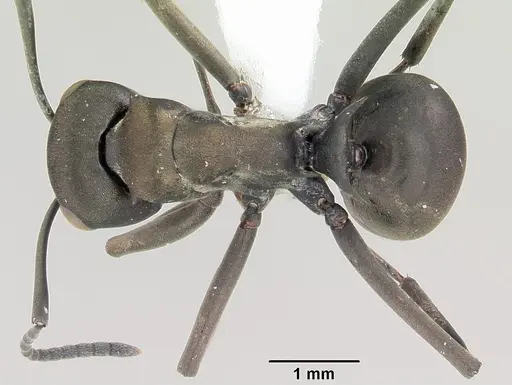
科学文献
正在加载分布地图...正在加载商品...