
Polyrhachis gobini
- 学名
- Polyrhachis gobini
- 亚属
- Myrma
- 族
- Camponotini
- 亚科
- Formicinae
- 命名者
- Kohout, 2008
- 地理分布
- 分布于 0 个国家/地区
物种引言
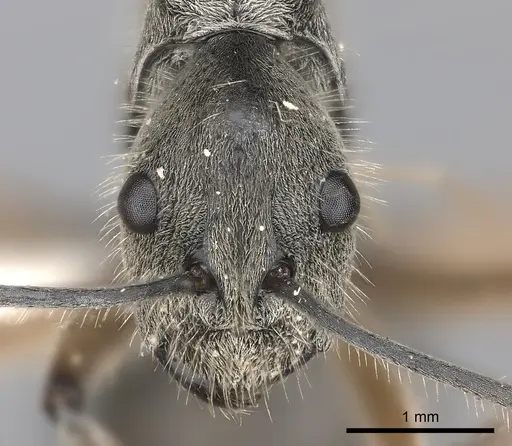
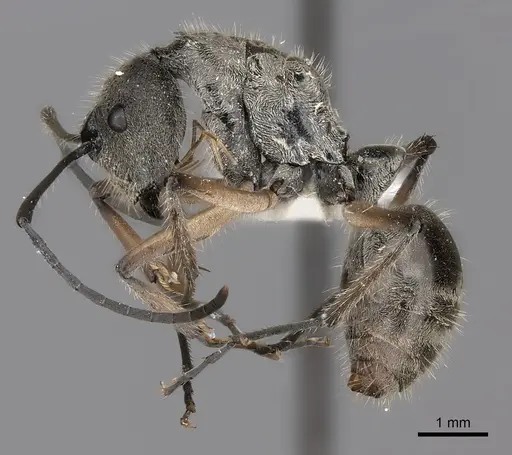
Polyrhachis gobini is an arboreal ant species from Sulawesi, Indonesia. Workers measure up to 10.78 mm in total length and have a black body with bright orange-red legs . They belong to the vestita species-group within the subgenus Myrma and have short, forward-pointing pronotal spines and an unarmed petiole . Queens are slightly larger, measuring approximately 11.14 mm in total length . This species nests in tree cavities and seals entrances with detritus and rotten wood pulp. Colonies are polydomous, meaning they occupy multiple nest sites in different trees. Workers forage singly, and the species is endemic to Sulawesi's limestone karst regions .
Quick Summary
- Difficulty: Medium
- Origin & Habitat: Sulawesi, Indonesia, secondary rainforest on limestone karst hills at elevations around 265-400 meters [1][2].
- Colony Type: Polydomous, colonies spread across multiple tree cavities. Queen number is unconfirmed [1].
- Size & Growth:
- Antkeeping:
- Temperature: Keep warm, around 24-28°C, based on tropical habitat needs.
- Humidity: Keep nest substrate consistently moist but not waterlogged, with some dry areas.
- Diapause: No, as a tropical species, they do not require hibernation [1].
- Nesting: Arboreal setup with enclosed cavities, such as Y-tong nests or cork bark pieces [1].
- Behavior: Workers are generally calm and non-aggressive. They lack a functional sting but can spray formic acid as a defense mechanism. They are excellent climbers, so escape prevention is critical [1].
- Common Issues: escape prevention is critical due to arboreal climbing abilities., tropical warmth requirements mean they cannot tolerate cool temperatures., polydomous nature may lead to spreading between nest areas in captivity., founding colonies are fragile with limited captive breeding data.
Natural History and Distribution
Polyrhachis gobini is endemic to Sulawesi, described in 2008 by R.J. Kohout. It belongs to the vestita species-group and is limited to southern Sulawesi's limestone karst hills [2][1].
Nesting Behavior
This arboreal species nests in tree cavities, sealing entrances with detritus and rotten wood pulp. Colonies are polydomous, occupying multiple nest sites [1].
Identification and Distinguishing Features
Workers have a black body with orange-red legs, short forward-pointing pronotal spines, and an unarmed petiole. Queens are slightly larger with similar features [2][1].
Housing and Nest Setup
Use arboreal setups like Y-tong nests or cork bark pieces to simulate tree cavities. Provide materials for sealing nest entrances and ensure excellent escape prevention [1].
Feeding and Diet
Offer sugar sources like honey water and protein such as small insects. Since workers forage singly, place food near active areas [1].
Temperature and Seasonal Care
Keep temperatures between 24-28°C year-round. No diapause is needed.
Frequently Asked Questions
Is Polyrhachis gobini a good beginner species?
No, it is medium difficulty due to tropical requirements and escape risks [1].
How long does it take for Polyrhachis gobini to produce first workers?
Unknown, no published data exists [1].
What temperature do Polyrhachis gobini need?
Keep them warm at 24-28°C based on tropical needs.
Can I keep multiple queens together?
No data exists, start with a single queen [1].
What do Polyrhachis gobini eat?
They are omnivorous, offer sugar water and small insects [1].
Do they need hibernation?
No, as a tropical species, they do not require hibernation [1].
Why are my Polyrhachis gobini escaping?
They are excellent climbers, apply barriers and check for gaps [1].
What type of nest should I use?
Arboreal setups like Y-tong nests or cork bark pieces [1].
How big do colonies get?
Unknown, no published colony size data [1].
Where is Polyrhachis gobini found in the wild?
Endemic to Sulawesi, Indonesia, in limestone karst regions [1][2].
How do I identify Polyrhachis gobini?
Look for black body with orange-red legs, short pronotal spines, and unarmed petiole [2][1].
Report an Issue
The current care sheet is based fully on literature. See inconsistencies, or something that's incorrect? Please , it will be resolved after review from an admin. Contributing to the blogs tab also helps providing information, to make us be able to further improve the caresheets. Thank you for your support!
References

此饲养指南授权协议为 CC BY-SA 4.0 .
社区博客
CASENT0217431
在 AntWeb 上查看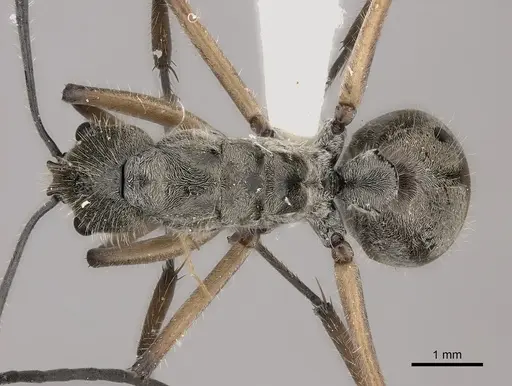
科学文献
正在加载分布地图...正在加载商品...