
Polyrhachis durvillei
- 学名
- Polyrhachis durvillei
- 亚属
- Myrmothrinax
- 族
- Camponotini
- 亚科
- Formicinae
- 命名者
- Donisthorpe, 1938
- 地理分布
- 分布于 0 个国家/地区
物种引言
Polyrhachis durvillei is an arboreal ant species in the subgenus Myrmothrinax, native to Australia . These ants construct nests using silk in trees and vegetation . Pupae are enclosed in cocoons . Size data for this species is unavailable. The most notable aspect is their arboreal nesting behavior with silk, which is unique among ants.
Quick Summary
- Difficulty: Medium
- Origin & Habitat: Australia, arboreal forest dwellers that nest in trees using silk [1][2].
- Colony Type: Colony structure is unconfirmed for Polyrhachis durvillei. Based on typical Polyrhachis patterns, they likely form single-queen colonies.
- Size & Growth:
- Queen: size data unavailable
- Worker: size data unavailable
- Colony: Estimated up to several hundred workers from genus patterns.
- Growth: Moderate
- Development: Estimated 6-8 weeks at optimal temperature [3]. (Direct development data unavailable for P. durvillei, this is an estimate from genus-level patterns.)
- Antkeeping:
- Temperature: Keep at 24-28°C with a gentle heat gradient [3].
- Humidity: Maintain moderate humidity with good ventilation. Keep substrate moist but not waterlogged [3].
- Diapause: No, as an Australian tropical species, they do not require diapause.
- Nesting: Arboreal setup essential. Use Y-tong nests oriented upward or naturalistic setups with branches [1][2].
- Behavior: Generally calm temperament. Defense mechanism: lacks functional sting, bites and sprays formic acid from acidopore. Escape risk is moderate due to climbing ability.
- Common Issues: arboreal setup is essential, they will not thrive in ground-level nests and may decline or die in inappropriate housing, poor ventilation combined with high humidity leads to mold problems that can devastate colonies, cold temperatures below 20°C can slow or stop brood development and weaken colonies, wild-caught arboreal colonies may carry parasites or be stressed from collection, quarantine and monitor closely, silk-nesting behavior means they prefer enclosed dark spaces, too much light exposure can cause stress
Housing and Nest Setup
Polyrhachis durvillei requires an arboreal-focused setup that mimics their natural tree-dwelling lifestyle. Standard test tube setups designed for ground-nesting ants will not work well for this species. The best captive arrangements include Y-tong nests oriented with the entrance facing upward, or naturalistic terrariums decorated with cork bark, branches, and other elevated structures [1][2]. The nest chamber should be dark and enclosed, providing security for these silk-nesting ants. Outworld space should include climbing surfaces. Ensure excellent escape prevention using fluon barriers on smooth surfaces [3].
Feeding and Diet
Polyrhachis durvillei is omnivorous and accepts a variety of foods. Offer sugar sources like honey water constantly and protein sources like small insects 2-3 times per week [3]. Remove uneaten prey after 24-48 hours to prevent mold. Fresh water should always be available.
Temperature and Heating
As an Australian arboreal species, Polyrhachis durvillei prefers warm conditions around 24-28°C. Use a low-wattage heating cable on one side of the nest to create a gentle thermal gradient [3]. Temperatures below 20°C can slow colony development.
Humidity and Ventilation
Maintain moderate humidity with good air circulation. Unlike ground-nesting ants, arboreal Polyrhachis prefer somewhat drier conditions [3]. Poor ventilation combined with moisture leads to mold growth, which can kill colonies.
Colony Development and Growth
Colony growth is moderate. A newly mated queen will raise her first brood alone, taking approximately 6-8 weeks under optimal conditions [3]. The first workers will expand the colony through subsequent broods. Growth may slow during cooler periods.
Frequently Asked Questions
Can I keep Polyrhachis durvillei in a test tube setup?
No, standard test tube setups are not suitable. Polyrhachis durvillei is an arboreal ant that needs elevated nesting options like Y-tong nests or naturalistic setups [1][2].
What do Polyrhachis durvillei ants eat?
They are omnivores that accept both sugar and protein. Offer sugar water constantly and protein sources like small insects 2-3 times per week [3].
How long does it take for Polyrhachis durvillei to produce first workers?
Estimated 6-8 weeks from egg to first worker at optimal temperature [3]. This is based on genus-level data, as specific timing for P. durvillei is unavailable.
Do Polyrhachis durvillei need hibernation?
No, as an Australian tropical species, they do not require diapause. They may show reduced activity in cooler months.
Are Polyrhachis durvillei good for beginners?
They are considered intermediate due to specific housing needs like arboreal setups and warm temperatures [3].
How big do Polyrhachis durvillei colonies get?
Estimated up to several hundred workers based on related Polyrhachis species [1][2].
Can I keep multiple Polyrhachis durvillei queens together?
Colony structure is unconfirmed. Based on typical Polyrhachis patterns, they likely form single-queen colonies. Combining unrelated queens is not recommended without evidence.
What temperature should I keep Polyrhachis durvillei at?
Keep them at 24-28°C with a gentle heat gradient [3]. Temperatures below 20°C can slow development.
Why is my Polyrhachis durvillei colony declining?
Common causes include incorrect housing (ground-level nest), temperatures too cold, poor ventilation causing mold, or inadequate diet. Review and adjust these factors.
Report an Issue
The current care sheet is based fully on literature. See inconsistencies, or something that's incorrect? Please , it will be resolved after review from an admin. Contributing to the blogs tab also helps providing information, to make us be able to further improve the caresheets. Thank you for your support!
References

此饲养指南授权协议为 CC BY-SA 4.0 .
社区博客
CASENT0903329
在 AntWeb 上查看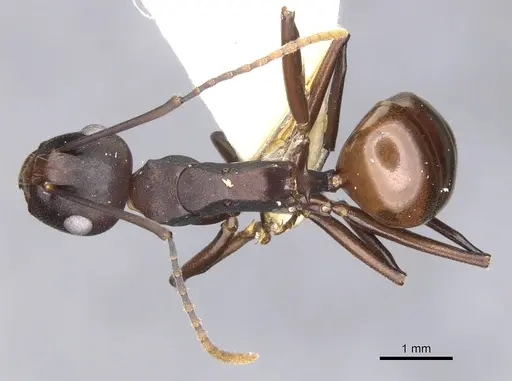
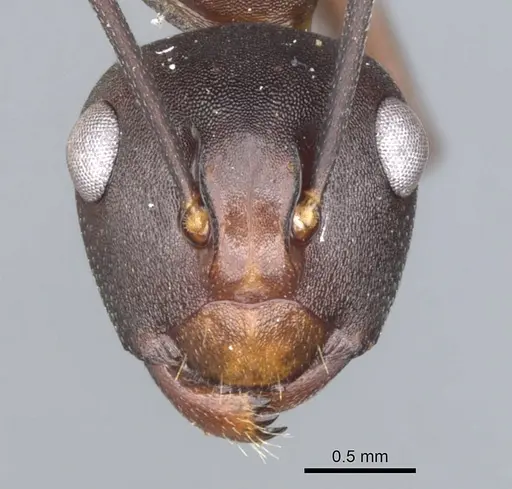
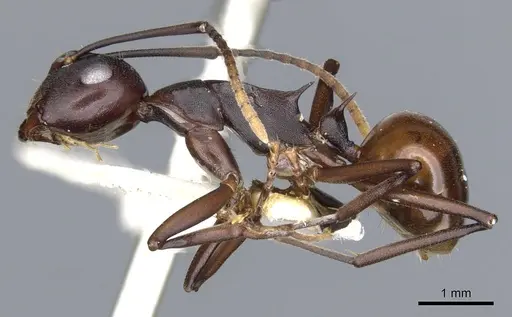
科学文献
正在加载分布地图...正在加载商品...