
Polyrhachis aureovestita
- 学名
- Polyrhachis aureovestita
- 亚属
- Myrmhopla
- 族
- Camponotini
- 亚科
- Formicinae
- 命名者
- Donisthorpe, 1937
- 地理分布
- 分布于 0 个国家/地区
物种引言
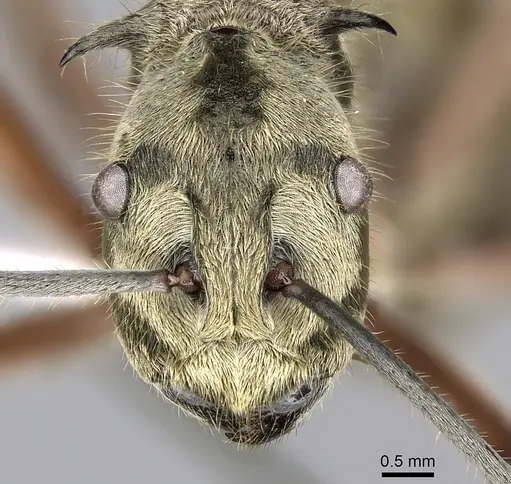
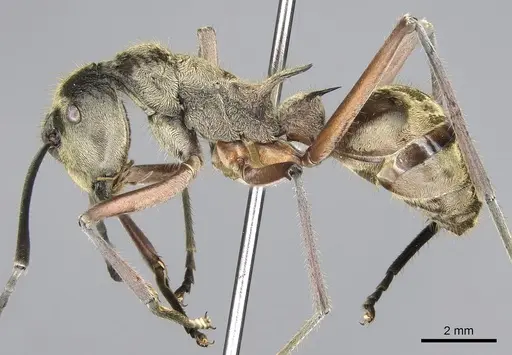
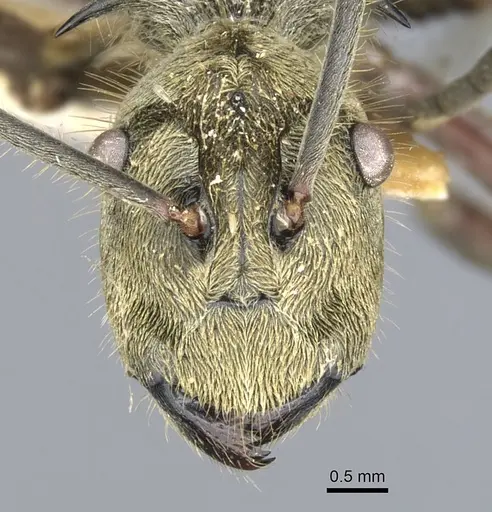
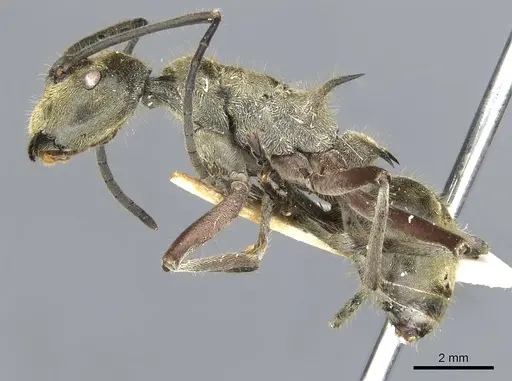
Polyrhachis aureovestita is an arboreal ant native to New Guinea and the Philippines . Workers display golden-brown to reddish coloration and carry distinctive spines on the mesosoma, which is the middle section of the ant body between the head and abdomen . This species belongs to the subgenus Myrmhopla and the sexspinosa-group . These ants build nests in wood and use silk and carton material to construct protective chambers . They produce pupal cocoons, which is unusual for Formicinae ants that typically pupate without cover . They require specialized arboreal setups and are best suited for keepers who can provide stable tropical conditions and wood-based nesting structures.
Quick Summary
- Difficulty: Medium
- Origin & Habitat: Native to New Guinea and the Philippines, inhabiting tropical forest environments where they nest arboreally in woody material [1][2].
- Colony Type: Single-queen colonies (monogyne) are typical for this genus, though this has not been confirmed for Polyrhachis aureovestita. Monogyne means colonies with only one reproductive queen.
- Size & Growth:
- Queen: size data unavailable
- Worker: size data unavailable
- Colony: Unknown, likely moderate based on related Polyrhachis species
- Growth: Moderate
- Development: Unknown, likely several months based on tropical Formicinae patterns (Development speed depends on stable warmth and humidity.)
- Antkeeping:
- Temperature: Unknown, keep warm and stable, roughly low-to-mid 20s°C and observe.
- Humidity: Provide a humidity gradient. Keep the nest substrate consistently moist but not waterlogged, with good ventilation to prevent mold in the wood.
- Diapause: Unlikely to require formal hibernation given tropical origin. They may slow down during cooler periods but should stay active year-round with proper heating.
- Nesting: Arboreal setup is essential. Provide woody material like cork bark, twigs, or small branches. They use silk and carton to bind materials and build chambers [2][3]. Y-tong nests with added wood chambers work well. Avoid acrylic nests.
- Behavior: Generally docile but defensive when threatened. Workers forage actively along branches and foliage. They are skilled climbers and can escape through small gaps. They lack a sting and instead bite while spraying formic acid from an acidopore into the wound.
- Common Issues: workers escaping through tiny gaps due to arboreal climbing ability, wood rot or mold developing if humidity stays too high without ventilation, colony rejecting terrestrial nests and refusing to establish in standard test tubes, queen failing to start a colony if kept too cold or dry, formic acid spray causing skin irritation if handled roughly
Nesting and Housing
Polyrhachis aureovestita builds nests in wood and hollow stems [2]. You must provide an arboreal setup with cork bark, twigs, or small branches they can climb and nest in [3]. These ants use silk and carton material to bind wood pieces and create sheltered chambers [2]. Y-tong nests with added wood chambers work well, but you must avoid acrylic nests [2]. Keep the nest substrate consistently moist but not waterlogged, and ensure good ventilation to stop mold from growing in the wood [2]. The outworld should include vertical surfaces or branches so workers can travel above the ground [1].
Feeding and Diet
Like most Polyrhachis species, Polyrhachis aureovestita acts as a generalist omnivore [1]. You should offer sugar sources like honey water or sugar water regularly, and protein sources like small insects (fruit flies, small crickets, mealworms) two to three times per week [1]. These ants forage actively along branches and foliage, so place food on elevated platforms that match their climbing habits [1]. Remove uneaten prey within 24 to 48 hours to prevent mold in the humid arboreal setup [1].
Behavior and Defense
Workers patrol branches and foliage looking for food [1]. They are generally docile but defend their nest vigorously when threatened [1]. These ants lack a functional sting. Instead, they bite the target and spray a stream of concentrated formic acid from an acidopore into the wound [1]. Handle them carefully to avoid the spray. Their golden coloration and distinct spines make them visually striking in captivity [1].
Frequently Asked Questions
Can I keep Polyrhachis aureovestita in a test tube?
A standard test tube setup does not work for this species. Polyrhachis aureovestita is arboreal and requires woody nesting material [2]. Use a Y-tong nest with added wood chambers, or build a naturalistic arboreal setup with cork bark, twigs, and branches they can modify with silk [3].
How long does it take for first workers to emerge?
The exact timeline is unknown. Expect several months based on typical tropical Formicinae development patterns [2]. Keep the queen undisturbed in a warm, stable environment while she raises the first brood.
What do Polyrhachis aureovestita eat?
They act as generalist omnivores [1]. Offer sugar water or honey water regularly, and protein sources like small insects two to three times per week [1]. They will also collect honeydew from aphids if available [1].
Are Polyrhachis aureovestita good for beginners?
This species suits intermediate to experienced keepers. Their arboreal nesting requirements, need for wood-based housing, and tropical temperature needs make them more challenging than beginner-friendly species [1].
Do Polyrhachis aureovestita need hibernation?
No. As a tropical species from New Guinea and the Philippines, they do not require formal hibernation [1]. Keep them warm year-round with no diapause period [1].
Report an Issue
The current care sheet is based fully on literature. See inconsistencies, or something that's incorrect? Please , it will be resolved after review from an admin. Contributing to the blogs tab also helps providing information, to make us be able to further improve the caresheets. Thank you for your support!
References

此饲养指南授权协议为 CC BY-SA 4.0 .
社区博客
CASENT0281395
在 AntWeb 上查看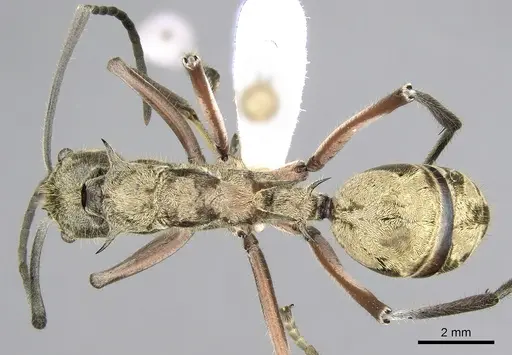
CASENT0903360
在 AntWeb 上查看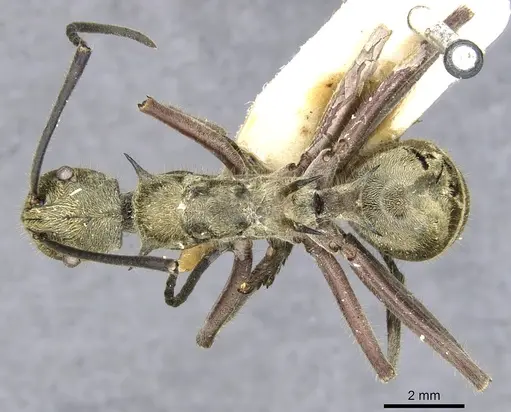
科学文献
正在加载分布地图...正在加载商品...