
Plagiolepis vladileni
- 学名
- Plagiolepis vladileni
- 族
- Plagiolepidini
- 亚科
- Formicinae
- 命名者
- Radchenko, 1996
- 地理分布
- 分布于 0 个国家/地区
物种引言
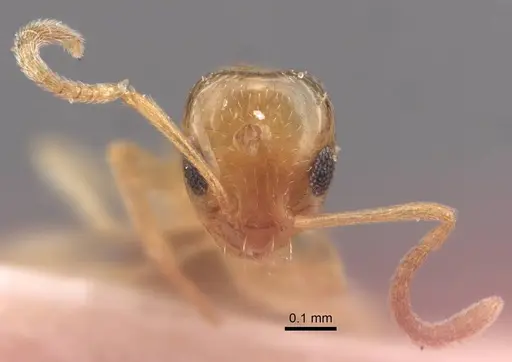
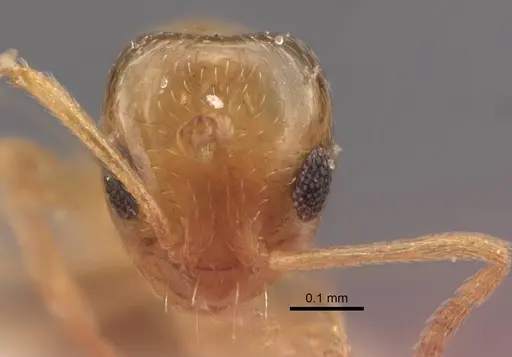
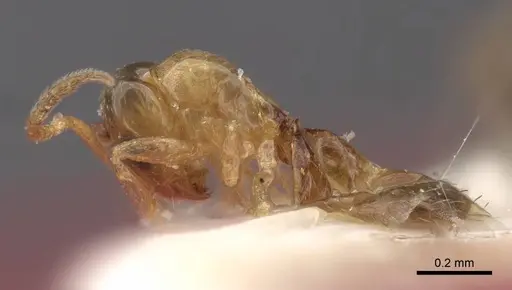
Plagiolepis vladileni is an ant species described from Turkmenistan in Central Asia . Workers are extremely small, though specific body size measurements are not available in the literature . The species belongs to the Formicinae subfamily and Plagiolepidini tribe . As a Palearctic species from an arid region, it experiences hot summers and cold winters, which may influence its seasonal activity patterns .
Quick Summary
- Difficulty: Medium
- Origin & Habitat: Turkmenistan in Central Asia, inhabiting arid to semi-arid environments [1].
- Colony Type: Unconfirmed, colony structure is not documented for this species [1].
- Size & Growth:
- Queen: Size data unavailable, no measurements provided in literature [1].
- Worker: Size data unavailable, no total length measurements provided [1].
- Colony: Unknown, no colony size data available [1].
- Growth: Unknown [1].
- Development: Unknown, no development data available [1]. (Development timeline not studied for this species.)
- Antkeeping:
- Temperature: Keep at room temperature with a gradient, based on arid region climate [1].
- Humidity: Moderate humidity, as an arid species, prefer drier conditions [1].
- Diapause: Unknown, no data on seasonal patterns [1].
- Nesting: Use dry to moderately humid nests, such as Y-tong or test tube setups, scaled to small size [1].
- Behavior: Calm and non-aggressive species. Workers are very small, so escape prevention is critical due to high risk of squeezing through gaps [1].
- Common Issues: escape prevention is critical due to extremely small size, use fine mesh and check for tiny gaps [1], limited documentation means care requirements are estimated from genus patterns rather than species-specific research [1], colony growth may be slow due to small size and lack of data [1]
Housing and Nest Setup
Plagiolepis vladileni requires careful escape prevention due to their extremely small size [1]. Use test tubes for founding colonies with a cotton barrier separating water from foraging area. For established colonies, Y-tong nests with narrow chambers work well to control humidity [1]. Cover ventilation holes with fine mesh to prevent escapes [1]. Avoid overly damp conditions as this species prefers drier environments [1].
Feeding and Diet
Like many Plagiolepis species, these ants are omnivorous [1]. Offer sugar water or honey as a constant energy source, and provide small protein sources like fruit flies or tiny insects 2-3 times per week [1]. Remove uneaten prey after 24 hours to prevent mold [1].
Temperature and Seasonal Care
Maintain temperatures at room level with a gradient, based on their arid region origin [1]. Avoid extreme temperatures, as specific requirements are not documented [1]. Diapause is unknown, so seasonal care should be adjusted based on observation [1].
Colony Establishment and Growth
Colony establishment is not documented for this species [1]. If a queen is obtained, she may seal herself in a chamber, but founding behavior is unconfirmed [1]. Colony growth is unknown, so patience is needed [1].
Behavior and Observation
Workers are active and fast-moving, but non-aggressive [1]. Their small size makes them challenging to observe, but they can be kept in simple setups [1]. Escape risk is high, so monitor closely during feeding times [1].
Frequently Asked Questions
How long does it take for Plagiolepis vladileni to produce first workers?
Development timeline is unknown, no data available for this species [1].
What do Plagiolepis vladileni ants eat?
They are omnivorous, likely feeding on sugar sources and small insects [1].
How big do Plagiolepis vladileni colonies get?
Colony size is unknown, no data available [1].
Do Plagiolepis vladileni need hibernation?
Diapause is unknown, no seasonal data available [1].
Are Plagiolepis vladileni good for beginners?
Medium difficulty due to escape risk from small size, but care requirements are not well documented [1].
What temperature should I keep Plagiolepis vladileni at?
Keep at room temperature with a gradient, based on arid region climate [1].
How do I prevent Plagiolepis vladileni from escaping?
Use fine mesh on all ventilation and check for tiny gaps due to their extremely small size [1].
Can I keep multiple Plagiolepis vladileni queens together?
Colony structure is unconfirmed, so it is safest to keep single queen colonies [1].
When should I move Plagiolepis vladileni to a formicarium?
Colony growth is unknown, so wait until the colony is active and has multiple workers before moving [1].
Report an Issue
The current care sheet is based fully on literature. See inconsistencies, or something that's incorrect? Please , it will be resolved after review from an admin. Contributing to the blogs tab also helps providing information, to make us be able to further improve the caresheets. Thank you for your support!
References

此饲养指南授权协议为 CC BY-SA 4.0 .
社区博客
CASENT0917485
在 AntWeb 上查看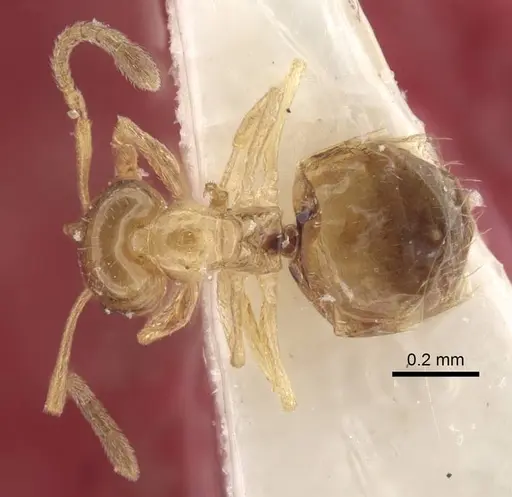
科学文献
正在加载分布地图...正在加载商品...