
Plagiolepis pissina
- 学名
- Plagiolepis pissina
- 族
- Plagiolepidini
- 亚科
- Formicinae
- 命名者
- Roger, 1863
- 地理分布
- 分布于 0 个国家/地区
物种引言
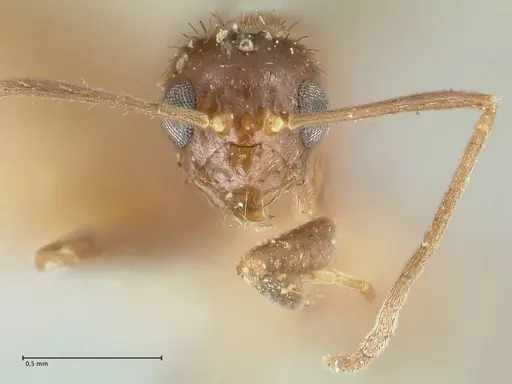
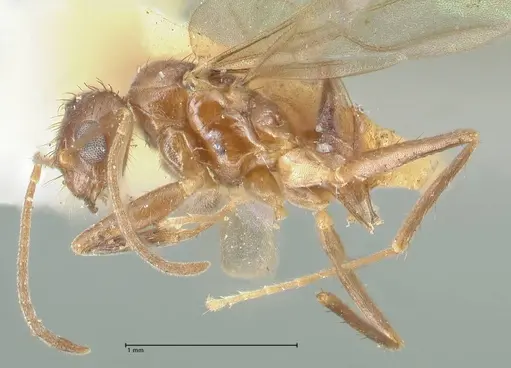
Plagiolepis pissina is a tiny ant species described from Sri Lanka (Ceylon) in 1863 . Workers are very small, about 1.5-2 mm long . The genus Plagiolepis consists of small ants found in warmer regions, often pale or yellowish . This species is poorly studied, with most records from Sri Lanka and the Indomalaya region . As a tropical species, Plagiolepis pissina likely inhabits forest edges or shaded areas, nesting in soil or under stones . They are generalist foragers, feeding on honeydew and small arthropods . Their small size makes them quick and agile, but not aggressive. Escape prevention is critical due to their minute size .
Quick Summary
- Difficulty: Medium
- Origin & Habitat: Sri Lanka (Ceylon) in the Indomalaya Region, likely in tropical forest edges or shaded areas with moist soil [1][2].
- Colony Type: Unconfirmed, no specific data on queen number or social structure.
- Size & Growth:
- Queen: Size data unavailable, no total length measurements in context. Inferred from Plagiolepis genus as approximately 4-5 mm [2].
- Worker: Approximately 1.5-2 mm [2].
- Colony: Up to several hundred workers, estimated from genus patterns [2].
- Growth: Moderate, inferred from related species.
- Development: Estimated 6-8 weeks at tropical temperatures, inferred from genus patterns [2]. (Development time is inferred, direct observations for this species are unavailable.)
- Antkeeping:
- Temperature: Keep at 24-28°C, tropical species prefers warm conditions [2].
- Humidity: Keep nest substrate consistently moist but not waterlogged, reflecting tropical forest floor habitat [2].
- Diapause: No, tropical species from Sri Lanka does not require hibernation [1][2].
- Nesting: Prefer small, tight chambers, in captivity, use test tube setups for founding, and Y-tong or plaster nests for established colonies [2].
- Behavior: Calm and non-aggressive, likely to flee threats. Tiny size makes escape prevention critical. Workers are fast-moving [2].
- Common Issues: escape prevention is critical due to tiny size, humidity control important to avoid brood death or mold, small size makes transfers risky, avoid crushing ants, wild-caught colonies may have parasites
Nest Preferences and Housing
Plagiolepis pissina requires small, tight chambers scaled to their tiny size [2]. For founding colonies, a test tube setup works well, fill with water reservoir and plug with cotton, then cover to simulate an underground chamber [2]. For established colonies with 50+ workers, transfer to a small formicarium like Y-tong or plaster nests [2]. Avoid large open spaces, these ants prefer compact areas with narrow passages [2].
Feeding and Diet
Plagiolepis pissina are generalist feeders [2]. Offer sugar water or honey water regularly, and small protein prey like fruit flies or pinhead crickets 2-3 times per week [2]. Remove uneaten prey after 24 hours to prevent mold [2].
Temperature and Seasonal Care
Maintain nest temperatures between 24-28°C [2]. Create a gradient with heating on one side, but ensure an unheated area for retreat [2]. No hibernation is needed for this tropical species [1][2].
Behavior and Temperament
Plagiolepis pissina is calm and non-aggressive, preferring to flee threats [2]. Workers are fast-moving, and escape prevention is critical due to their tiny size [2]. Use fine mesh barriers and tight lid seals to contain them [2].
Frequently Asked Questions
How long does it take for Plagiolepis pissina to raise their first workers?
Based on genus patterns, expect 6-8 weeks from egg to worker at tropical temperatures [2].
Can I keep multiple Plagiolepis pissina queens together?
Colony structure is unconfirmed. Combining unrelated queens is not recommended as they may fight [2].
What do Plagiolepis pissina ants eat?
They are generalist feeders. Offer sugar water and small protein prey like fruit flies [2].
Are Plagiolepis pissina good for beginners?
This species is rated medium difficulty due to escape prevention and temperature control needs [2].
When should I move my Plagiolepis pissina colony to a formicarium?
Transfer when the colony reaches about 50-100 workers, using a nest with small chambers [2].
Do Plagiolepis pissina need hibernation?
No, as a tropical species from Sri Lanka, they do not require hibernation [1][2].
Why are my Plagiolepis pissina escaping?
Escape prevention is critical due to their tiny size. Use fine mesh and tight seals [2].
How big do Plagiolepis pissina colonies get?
Colonies can reach up to several hundred workers, based on genus patterns [2].
What temperature is best for Plagiolepis pissina?
Keep nest temperatures between 24-28°C [2].
Report an Issue
The current care sheet is based fully on literature. See inconsistencies, or something that's incorrect? Please , it will be resolved after review from an admin. Contributing to the blogs tab also helps providing information, to make us be able to further improve the caresheets. Thank you for your support!
References

此饲养指南授权协议为 CC BY-SA 4.0 .
社区博客
FOCOL2225
在 AntWeb 上查看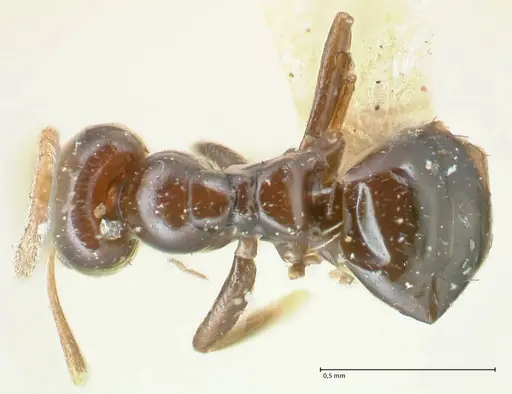
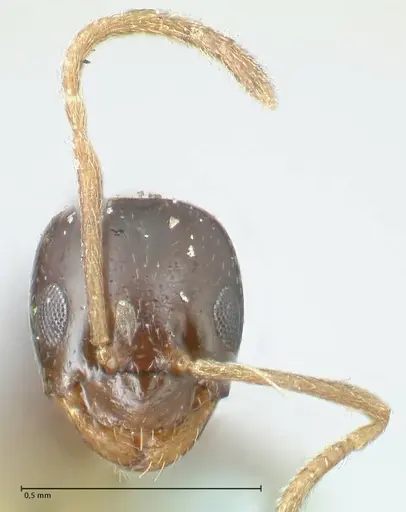
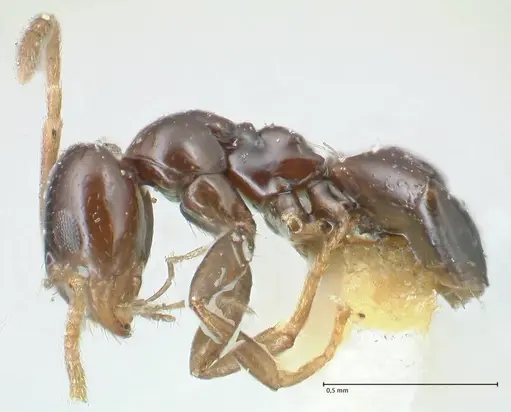
FOCOL2226
在 AntWeb 上查看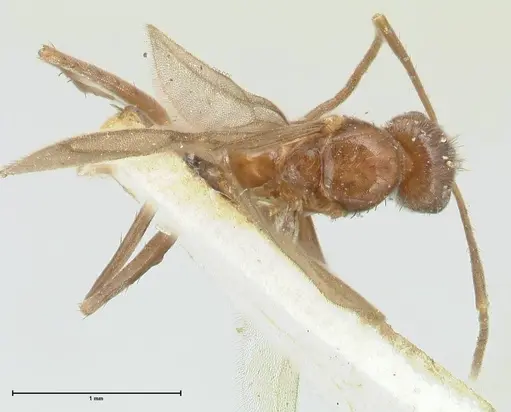
科学文献
正在加载分布地图...正在加载商品...