
Pheidole quinata
- 学名
- Pheidole quinata
- 族
- Attini
- 亚科
- Myrmicinae
- 命名者
- Eguchi, 2000
- 地理分布
- 分布于 0 个国家/地区
物种引言
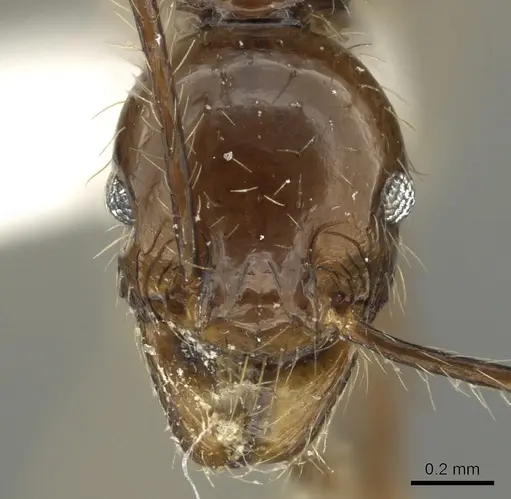
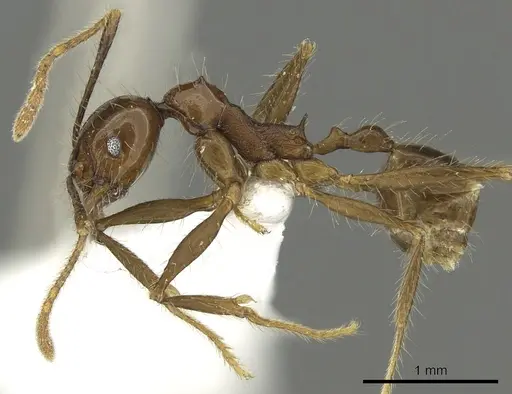
Pheidole quinata is a small ant species native to Borneo and surrounding regions in Southeast Asia. It is recognized by its distinctive 5-segmented antennal club, which sets it apart from most other Pheidole species . Major workers have a dark brown body and measure about 5.0 mm, while minor workers are lighter brown and reach 2.5-2.7 mm . The species inhabits hill forests at elevations around 1000 m, nesting in soil and leaf litter on the forest floor . Pheidole quinata belongs to the QNT (P. quinata clade), a distinct evolutionary lineage within the genus . The species was first described in 2000 and is known only from the Borneo region .
Quick Summary
- Difficulty: Medium
- Origin & Habitat: Borneo, Indonesia, and Malaysia in the Indomalaya region. These ants live in hill forests at elevations around 1000 m, nesting in soil and leaf litter on the forest floor [1].
- Colony Type: Colony structure is unconfirmed for this species. Most Pheidole species are monogyne (single queen), but this has not been specifically documented for P. quinata.
- Size & Growth:
- Queen: Size data unavailable for queens, inferred from Pheidole genus patterns to be larger than workers
- Worker: Major workers: 5.0 mm, Minor workers: 2.5-2.7 mm [1]
- Colony: Colony size data unavailable, estimated from typical Pheidole colonies to be up to several thousand workers
- Growth: Moderate
- Development: Unknown, based on tropical Pheidole patterns, estimated 5-8 weeks at 24-28°C (Development time inferred from genus-level data for tropical Pheidole species)
- Antkeeping:
- Temperature: Keep warm, roughly 24-28°C, based on tropical habitat conditions [1]. Use a heating cable to create a gradient if needed.
- Humidity: Maintain moderate to high humidity with consistently moist but not waterlogged substrate, as forest floor species require damp conditions [1].
- Diapause: Unknown, tropical species from consistent climate may not require diapause, but slight temperature reduction in cooler months is tolerated.
- Nesting: Natural nesting in soil and leaf litter [1]. In captivity, use moist substrate mixes or Y-tong/plaster nests with good moisture retention.
- Behavior: These ants are generally non-aggressive but will defend their colony if threatened. Major workers serve as soldiers and can deliver a mild sting, though this is barely noticeable to humans due to their small size. Minor workers are very small (2.5 mm), so escape prevention is important, they can squeeze through small gaps. They are active foragers on the forest floor.
- Common Issues: humidity management is critical, too dry and colonies will fail, too wet and mold becomes a problem., wild-caught colonies may contain parasites that can decimate the colony in captivity., small minor workers can get lost if the nest setup lacks proper moisture gradients., tropical species are sensitive to temperature drops, keep away from cold drafts., Pheidole colonies can grow large quickly, ensure you have space for expansion.
Nest Preferences and Housing
In the wild, Pheidole quinata nests in soil and leaf litter on the forest floor of hill forests in Borneo [1]. They prefer dark, humid microhabitats with stable temperatures. For captive care, use a mixture of soil and peat or coco fiber as substrate, kept consistently moist but not waterlogged. A depth of 5-10 cm allows them to create brood chambers. Alternatively, a Y-tong nest with narrow chambers and good moisture retention works well. Maintain high humidity with adequate ventilation to prevent mold. Place the nest in a dark area or cover three sides to simulate their natural environment.
Feeding and Diet
Pheidole quinata is a generalist omnivore like most Pheidole species. They accept protein sources including small insects such as fruit flies and pinhead crickets, and they also collect seeds. Offer protein prey 2-3 times per week and provide a constant sugar source like sugar water or honey. Remove uneaten prey after 24-48 hours to prevent mold. Prey items should be appropriately sized for their small workers.
Temperature and Seasonal Care
As a tropical species from Borneo, P. quinata requires warm conditions year-round. Maintain temperatures between 24-28°C for optimal brood development [1]. Temperatures below 22°C may slow activity, while above 32°C can be stressful. Use a heating cable on one side of the nest to create a gradient if room temperature is low. Unlike temperate species, they do not require a true hibernation diapause, but slight seasonal variations are tolerated.
Colony Founding
The colony founding behavior of P. quinata has not been directly documented. Founding colonies should be kept in complete darkness with minimal disturbance. After the first workers emerge, the colony will expand as the queen continues laying eggs and foragers bring food back to the nest.
Behavior and Defense
Pheidole quinata has distinct worker castes: large major workers (soldiers) and smaller minor workers (foragers). Majors are about 5 mm and serve colony defense, while minors at 2.5 mm handle foraging and brood care. When disturbed, majors may emerge to defend the colony. The sting is mild due to their small size and is rarely felt by humans. They are not aggressive toward keepers but will defend their nest territory. [1]
Frequently Asked Questions
How long does it take for Pheidole quinata to produce first workers?
Specific data unavailable, but based on typical Pheidole development at tropical temperatures (24-28°C), expect first workers in approximately 5-8 weeks after the queen lays eggs.
What do Pheidole quinata ants eat?
They are generalist omnivores. Offer small insects like fruit flies as protein 2-3 times per week and provide a constant sugar source such as sugar water or honey.
Can I keep multiple Pheidole quinata queens together?
This has not been documented for this species. Most Pheidole are monogyne (single queen), and combining unrelated queens typically results in fighting. It is not recommended unless specific evidence exists.
What temperature do Pheidole quinata ants need?
Keep them at roughly 24-28°C, based on their tropical habitat [1]. Avoid temperatures below 22°C or above 32°C.
Are Pheidole quinata good for beginners?
They are rated as medium difficulty. While manageable for keepers who can maintain warm, humid conditions, the main challenges are humidity management and providing appropriate small prey items.
How big do Pheidole quinata colonies get?
Colony size data unavailable, but based on typical Pheidole growth patterns, colonies may reach up to several thousand workers over time.
Do Pheidole quinata need hibernation?
Unknown, as a tropical species from Borneo with consistent temperatures, they likely do not require hibernation, but slight temperature reduction in winter is acceptable.
When should I move Pheidole quinata to a formicarium?
Keep founding colonies in a test tube setup until you see a small number of workers. Transition to a naturalistic setup or formicarium with appropriate humidity control gradually.
Why are my Pheidole quinata dying?
Common causes include too low humidity (forest floor species need moist substrate), temperature too cold (below 22°C), mold from overwatering, or stress from disturbance. Wild-caught colonies may carry parasites.
Report an Issue
The current care sheet is based fully on literature. See inconsistencies, or something that's incorrect? Please , it will be resolved after review from an admin. Contributing to the blogs tab also helps providing information, to make us be able to further improve the caresheets. Thank you for your support!
References

此饲养指南授权协议为 CC BY-SA 4.0 .
社区博客
CASENT0901624
在 AntWeb 上查看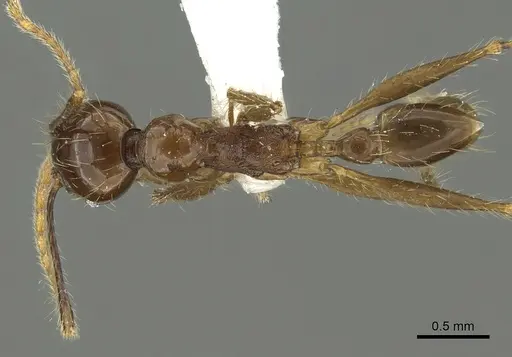
科学文献
正在加载分布地图...正在加载商品...