
Pheidole foveolata
- 学名
- Pheidole foveolata
- 族
- Attini
- 亚科
- Myrmicinae
- 命名者
- Eguchi, 2006
- 地理分布
- 分布于 0 个国家/地区
物种引言
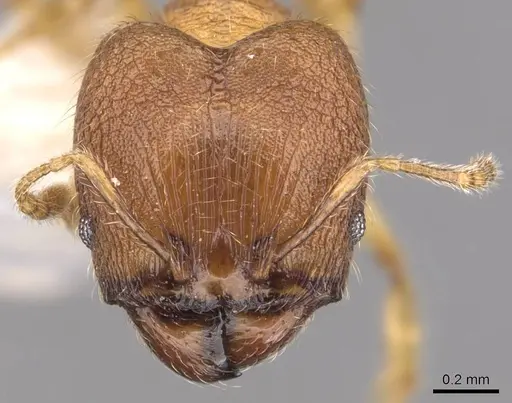
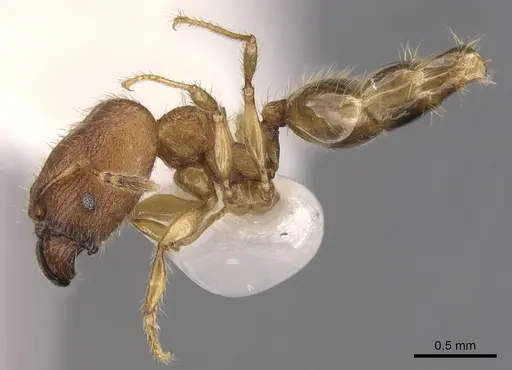
Pheidole foveolata is a small ant species from northern Vietnam, first described in 2006 by Katsuyuki Eguchi. Like other Pheidole, they have two worker castes: smaller minors and larger majors. The majors act as repletes – they store liquid food in their enlarged abdomens to share with the colony during lean times. The species nests in soil at forest edges around 1100 m elevation in the Sa Pa region of Lao Cai province . Queen measurements are unavailable, and the actual body length of workers has not been recorded; only head widths are known from the original description .
Quick Summary
- Difficulty: Medium
- Origin & Habitat: Northern Vietnam (Sa Pa, Lao Cai province) at about 1100 m elevation. Lives at forest edges and nests in the soil [1][2].
- Colony Type: Unconfirmed. Colonies contain minor workers and major workers (repletes) [1][2]. Queen number has not been studied.
- Size & Growth:
- Queen: Unconfirmed – no queen measurements in original description
- Worker: Data unavailable – body length not measured. Only head width is documented (minor HW 0.42–0.46 mm, major HW 0.91–0.97 mm), but those are not body size [1][2].
- Colony: Unknown, estimated up to several hundred workers based on typical Pheidole colony sizes (inferred from genus)
- Growth: Moderate (inferred from genus)
- Development: Estimated 6–8 weeks at warm temperatures (inferred from genus) (Development time has not been studied for this species. The estimate is based on typical Pheidole patterns.)
- Antkeeping:
- Temperature: Keep around 22–26°C based on the subtropical forest‑edge habitat at moderate elevation. Avoid prolonged temperatures above 30°C or below 18°C.
- Humidity: Provide a gradient. The nest area should be slightly moist (like damp soil), with a drier outworld. Since they nest in soil, moisture retention is important.
- Diapause: Unknown, a mild winter slowdown may occur at subtropical latitudes (22°N), but this has not been documented. Reduce feeding if activity slows, but do not cold‑store.
- Nesting: They nest in soil in the wild [1][2]. In captivity, a test tube setup works for founding. Later transition to a Y‑tong (AAC) or plaster nest with compact chambers. Keep the nesting material slightly moist without waterlogging.
- Behavior: Generally peaceful – typical of Pheidole. Major workers serve as repletes, storing liquid food in their abdomens, minors are the main foragers [1][2]. The species has a functional stinger (subfamily Myrmicinae, tribe Attini), but stings are mild and not medically significant. Escape risk is moderate – they are small, so use fine mesh and tight lids (gaps under 0.5 mm). Active foragers that will collect seeds, small insects, and honeydew.
- Common Issues: colonies may slow or stall if temperatures drop – keep warm during active growth., replete majors can look bloated or dead – this is normal food storage, not mortality., small size means escape prevention is critical – seal all gaps under 0.5 mm., wild‑caught colonies may have parasites or diseases – quarantine new queens., founding phase can be slow, patience is needed (founding method is unconfirmed).
Housing and Nest Setup
For founding, a test tube setup works well – fill one‑third with water, plug with cotton, and provide a dry landing area. Since the queen naturally nests in soil, she may start a chamber in the substrate. Once you have 20–30 workers, move them to a Y‑tong (AAC), plaster, or soil nest with compact chambers. Keep the nesting area slightly moist (like squeezed‑out sponge) but not waterlogged. Because minors are very small (head width under 0.5 mm), seal any gaps larger than 0.5 mm to prevent escapes. [1][2]
Feeding and Diet
Offer a mix of protein (small insects like fruit flies, pinhead crickets, or small mealworms) and sugars (honey water, sugar water). They may also collect small seeds. Major workers act as repletes – they store liquid food in their crops and share it with the colony through trophallaxis [1][2]. Feed protein every 2–3 days and keep sugar water available at all times. Remove uneaten prey after 24–48 hours to prevent mold. The replete system means they can handle short periods without fresh food, but still avoid long starvation.
Temperature and Seasonal Care
Maintain 22–26°C for optimal activity. This species comes from subtropical northern Vietnam at about 1100 m elevation, so it prefers moderate warmth. Avoid extended exposure above 30°C or below 18°C. In winter, a slight reduction in temperature and feeding may be safe, but true hibernation is not required. Use a heating cable on one side of the nest to create a gradient if your room is cool.
Understanding Replete Behavior
The major workers of Pheidole foveolata serve as repletes – living food storage containers [1][2]. When you provide liquid food like honey water, majors drink large amounts and store it in their crop (social stomach). Their abdomens become visibly enlarged, which may look like bloat or death – this is completely normal. The stored liquid is later regurgitated to feed hungry nestmates. This adaptation helps the colony survive food shortages. Do not attempt to squeeze or puncture a replete – it causes injury or death. You may notice some majors always appear ‘full’ while others are ‘empty’. That is the replete system working.
Colony Development and Growth
Colonies develop through the typical founding sequence: eggs, larvae, pupae, then workers. The first workers (nanitics) may take 6–8 weeks to emerge at warm temperatures (inferred from genus). Once the first workers arrive, the queen stops leaving the nest and all brood care and foraging are done by workers. Growth is moderate – expect 50 workers within a few months under good conditions, then the colony size increases as more brood develops. Major workers appear once the colony is large enough to support them. Patience is needed, it may take 1–2 years to reach several hundred workers.
Behavior and Temperament
This species is peaceful and not aggressive. Major workers can bite if the colony is threatened, but their main role is food storage (repletes) rather than defense. They have a functional stinger (Myrmicinae tribe Attini), but the sting is mild and poses no real issue for keepers. Foragers (mostly minors) are active and will investigate new food sources. Activity patterns shift based on temperature and food availability. Because of their small size, escape prevention is paramount – use fine mesh on ventilation holes and ensure all seals fit tightly. [1][2]
Frequently Asked Questions
How long does it take for Pheidole foveolata to produce first workers?
Expect first workers (nanitics) to emerge in about 6–8 weeks at optimal temperatures of 24–26°C. This estimate is based on typical Pheidole development, not directly studied for this species.
What do Pheidole foveolata ants eat?
They are generalists. Provide protein (small insects like fruit flies, pinhead crickets, small mealworms) and sugars (honey water, sugar water). They may also collect small seeds. Feed protein every 2–3 days and keep sugar water available constantly.
What is the replete behavior in Pheidole foveolata?
Major workers serve as repletes – they store liquid food in their distended abdomen (crop) and share it with the colony through mouth‑to‑mouth feeding (trophallaxis) [1][2]. This allows the colony to survive lean times. You may see some majors looking ‘bloated’ – that is normal, not a sign of illness.
What temperature do Pheidole foveolata need?
Keep them at 22–26°C. They come from subtropical northern Vietnam and prefer moderate warmth. Avoid temperatures above 30°C or below 18°C for extended periods.
Are Pheidole foveolata good for beginners?
They are a good intermediate species – peaceful, no painful sting, and interesting replete behavior. However, their small size requires careful escape prevention, and the founding stage can take patience.
How big do Pheidole foveolata colonies get?
The maximum colony size is not documented. Based on typical Pheidole, they likely reach several hundred workers over 1–2 years under good conditions.
Do Pheidole foveolata need hibernation?
Probably not a true hibernation. Given their subtropical origin, a mild winter slowdown is possible – reduce feeding if activity drops and allow temperatures a few degrees cooler, but do not cold‑store them.
When should I move Pheidole foveolata to a formicarium?
Wait until the colony has 20–30 workers before moving from a test tube setup. Signs they need more space: workers frequently exploring outside the nest area, or the test tube becoming moldy.
Why do some major workers look bloated or swollen?
That is completely normal – these are repletes storing food. Major workers drink liquid food, store it in their crop, and their abdomen expands to hold it. They then share the food with other ants through trophallaxis [1][2].
Report an Issue
The current care sheet is based fully on literature. See inconsistencies, or something that's incorrect? Please , it will be resolved after review from an admin. Contributing to the blogs tab also helps providing information, to make us be able to further improve the caresheets. Thank you for your support!
References

此饲养指南授权协议为 CC BY-SA 4.0 .
社区博客
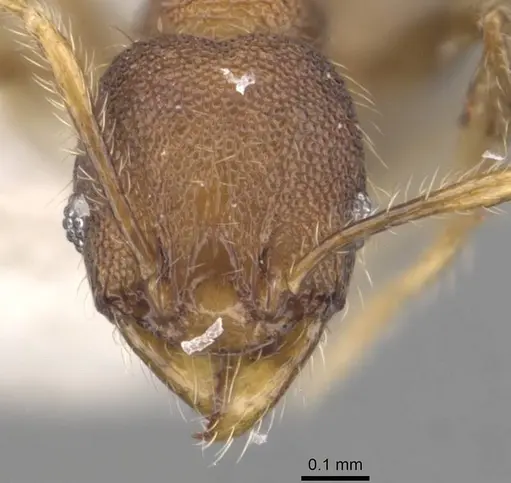
CASENT0905881
在 AntWeb 上查看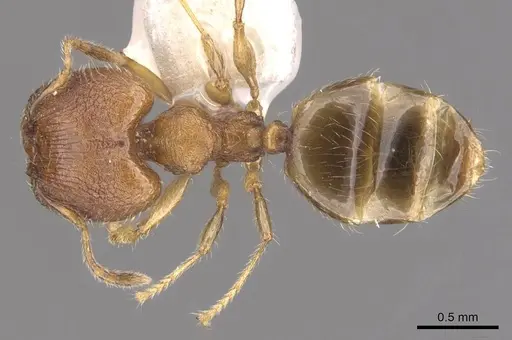
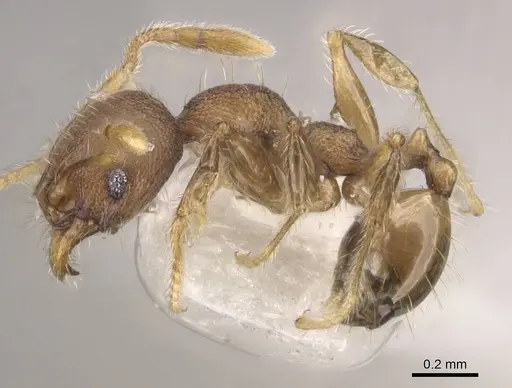
CASENT0905882
在 AntWeb 上查看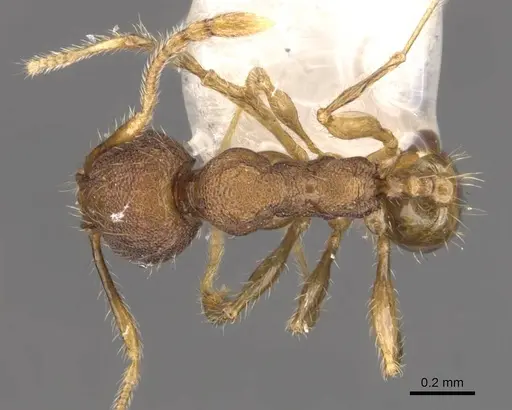
科学文献
正在加载分布地图...正在加载商品...