
Pheidole defecta
- 学名
- Pheidole defecta
- 族
- Attini
- 亚科
- Myrmicinae
- 命名者
- Santschi, 1923
- 地理分布
- 分布于 0 个国家/地区
物种引言
Pheidole defecta is a dimorphic ant species native to Guatemala, producing two distinct worker castes: larger major workers and smaller minor workers . The species was first described from Guatemala, placing it in the Central American tropical region . Size data is unavailable from context, but based on Pheidole genus patterns, workers are typically around 2-4 mm for minors and 4-6 mm for majors, with queens around 8-10 mm. As a Pheidole species, it exhibits the classic big-headed ant morphology with majors having enlarged heads for defense and seed processing.
Quick Summary
- Difficulty: Medium
- Origin & Habitat: Guatemala, Central America [1]. Based on typical Pheidole habitat preferences, this species likely nests in tropical forest floors, often in soil or under stones in shaded, humid areas.
- Colony Type: Unconfirmed, context does not specify queen number or social structure.
- Size & Growth:
- Queen: Size data unavailable, but inferred from Pheidole genus to be around 8-10 mm
- Worker: Size data unavailable, but inferred from Pheidole genus: minors ~2-4 mm, majors ~4-6 mm
- Colony: Estimated up to several hundred workers at maturity
- Growth: Moderate, inferred from genus patterns
- Development: Timeline unknown, based on tropical species, likely several weeks at warm temperatures (Development is temperature-dependent, warmer conditions accelerate growth)
- Antkeeping:
- Temperature: Keep warm, roughly 24-28°C, as inferred from tropical habitat. Use a heating gradient if needed.
- Humidity: Keep nest substrate consistently moist but not waterlogged, as inferred from tropical preferences.
- Diapause: No, tropical species do not require hibernation. Keep temperatures stable year-round.
- Nesting: Use nests with moist substrate, such as plaster or soil nests, as inferred from genus patterns. Ensure chambers are sized for major workers.
- Behavior: Generally peaceful but will defend the colony if threatened. Major workers serve as defenders and seed processors. Escape risk is moderate, they can climb smooth surfaces, so use standard barrier methods.
- Common Issues: colonies may stall if temperatures drop below 20°C, keep them warm, major workers can get stuck in narrow tubing, use appropriately sized connections, overfeeding can lead to mold problems in the nest, wild-caught colonies may have parasites that need treatment, queens can be damaged during founding if disturbed, leave them completely alone
Housing and Nest Setup
Pheidole defecta does well in standard ant keeping setups. Test tube setups work well for founding colonies, use a water tube attached to provide humidity. Once the colony reaches a moderate size, you can move them to a formicarium. Plaster nests or soil nests both work well. The key is maintaining moisture in the nest material while providing a water source. Because major workers have large heads, ensure any tubing and chambers are sized appropriately, narrow connections can trap or damage majors. A small outworld for foraging allows you to feed without disturbing the nest [1].
Feeding and Diet
Pheidole species are omnivorous with a preference for protein. In captivity, offer protein sources like mealworms, small crickets, or fruit flies twice weekly. They also readily accept sugar water, honey, or diluted maple syrup. Major workers are specialized for processing seeds, so you can occasionally offer small seeds or grain as enrichment. Remove uneaten protein within 24 hours to prevent mold. Keep sugar water available constantly in the foraging area.
Temperature and Seasonal Care
As a tropical species from Guatemala, Pheidole defecta needs warm temperatures. Keep them roughly between 24-28°C, using a heating cable on one part of the nest to create a warm zone if needed. They do not require hibernation or cooling periods, maintaining stable tropical conditions year-round is best. Avoid temperatures below 20°C as this can slow brood development.
Colony Development
Pheidole colonies grow through a well-defined caste system. The queen produces only minor workers initially. Once the colony reaches a certain size, the queen begins producing major workers with enlarged heads for defense and seed processing. A mature colony can have hundreds of majors. Development time from egg to worker is unknown but likely several weeks at optimal temperatures. Growth is steady but not extremely fast, patience is needed during the founding phase [1].
Frequently Asked Questions
How long does it take for Pheidole defecta to produce first workers?
First workers typically emerge several weeks after the queen lays eggs, assuming warm temperatures around 24-28°C. The founding phase requires patience, the queen will remain sealed in her chamber raising the first brood alone.
When should I move my Pheidole colony to a formicarium?
Move to a formicarium once the colony reaches a moderate size, such as 30-50 workers. At this size, they need more space and a proper nest environment. Test tubes become cramped with larger colonies.
What do I feed Pheidole defecta?
Offer protein (small insects like mealworms, fruit flies, or crickets) twice weekly, plus a constant sugar source (sugar water, honey, or maple syrup). They also accept seeds and grains as major workers can process these.
Are Pheidole defecta good for beginners?
They are moderate difficulty, easier than some exotic species but requiring more attention to temperature and humidity than temperate species. They are rewarding to watch with their distinct worker castes.
How big do Pheidole defecta colonies get?
Mature colonies can reach up to several hundred workers, including a significant number of major workers. Size data is unavailable from context, but inferred from genus patterns.
Do I need to hibernate Pheidole defecta?
No, as a tropical species from Guatemala, they do not require hibernation. Keep them at warm tropical temperatures year-round.
Why are my major workers getting stuck?
Major workers have large heads that can get stuck in narrow tubing. Use appropriately sized connections and avoid narrow tubes. Ensure any gaps or holes are either too small for majors to enter or large enough for them to pass through completely.
Report an Issue
The current care sheet is based fully on literature. See inconsistencies, or something that's incorrect? Please , it will be resolved after review from an admin. Contributing to the blogs tab also helps providing information, to make us be able to further improve the caresheets. Thank you for your support!
References

此饲养指南授权协议为 CC BY-SA 4.0 .
社区博客
CASENT0913303
在 AntWeb 上查看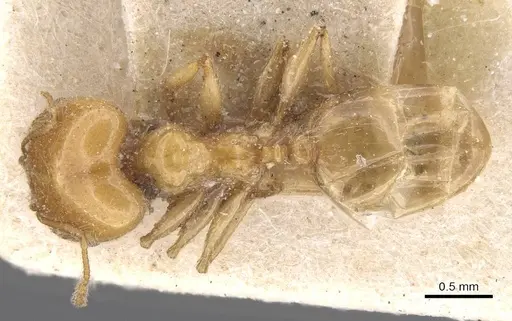
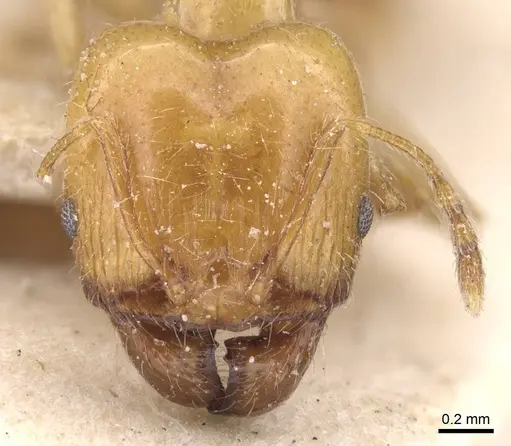
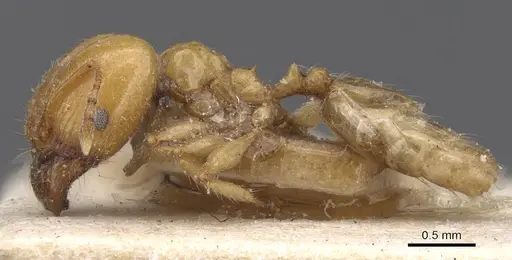
科学文献
正在加载分布地图...正在加载商品...