
Parasyscia polynikes
- 学名
- Parasyscia polynikes
- 亚科
- Dorylinae
- 命名者
- Wilson, 1959
- 地理分布
- 分布于 0 个国家/地区
物种引言
Parasyscia polynikes is a small ant species in the Dorylinae subfamily, found in the Oceanian region including New Guinea and surrounding islands . Workers show size polymorphism with allometric growth, but specific body size measurements are unavailable . Colonies are small, with documented sizes around 20 workers . This species exhibits allometric growth, where smaller workers have more slender bodies compared to larger workers, a trait common in non-army ant dorylines .
Quick Summary
- Difficulty: Medium
- Origin & Habitat: Oceanian region, tropical islands and forests [1]. Likely nests in soil, under stones, or in decaying wood in humid environments.
- Colony Type: Unconfirmed, research does not specify queen number, but based on Dorylinae patterns, likely monogyne (single queen).
- Size & Growth:
- Antkeeping:
- Behavior: Workers are predatory and may show aggression when defending the colony. Escape risk is high due to small size, use fine mesh and tight barriers.
- Common Issues: small colony size makes colonies fragile and sensitive to disturbance., tiny size creates high escape risk, use excellent barrier prevention., predatory diet requires live prey, may be difficult to establish feeding routine., humidity requirements are critical, dry conditions quickly harm brood.
Housing and Nest Setup
For founding colonies, use a test tube setup with water and cotton plug. For established colonies, transition to small nests with moist substrate, such as plaster or soil-based nests. Avoid acrylic nests, use Y-tong, plaster, or 3D-printed nests instead. Provide tight, enclosed spaces that mimic natural nesting in soil or under stones [2].
Feeding and Diet
Feed small live prey such as fruit flies, pinhead crickets, or tiny mealworms. Offer prey twice weekly, removing uneaten items after 24 hours. Sugar sources are not essential but can be offered occasionally. Portion control is important due to small colony size [2].
Temperature and Humidity
Maintain temperatures around 24-28°C with a gentle gradient. Humidity should be kept consistent with moist substrate, avoiding waterlogged conditions. Mist the outworld occasionally and ensure water reservoirs stay filled [2].
Colony Dynamics and Growth
Colonies remain small, with up to 20 workers [2]. Workers show allometric growth, with smaller slender workers and larger robust workers [2]. Growth is slow and incremental, and colonies are sensitive to disturbance during founding [2].
Behavior and Temperament
Workers are predatory and may be aggressive when defending the colony or capturing prey. They forage individually rather than in swarms. Due to their tiny size, escape prevention is critical, use fluon on nest edges and seal all connections [2].
Frequently Asked Questions
How long does it take for Parasyscia polynikes to produce first workers?
Estimated 6-8 weeks from egg to first worker at optimal tropical temperatures, based on typical Dorylinae development patterns [2].
Can I keep multiple Parasyscia queens together?
Not recommended, as the colony type is unconfirmed but likely monogyne. Combining unrelated queens has not been documented and may result in fighting.
What do Parasyscia polynikes eat?
They are predatory and need live small invertebrates like fruit flies or tiny crickets. Remove uneaten prey after 24 hours to prevent mold [2].
How big do Parasyscia polynikes colonies get?
Colonies remain small, with up to 20 workers based on field observations [2].
Do Parasyscia polynikes need hibernation?
No, hibernation is not required as a tropical species. Maintain warm temperatures year-round [2].
Are Parasyscia polynikes good for beginners?
This species is rated as Medium difficulty. Small colony size and specific humidity requirements make them somewhat challenging, but manageable with some experience.
When should I move Parasyscia polynikes to a formicarium?
Wait until the colony has at least 10-15 workers before transitioning. Keep them in a test tube setup as long as possible, and ensure the new setup maintains humidity levels [2].
Why are my Parasyscia polynikes dying?
Common causes include dry conditions, temperature extremes, overfeeding leading to mold, or escape through tiny gaps. Check environmental parameters first.
What is the best nest type for Parasyscia polynikes?
Test tubes work best for founding colonies. For established colonies, use small plaster or soil-based nests with moist substrate. Avoid acrylic nests [2].
Report an Issue
The current care sheet is based fully on literature. See inconsistencies, or something that's incorrect? Please , it will be resolved after review from an admin. Contributing to the blogs tab also helps providing information, to make us be able to further improve the caresheets. Thank you for your support!
References

此饲养指南授权协议为 CC BY-SA 4.0 .
社区博客
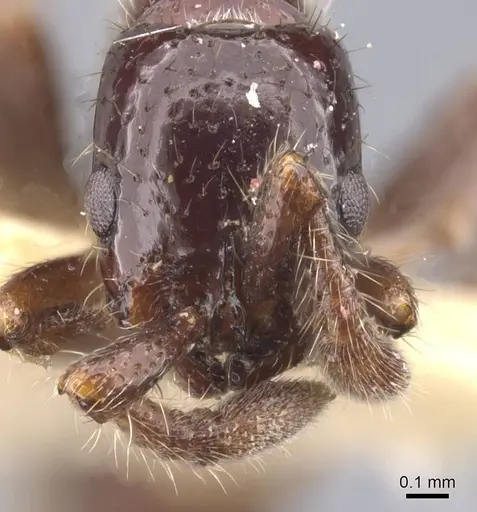
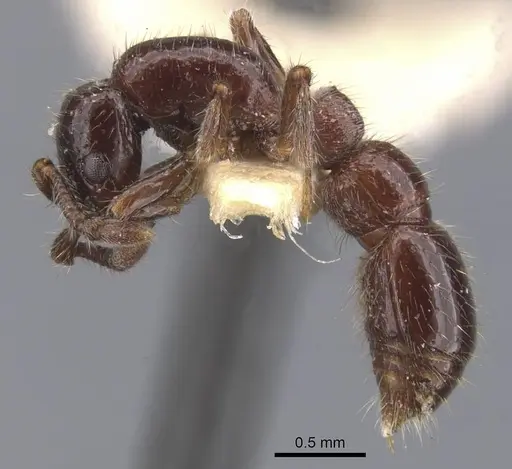
CASENT0911263
在 AntWeb 上查看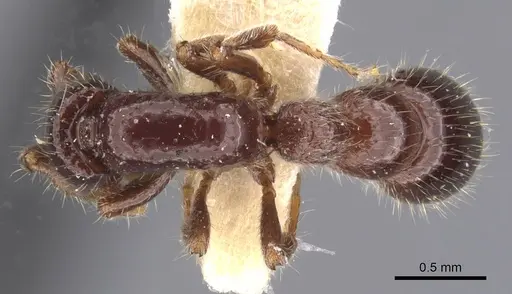
科学文献
正在加载分布地图...正在加载商品...