
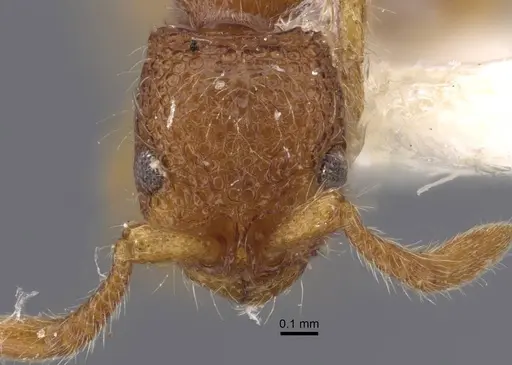
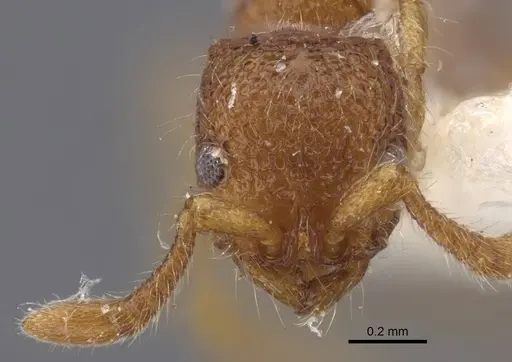
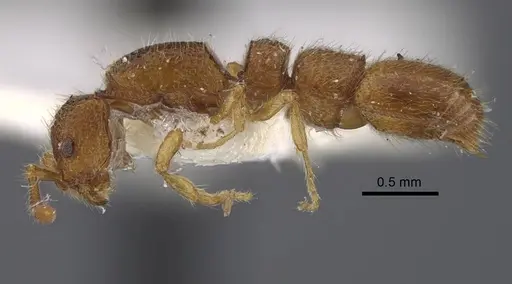
Parasyscia foveolata
- 学名
- Parasyscia foveolata
- 亚科
- Dorylinae
- 命名者
- Radchenko, 1993
- 地理分布
- 分布于 0 个国家/地区
物种引言
Parasyscia foveolata is a species in the Dorylinae subfamily, which includes army ants . This species is found in the Oriental region, including China . Size data for workers and queens is not available. Like other Dorylinae, they are predatory and form colonies that raid for food . This species is poorly studied, with limited information on its biology and care requirements.
Quick Summary
- Difficulty: Unknown, limited data available
- Origin & Habitat: Oriental region including China [2]. Typical habitat is tropical forests and humid woodland areas [1].
- Colony Type: Colony structure is unconfirmed. Based on Dorylinae patterns, colonies are typically single-queen [1].
- Size & Growth:
- Queen: Size data unavailable
- Worker: Size data unavailable
- Colony: Unknown
- Growth: Unknown
- Development: Unknown, no data available (Development timeline is not documented for this species.)
- Antkeeping:
- Temperature: Temperature requirements are unconfirmed. Based on Dorylinae patterns, keep between 22-28°C [1].
- Humidity: Humidity requirements are unconfirmed. Based on Dorylinae patterns, keep substrate consistently moist but not waterlogged [1].
- Diapause: Diapause requirements are unconfirmed. As a tropical species, formal hibernation may not be required [1].
- Nesting: Natural nesting habits are unconfirmed. Based on Dorylinae patterns, they may prefer humid nest sites like rotting wood or soil cavities [1]. In captivity, use a test tube setup or small nest with good humidity retention.
- Behavior: Behavior is unconfirmed for this species. Dorylinae ants are typically predatory and may defend their colonies aggressively. Due to their small size, escape prevention is essential [1].
- Common Issues: limited species-specific care information makes proper husbandry challenging., colony may fail if temperature and humidity requirements are not met., tiny size means excellent escape prevention is essential., predatory diet may be difficult to replicate in captivity.
Species Overview
Parasyscia foveolata is a Dorylinae ant species described from the Oriental region [2]. Like other Dorylinae, they are predatory and form colonies that raid for food [1]. This species is poorly studied, so detailed care recommendations are limited.
Housing and Nest Setup
Due to limited data, housing must be based on general Dorylinae preferences. Use a small test tube setup for founding colonies, providing consistent humidity [1]. For established colonies, use a small nest with chambers scaled to their size. Maintain high humidity and ensure escape-proof connections due to their tiny size [1].
Feeding and Diet
The natural diet is not documented, but Dorylinae ants are predatory on other insects [1]. In captivity, offer small live prey such as fruit flies or pinhead crickets. Some colonies may accept protein gels or dead insects. Feed every 2-3 days and remove uneaten prey.
Temperature and Humidity
Based on Dorylinae patterns, aim for temperatures of 22-28°C and high humidity [1]. Keep substrate moist but not waterlogged. Monitor condensation in test tube setups.
Colony Development
No specific development data exists for this species. Based on Dorylinae patterns, colony growth is slow, and colonies may remain small [1]. Be patient during founding and avoid disturbing the queen.
Frequently Asked Questions
How long does it take for Parasyscia foveolata to produce first workers?
The egg-to-worker timeline is unconfirmed for this species. Based on general Dorylinae patterns, it may take several weeks, but specific data is lacking [1].
What do Parasyscia foveolata ants eat?
Like other Dorylinae ants, they are predatory. Offer small live prey such as fruit flies, small crickets, and micro-arthropods [1]. Some colonies may accept honey or sugar water experimentally, but live protein is likely the primary food source.
Are Parasyscia foveolata ants aggressive?
Aggression levels are unconfirmed for this specific species. However, Dorylinae ants typically defend their colonies vigorously and may attack threats aggressively [1]. Their small size makes them less of a direct threat to humans.
Do Parasyscia foveolata ants sting?
Stinging ability is unconfirmed for this species. Most small Dorylinae ants have stingers but are too small to penetrate human skin effectively [1]. Handle with care regardless.
What temperature do Parasyscia foveolata ants need?
Temperature requirements are unconfirmed but likely 22-28°C based on Dorylinae patterns [1]. Start around 24-26°C and adjust based on colony activity.
How big do Parasyscia foveolata colonies get?
Maximum colony size is unknown. Based on typical Dorylinae patterns, colonies may reach several hundred workers [1].
Is Parasyscia foveolata a good species for beginners?
This species is not recommended for beginners due to very limited care information available. The predatory diet and specific humidity requirements make it challenging [1]. Consider starting with better-documented species.
Do Parasyscia foveolata queens need to forage during founding?
Founding behavior is unconfirmed for this species. Most Dorylinae queens are claustral, but this has not been documented for Parasyscia foveolata specifically [1].
Does Parasyscia foveolata need hibernation?
Diapause requirements are unconfirmed. As a tropical species from the Oriental region, they likely do not require formal hibernation but may reduce activity during cooler periods [1].
How do I set up a nest for Parasyscia foveolata?
Use a small test tube setup for founding colonies, transitioning to a small nest as the colony grows. Maintain high humidity and ensure all connections are escape-proof due to their tiny size [1].
Report an Issue
The current care sheet is based fully on literature. See inconsistencies, or something that's incorrect? Please , it will be resolved after review from an admin. Contributing to the blogs tab also helps providing information, to make us be able to further improve the caresheets. Thank you for your support!
References

此饲养指南授权协议为 CC BY-SA 4.0 .
社区博客
CASENT0917354
在 AntWeb 上查看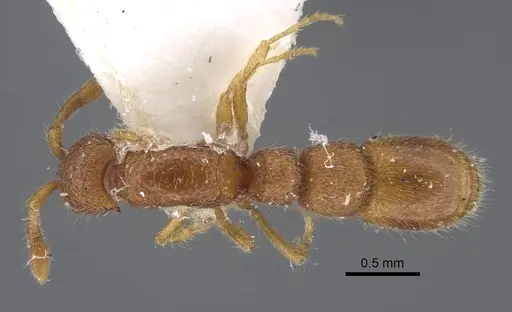
科学文献
正在加载分布地图...正在加载商品...