
Odontomachus scifictus
- 学名
- Odontomachus scifictus
- 族
- Ponerini
- 亚科
- Ponerinae
- 命名者
- Sorger & Zettel, 2011
- 地理分布
- 分布于 0 个国家/地区
物种引言
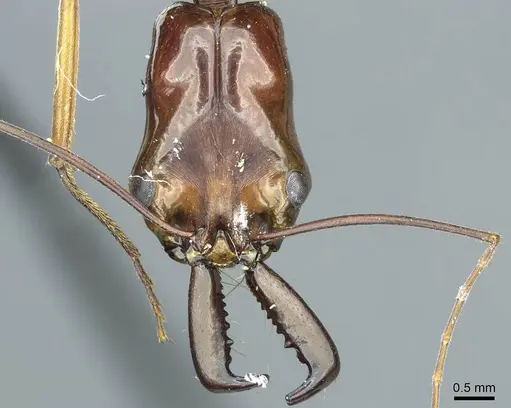
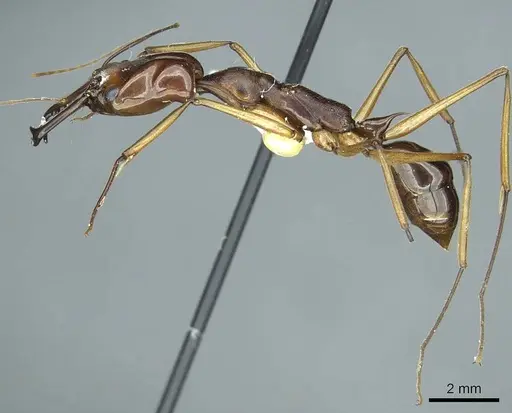
Odontomachus scifictus is a large trap-jaw ant endemic to Camiguin Island in the Philippines. Workers have a total length of 12.6 to 15.3 mm, with a uniformly reddish-brown, glossy appearance . They inhabit shaded, humid degraded dipterocarp forests near streams at elevations of 350 to 800 meters . This species belongs to the Odontomachus infandus group and is closely related to O. philippinus, differing in mesopleuron and petiole structure .
Quick Summary
- Difficulty: Medium
- Origin & Habitat: Camiguin Island, Philippines, endemic. Found in shaded, humid degraded dipterocarp forests near streams at 350-800m elevation [1].
- Colony Type: Colony structure is unconfirmed for this species. Based on typical Odontomachus genus patterns, likely single-queen (monogyne) colonies.
- Size & Growth:
- Queen: Size data unavailable, no measurements in research context
- Worker: 12.6-15.3 mm total length [1]
- Colony: Up to several hundred workers, inferred from Odontomachus genus patterns
- Growth: Moderate, inferred from tropical Ponerinae patterns
- Development: Estimated 6-10 weeks based on genus patterns (Development time inferred from related tropical species. Warmer temperatures may accelerate development.)
- Antkeeping:
- Temperature: Keep warm, roughly 24-28°C, based on tropical habitat. Provide a gentle gradient [1].
- Humidity: Keep substrate consistently moist but not waterlogged, based on humid forest habitat [1].
- Diapause: No, tropical species from Camiguin Island does not require hibernation [1].
- Nesting: Prefer humid nests like plaster or Y-tong (AAC) with moisture-retaining substrate, based on natural habitat [1].
- Behavior: Trap-jaw ants are active hunters using powerful mandibles for prey capture. Defense mechanism is a sting from subfamily Ponerinae. Workers are fast-moving but not aggressive toward humans, escape risk is moderate due to size and agility. Use barrier methods like Fluon on rims.
- Common Issues: high humidity maintenance is critical, drying out causes colony collapse., predatory diet requires live insects, sugar alone is insufficient., slow founding stage, queens may take months to raise first workers., escape prevention needed, they can climb smooth surfaces., wild-caught colonies may carry parasites.
Housing and Nest Setup
You need a humid nest that mimics their native stream-side forest. Use plaster nests or Y-tong (AAC) to hold moisture consistently. Test tubes with cotton-plugged water reservoirs work but monitor humidity closely. Naturalistic setups with moist soil and hiding spots like cork bark are suitable. The outworld should be simple with a feeding station and water tube. Avoid dry setups like acrylic nests [1].
Feeding and Diet
You must provide a protein-rich diet of live or killed insects like fruit flies, small crickets, or mealworms 2-3 times per week. These ants are primarily predatory and may ignore sweet liquids. Remove uneaten prey after 24-48 hours to prevent mold. Rotate insect types for variety [1].
Temperature and Humidity
Maintain temperatures around 24-28°C based on their tropical habitat. Use a heating cable to create a gradient but always provide unheated areas. Humidity is critical, keep substrate moist but not waterlogged, as they come from humid forests [1]. Mist the outworld occasionally and keep water tubes filled.
Colony Founding and Growth
Founding behavior is unconfirmed for this species. Provide a founding queen with a small, dark, humid chamber and leave undisturbed for 2-4 months. After workers emerge, connect to an outworld and begin feeding. Growth is moderate, expect 6-10 weeks from egg to first worker at optimal temperatures. Colonies may remain small initially [1].
Behavior and Defense
Odontomachus ants use trap-jaw mandibles for prey capture and defense. From subfamily Ponerinae, their primary defense is a sting. Move slowly to avoid triggering snaps. Workers are active foragers and diurnal. They defend the nest if disturbed but are not aggressive toward humans [1].
Frequently Asked Questions
How long does it take for Odontomachus scifictus to produce first workers?
Based on genus patterns, expect 6-10 weeks from egg to first worker at 24-28°C. The founding queen may take 2-4 months before workers emerge. Do not disturb the founding chamber [1].
What do I feed Odontomachus scifictus ants?
Feed live or killed insects like fruit flies or crickets 2-3 times per week. Protein is primary, sugar water may be accepted occasionally. Remove uneaten prey after a day [1].
What humidity level do they need?
Keep humidity high with moist substrate, based on their humid forest habitat. Aim for consistently damp but not waterlogged conditions [1].
Can I keep multiple queens together?
Colony structure is unconfirmed. Based on genus patterns, they likely form single-queen colonies. Combining unrelated queens is not recommended as it is undocumented [1].
What temperature should I keep them at?
Maintain around 24-28°C based on their tropical habitat. Provide a temperature gradient with unheated areas [1].
Do they need hibernation?
No, as a tropical species from Camiguin Island, they do not require hibernation. Keep temperatures consistent year-round [1].
How big do colonies get?
Colony size is not documented, but typical Odontomachus colonies reach up to several hundred workers. Growth is moderate [1].
Are they good for beginners?
This species is medium difficulty due to humidity control and predatory diet. Beginners may struggle with these aspects [1].
When should I move them to a formicarium?
Keep small colonies in test tubes until they reach 30-50 workers or become crowded, then move to a larger setup like Y-tong [1].
Why are my ants dying?
Common causes include drying out, insufficient protein, low temperatures, or parasites. Check humidity first, then diet and temperature [1].
Where is this species found?
Odontomachus scifictus is endemic to Camiguin Island in the Philippines and has not been found elsewhere [1].
Report an Issue
The current care sheet is based fully on literature. See inconsistencies, or something that's incorrect? Please , it will be resolved after review from an admin. Contributing to the blogs tab also helps providing information, to make us be able to further improve the caresheets. Thank you for your support!
References

此饲养指南授权协议为 CC BY-SA 4.0 .
社区博客
CASENT0915899
在 AntWeb 上查看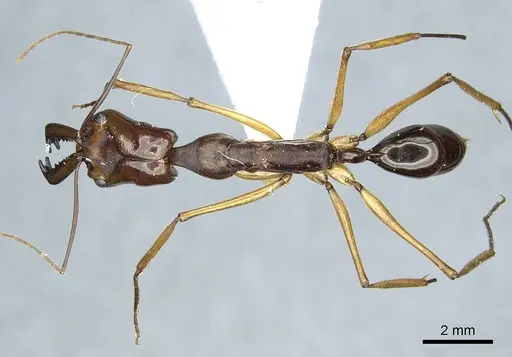
科学文献
正在加载分布地图...正在加载商品...