
Nesomyrmex costatus
- 学名
- Nesomyrmex costatus
- 族
- Crematogastrini
- 亚科
- Myrmicinae
- 命名者
- Emery, 1896
- 地理分布
- 分布于 0 个国家/地区
物种引言
Nesomyrmex costatus is a small ant species native to the Neotropical region, found in Brazil and Ecuador . Workers are modest in size, typical of the genus Nesomyrmex, and were originally described by Emery in 1896,with queens later described by Kempf in 1959 . The species belongs to the Nesomyrmex group within the Crematogastrini tribe, a lineage of small, often arboreal or forest-dwelling ants . This species remains poorly documented in scientific literature. It has been recorded in forest habitats in southeastern Brazil, including in Atlantic Forest areas and transitional zones between Cerrado and Caatinga biomes .
Quick Summary
- Difficulty: Unknown, likely Medium due to limited available care information
- Origin & Habitat: Native to the Neotropical region, specifically Brazil and Ecuador. Found in tropical forest habitats including Atlantic Forest areas in southeastern Brazil and forest transitional zones [2][1].
- Colony Type: Unconfirmed, colony structure has not been documented in scientific literature.
- Size & Growth:
- Queen: Size data unavailable, no specific measurements exist in available literature.
- Worker: Size data unavailable, worker was described in 1896 but specific measurements not readily available.
- Colony: Unknown, no colony size data available.
- Growth: Unknown, no development data available.
- Development: Unknown, no direct measurements available for this species. (Specific development data for this species is unavailable.)
- Antkeeping:
- Temperature: Keep at tropical room temperature, roughly 24-28°C. This range is inferred from the species' Neotropical distribution. Observe colony activity and adjust if workers appear sluggish (too cool) or cluster away from heated areas (too warm).
- Humidity: Maintain moderate to high humidity, typical of tropical forest ants. Keep nest substrate consistently moist but not waterlogged. Provide a gradient with slightly drier areas available.
- Diapause: Unknown, tropical species may have reduced activity periods rather than true hibernation. No specific seasonal data available for this species.
- Nesting: Likely prefers small cavities, potentially in rotting wood or under bark. In captivity, a small Y-tong (AAC) nest or plaster nest with tight chambers works well. Avoid large, open spaces, scale chambers to their small size.
- Behavior: Behavior is poorly documented. These are likely generalist foragers with moderate activity levels. Escape risk is present due to their small size, use fine mesh barriers and ensure all openings are sealed. Aggression levels are unknown but likely low to moderate, typical of the genus.
- Common Issues: limited documentation makes specific care requirements uncertain, start with typical tropical ant conditions and adjust based on colony response, small size increases escape risk, use excellent escape prevention with fine mesh, humidity management is critical, too dry causes brood death, too wet causes mold, growth rate is unknown which can lead to keeper impatience and overfeeding, wild-caught colonies may have parasites or disease that can cause colony failure in captivity
Housing and Nest Preferences
Nesomyrmex costatus likely nests in small cavities in natural settings, potentially in rotting wood, under bark, or in leaf litter. Based on their small size and tropical forest distribution, they probably prefer humid, shaded microhabitats. In captivity, provide a small nest with chambers scaled to their size, avoid tall, open spaces. Y-tong (AAC) nests or plaster nests work well for this type of ant. The nest should have a water reservoir to maintain humidity without frequent misting. Place the nest in an area away from direct sunlight and drafts. An outworld for foraging should be simple and easy to clean. Because of their small size, ensure all connections between nest and outworld have tight-fitting barriers, these ants can squeeze through surprisingly small gaps. [1]
Feeding and Diet
The specific diet of Nesomyrmex costatus has not been documented. Based on typical Nesomyrmex and related Leptothorax behavior, they are likely generalist omnivores that forage for small insects, honeydew, and nectar. In captivity, offer a varied diet including sugar water or honey as a constant energy source, and protein sources like small fruit flies, pinhead crickets, or other appropriately-sized live prey. Feed protein roughly twice weekly, adjusting based on colony size and brood production. Remove uneaten prey after 24-48 hours to prevent mold. Observe whether your colony readily accepts different foods, some colonies show strong preferences while others are more flexible. Always ensure fresh water is available, either through a water tube or moist substrate.
Temperature and Seasonal Care
As a tropical species from Brazil and Ecuador, Nesomyrmex costatus requires warm conditions. Aim for temperatures in the 24-28°C range, which is typical room temperature in many homes. If your room runs cooler, use a heating cable on one side of the nest to create a gentle gradient, place it on top of the nest, not underneath, to avoid evaporating moisture too quickly. Monitor colony behavior: if workers are clustered near the heat source, the colony may need more warmth, if they avoid the heated area, reduce heat. Unlike temperate species, this ant likely does not require a true hibernation period. However, slight seasonal variations in activity are normal, they may become less active during cooler months. Avoid sudden temperature changes and keep the nest away from air conditioning vents or drafty windows. [1]
Colony Establishment and Growth
Since specific founding behavior is unconfirmed for this species, provide standard founding colony care. Keep founding queens in a quiet, dark location with minimal disturbance. Do not check on them daily, excessive vibration and light stress founding queens. Once workers emerge (nanitics, which are typically smaller than mature workers), introduce a small amount of sugar water and tiny prey. Growth rate is unknown, be patient. Resist the urge to overfeed, as excess food mold kills colonies. Only move to a larger nest when the current one is clearly overcrowded or the colony shows signs of stress from limited space.
Common Challenges
The primary challenge with Nesomyrmex costatus is the lack of species-specific care documentation. What works for this species may differ from related ants, so careful observation is essential. Escape prevention is critical due to their small size, regularly inspect all barriers and connections. Humidity management requires balance: too dry causes brood desiccation, too wet promotes mold. If mold appears, reduce humidity and clean the affected area immediately. Wild-caught colonies may carry parasites or diseases that can devastate captive colonies, quarantine and observe new colonies before introducing them to established setups. Finally, the unknown growth rate can lead to keeper impatience. Resist the urge to overfeed or upgrade housing too quickly, let the colony's actual needs guide your decisions.
Frequently Asked Questions
How long does it take for Nesomyrmex costatus to produce first workers?
The exact egg-to-worker timeline is unknown for this species. No specific development data is available.
What do Nesomyrmex costatus ants eat?
Specific diet has not been documented, but based on typical Nesomyrmex behavior, they likely accept sugar sources (honey, sugar water) and small protein prey (fruit flies, pinhead crickets, other micro-arthropods). Offer variety and remove uneaten food promptly.
Can I keep multiple Nesomyrmex costatus queens together?
Colony structure is unconfirmed for this species. Combining unrelated queens has not been documented and is not recommended. If you obtain a wild colony, observe its structure and provide appropriate housing.
Do Nesomyrmex costatus ants sting?
Stinging behavior has not been documented for this species. Most Nesomyrmex are small and not known for painful stings, but individual reactions vary. Handle gently and avoid provoking the colony.
What temperature is best for Nesomyrmex costatus?
Keep nest temperatures around 24-28°C based on the species' tropical distribution. Room temperature in many homes falls within this range. Use a heating cable on one side of the nest if additional warmth is needed.
Is Nesomyrmex costatus a good species for beginners?
Difficulty level is unknown due to limited documentation. This species is not recommended as a first ant because of the lack of species-specific care information. Start with better-documented species until you understand general antkeeping principles.
How big do Nesomyrmex costatus colonies get?
Maximum colony size is unknown. No specific data is available for this species.
Does Nesomyrmex costatus need hibernation?
Hibernation requirements are unknown. As a tropical species, they likely do not require true hibernation. They may have reduced activity periods during cooler months, but this differs from temperate species diapause.
What humidity level do Nesomyrmex costatus ants need?
Maintain moderate to high humidity, keep the nest substrate consistently moist but not waterlogged. This matches their tropical forest habitat. Provide a gradient with slightly drier areas for the ants to choose.
When should I move Nesomyrmex costatus to a formicarium?
Move to a larger nest when the current setup shows signs of overcrowding, such as workers clustering outside the nest or the queen positioning herself near the entrance. For founding colonies in test tubes, wait until the colony has at least 20-30 workers and the tube shows condensation issues or mold.
Report an Issue
The current care sheet is based fully on literature. See inconsistencies, or something that's incorrect? Please , it will be resolved after review from an admin. Contributing to the blogs tab also helps providing information, to make us be able to further improve the caresheets. Thank you for your support!
References

此饲养指南授权协议为 CC BY-SA 4.0 .
社区博客
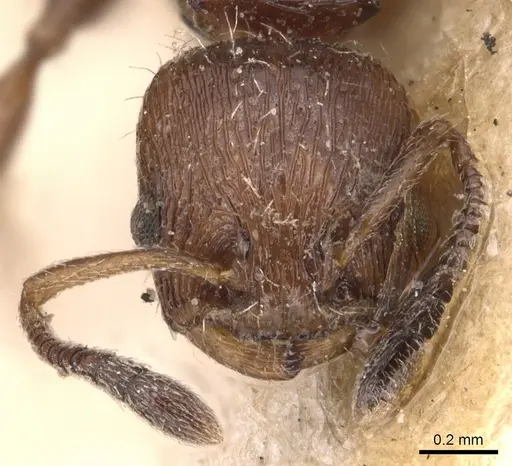
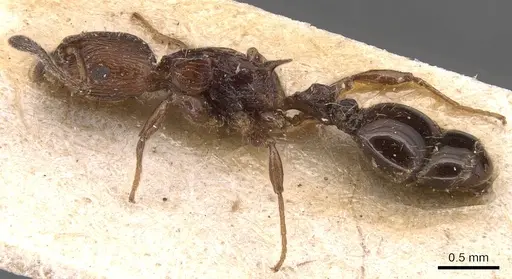
CASENT0904728
在 AntWeb 上查看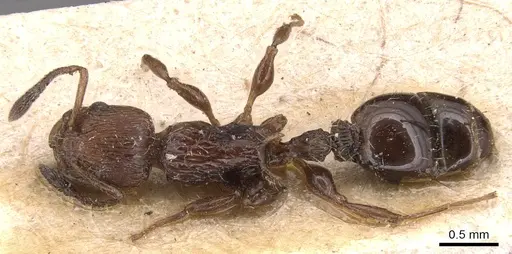
科学文献
正在加载分布地图...正在加载商品...