
Myrmoteras mcarthuri
- 学名
- Myrmoteras mcarthuri
- 亚属
- Myagroteras
- 族
- Myrmoteratini
- 亚科
- Formicinae
- 命名者
- Zettel & Sorger, 2011
- 地理分布
- 分布于 0 个国家/地区
物种引言
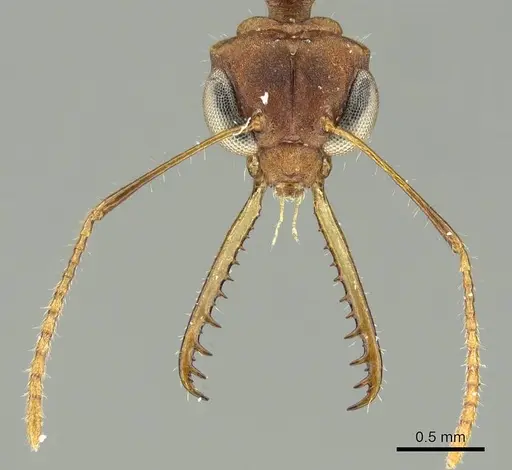
Myrmoteras mcarthuri is a small to medium-sized ant species native to Leyte Island in the Philippines. Workers measure 4.93-5.27mm in total length, with a medium brown coloration and notably long mandibles that give them a distinctive appearance . The species was only recently described in 2011 and was initially confused with the related Myrmoteras williamsi before being recognized as a distinct species. The genus Myrmoteras belongs to the subfamily Formicinae and is known for its extremely long, slender mandibles that function like trap-jaws, though not as extreme as in the related genus Odontomachus.
Quick Summary
- Difficulty: Unknown, too little data to assess
- Origin & Habitat: Endemic to Leyte Island, Philippines. In the wild, they nest under and between stones along riverbanks, specifically along the Calbiga-a River and Lago-Lago River near Baybay at elevations of 50-100m above sea level [1]. They are found in leaf litter during both day and night surveys [2].
- Colony Type: Unconfirmed, colony structure has not been documented in scientific literature
- Size & Growth:
- Antkeeping:
- Temperature: Unknown, no thermal studies exist for this species. Based on its Philippine origin (tropical climate), room temperature (24-28°C) is likely suitable.
- Humidity: Likely requires moderate to high humidity given its riverbank habitat. Keep the nest substrate consistently moist but not waterlogged.
- Diapause: Unknown, no seasonal studies exist. As a tropical species from the Philippines, hibernation may not be required.
- Nesting: In captivity, provide a naturalistic setup with moist substrate. Based on natural nesting behavior (under stones along riverbanks), a Y-tong or plaster nest with damp conditions would likely work well.
- Behavior: Behavior is poorly documented. The genus Myrmoteras is known for their trap-jaw mandibles, though they are not as extreme as in Odontomachus. Workers are foragers and have been found in leaf litter. Escape prevention should be moderate, workers are around 5mm so standard barriers should suffice.
- Common Issues: no documented captive husbandry means trial and error is required., colony size and growth rate are completely unknown making progress tracking difficult., founding behavior is unconfirmed so starting a colony from a queen may not be feasible., no dietary information exists, unknown what foods they accept., tropical origin means temperature and humidity requirements are educated guesses only
Discovery and Taxonomy
Myrmoteras mcarthuri was formally described in 2011 by Zettel and Sorger from specimens collected on Leyte Island in the Philippines. The species was initially mistaken for the related Myrmoteras williamsi, which is known from Luzon and Negros islands. However, careful examination revealed several distinguishing features: M. mcarthuri has granulate sculpture on the posterior face of temples (smooth and shiny in M. williamsi), a higher Mandible Index (145-154 vs 124-130), a wider petiolar node in lateral view, and notably slenderer antenna segments. The species was named in honor of Archie McArthur, a myrmecologist from the South Australia Museum [1].
Natural Habitat and Distribution
This species is currently known only from Leyte Island in the Eastern Visayas region of the Philippines. The type locality is along the Calbiga-a River near Baybay, at lower slopes of Mount Pangasugan, at approximately 50-100 meters elevation. Specimens have been collected from under and between stones along riverbanks, and from leaf litter samples taken both during the day and night [1][2]. The riverbank habitat suggests preference for moist, shaded microenvironments. No information exists on colony size in the wild or the species' geographic range beyond Leyte Island.
Identification and Morphology
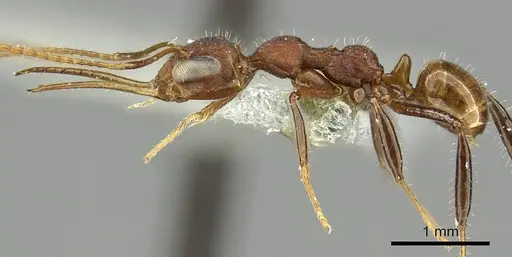
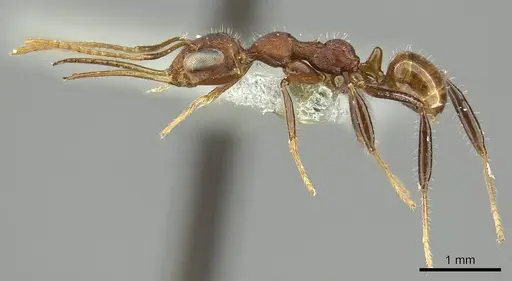
Workers of Myrmoteras mcarthuri measure 4.93-5.27mm in total length. They are medium brown in color, with the gaster slightly lighter than the head and mesosoma. The most distinctive features are the extremely long, slender mandibles (Mandible Index 145-154) and the slender antenna funiculus, where each segment is about twice as long as broad. The dorsum of the head is densely granulate and dull. The mesonotum is strongly depressed, and the dorsum of the propodeum is strongly convex. The middle tibia is weakly dilated, more than 5 times as long as wide. These morphological features distinguish it from similar species like M. williamsi [1].
Keeping Myrmoteras mcarthuri in Captivity
Unfortunately, there is no established husbandry information for this species. It is one of the least-studied ants in the antkeeping hobby, with virtually no captive breeding records or care documentation. Based on its natural habitat (tropical riverbanks in the Philippines), you should aim for warm temperatures (24-28°C) and moderate to high humidity. A naturalistic setup with moist substrate would best approximate its natural conditions. Start with standard antkeeping practices and observe your colony's behavior, if workers cluster in cooler or warmer areas of the nest, adjust accordingly. Feeding should begin with small live prey (fruit flies, pinhead crickets) and sugar water, but acceptance is completely unconfirmed for this species. This is truly a species for advanced antkeepers willing to document and share their findings with the hobby.
Frequently Asked Questions
How long does it take for Myrmoteras mcarthuri to go from egg to worker?
This is completely unknown. No scientific studies have documented the development time for this species.
What do Myrmoteras mcarthuri ants eat?
Diet is unconfirmed. The genus Myrmoteras is in the subfamily Formicinae, which typically includes predatory and omnivorous species. In captivity, you should offer small live prey (fruit flies, springtails, small crickets) and sugar water or honey. Monitor for acceptance, but be prepared that this species may have specialized feeding requirements that are currently unknown.
Can I keep Myrmoteras mcarthuri in a test tube?
Test tubes can work for founding colonies, but given their natural habitat along riverbanks (moist conditions), you will need to monitor humidity carefully. Once the colony grows, a naturalistic setup with moist substrate would likely be more appropriate.
What temperature do Myrmoteras mcarthuri ants need?
Temperature requirements are not scientifically established. As a tropical species from the Philippines, aim for room temperature in the range of 24-28°C. Start in the mid-range and adjust based on colony activity and behavior.
How big do Myrmoteras mcarthuri colonies get?
Maximum colony size is completely unknown. No scientific papers have documented wild or captive colony sizes for this species.
Is Myrmoteras mcarthuri a good species for beginners?
No. This species is not recommended for beginners due to the complete lack of captive husbandry information. There are no established care protocols, and you will essentially be pioneering captive keeping for this species. Only experienced antkeepers willing to experiment and document their findings should attempt this species.
Do Myrmoteras mcarthuri queens need to hibernate?
Hibernation requirements are unknown. As a tropical species from the Philippines, hibernation may not be necessary.
Where is Myrmoteras mcarthuri found in the wild?
This species is endemic to Leyte Island in the Philippines. It has been found along the Calbiga-a River and Lago-Lago River near Baybay, nesting under stones along the riverbanks at elevations of 50-100m.
How do I identify Myrmoteras mcarthuri from similar species?
Myrmoteras mcarthuri can be distinguished from the similar M. williamsi by its granulate posterior temple (smooth and shiny in M. williamsi), higher Mandible Index (145-154 vs 124-130), wider petiolar node, and notably slenderer antenna segments. Workers are 4.93-5.27mm with medium brown coloration.
Report an Issue
The current care sheet is based fully on literature. See inconsistencies, or something that's incorrect? Please , it will be resolved after review from an admin. Contributing to the blogs tab also helps providing information, to make us be able to further improve the caresheets. Thank you for your support!
References

此饲养指南授权协议为 CC BY-SA 4.0 .
社区博客
CASENT0915745
在 AntWeb 上查看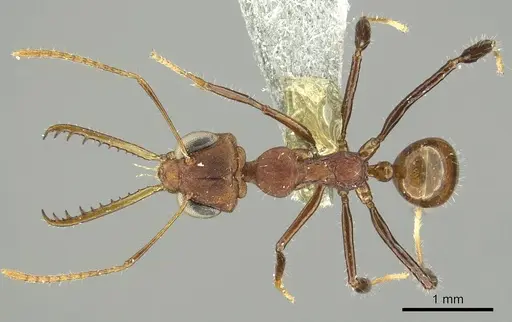
科学文献
正在加载分布地图...正在加载商品...