
Myrmica yunnanensis
- 学名
- Myrmica yunnanensis
- 族
- Myrmicini
- 亚科
- Myrmicinae
- 命名者
- Radchenko & Elmes, 2009
- 地理分布
- 分布于 0 个国家/地区
物种引言
Myrmica yunnanensis is a rare mountain ant species known only from the high altitudes of Yunnan Province, China. Workers are small reddish ants with distinctive morphological features including a distinctly elongated head, short propodeal spines, and a shiny body surface with fine rugae. Only the worker caste has been described - queens and males remain unknown to science. This species belongs to the pachei species group and was discovered at 3300m elevation in a mountain meadow environment . This is one of the least-studied Myrmica species in existence - only two worker specimens have ever been documented. The high-altitude origin suggests adaptations to cooler conditions, but captive care recommendations must be based largely on genus-level knowledge since species-specific data is essentially nonexistent.
Quick Summary
- Difficulty: Expert
- Origin & Habitat: Yunnan Province, China, known only from the type locality at 3300m elevation in a mountain meadow environment [1][2]
- Colony Type: Unknown, only worker specimens have been collected. Colony structure has not been documented [1]
- Size & Growth:
- Queen: Unknown, queens have not been described in scientific literature
- Worker: Approximately 4-6mm, inferred from pachei species-group patterns [1]
- Colony: Unknown, only two workers have ever been collected
- Growth: Unknown, no colony development data exists
- Development: Unknown, no species-specific data exists (No development data available for this species.)
- Antkeeping:
- Temperature: Cool conditions recommended, likely 15-22°C based on high-altitude origin at 3300m. Start at room temperature and observe colony activity.
- Humidity: Moderate humidity preferred. Keep nest substrate moist but not waterlogged, with some drier areas available.
- Diapause: Likely yes, high-altitude origin strongly suggests a winter dormancy period. Provide 3-4 months of cold conditions during winter.
- Nesting: Natural nesting is unconfirmed. Myrmica species typically nest in soil or under stones. A test tube setup or Y-tong nest with compact chambers works well.
- Behavior: Behavior is unstudied. Based on genus patterns, expect typical Myrmica traits: moderate foraging activity, potential for stinging if threatened, and active colony defense. Workers likely accept both sugar and protein foods like other Myrmica species.
- Common Issues: very limited availability, this species is extremely rare in the antkeeping hobby, no breeding data exists, establishing a captive colony may be difficult if queens cannot be located, high-altitude origin means temperature management is critical, overheating can be fatal, winter dormancy is likely required but specific timing and duration are unknown, only worker caste described, keeper may not be able to identify queens correctly if found
Species Discovery and Rarity
Myrmica yunnanensis represents one of the most poorly documented ant species in the Myrmica genus. The species was formally described in 2009 by Radchenko and Elmes based on only two worker specimens collected in 2002 from a mountain meadow at 3300m elevation in Zhongdian, Yunnan Province, China [1]. The type locality is in the Hengduan Mountains, a region known for high biodiversity but also for the challenges of field research in remote terrain.
Despite being described over 15 years ago, no additional specimens have been documented in scientific literature. Queens, males, and any information about colony structure, development, or behavior remain completely unknown. This represents a significant gap in our knowledge.
Identification and Morphology
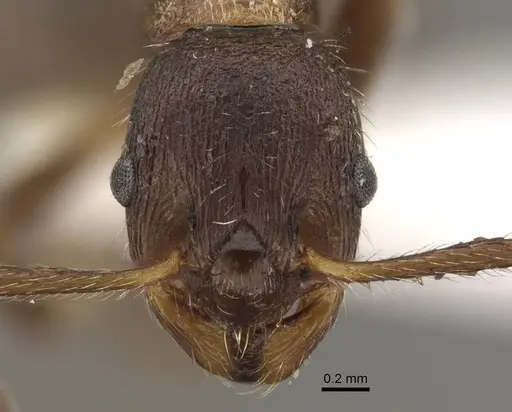
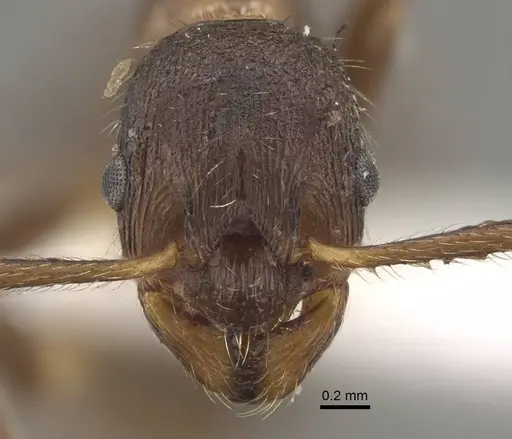
Workers of Myrmica yunnanensis can be identified by several distinctive features that separate them from other species in the pachei group. The head is distinctly elongated, suboval in shape with barely marked occipital corners. The frontal carinae do not curve outwards and do not merge with the rugae surrounding the antennal sockets, a key diagnostic feature. The body surface is notably shiny between the rugae, with only very fine superficial micropunctures visible under magnification [1].
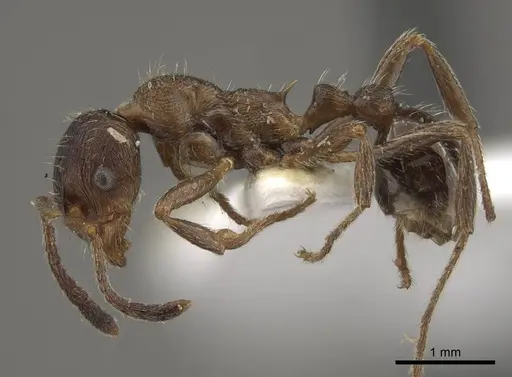
The alitrunk is long and low, with the promesonotum convex in profile. Propodeal spines are quite short, straight, thin, and sharp, directed backward at approximately 45 degrees. The body coloration is reddish on the head and alitrunk, transitioning to reddish-brown on the petiolar node, postpetiole, and gaster. Workers measure approximately 4-6mm, typical of the pachei species-group [1].
Habitat and Environmental Conditions
The type locality at 3300m elevation provides critical clues about this species' environmental requirements. High-altitude mountain meadows in Yunnan experience cool temperatures year-round, with significant seasonal variation. Summer temperatures at this elevation may reach 15-20°C, while winter temperatures regularly drop below freezing.
The Hengduan Mountains region features a complex climate influenced by the Asian monsoon system. Precipitation is highest during summer months, creating moist but not saturated soil conditions. These conditions suggest Myrmica yunnanensis has adapted to cooler temperatures than most lowland Myrmica species and likely requires a distinct winter dormancy period. [1]
Care Recommendations
Since no captive husbandry data exists for this species, care recommendations must be based on inference from the pachei species-group and genus-level Myrmica biology. Provide cool conditions, start with room temperature around 18-20°C and avoid any heating unless the colony shows clear signs of cold stress. A temperature gradient allowing workers to choose their preferred zone is ideal [1].
For nesting, use a test tube setup or compact Y-tong nest. Keep the nest substrate consistently moist but not waterlogged, as mountain meadow conditions would not be saturated. Provide a small outworld for foraging. Feed a standard Myrmica diet: sugar water or honey continuously, and protein sources several times per week.
Winter care is critical, provide 3-4 months of cold conditions during winter to simulate the natural dormancy period this high-altitude species would experience. This species is best suited for experienced antkeepers comfortable with experimental husbandry approaches.
Research Opportunities
Myrmica yunnanensis represents a significant opportunity for antkeepers to contribute to scientific knowledge. Since only two workers have ever been documented, any information about wild colonies, queen morphology, colony structure, or behavior would be scientifically valuable. If you locate a colony in the wild, careful documentation and photography could help expand our understanding of this species.
Key questions that remain unanswered include: What is the queen's morphology and size? How many queens does a typical colony have? What is the colony's natural size? When do nuptial flights occur? How long does development take? What are the specific temperature and humidity preferences? [1]
Frequently Asked Questions
How difficult is Myrmica yunnanensis to keep?
This species is best classified as Expert-level difficulty. Only two workers have ever been documented in scientific literature, meaning essentially no species-specific husbandry data exists. You'll be pioneering captive care for this species based on educated guesses from genus-level knowledge.
What temperature should I keep Myrmica yunnanensis at?
Keep them cool, around 18-20°C is a good starting point. This species comes from 3300m elevation in Yunnan, so it is adapted to mountain conditions. Avoid heating unless the colony appears sluggish or inactive. A temperature gradient allowing workers to choose their preferred zone is ideal.
Does Myrmica yunnanensis need hibernation?
Likely yes. The high-altitude origin strongly suggests they require a winter dormancy period. Provide 3-4 months of cold conditions during winter. The exact timing and duration are unknown, so observe your colony's activity patterns to fine-tune this.
What do Myrmica yunnanensis eat?
No species-specific feeding data exists. Based on typical Myrmica diet, offer sugar water or honey continuously as an energy source, and protein sources like small insects several times per week. Adjust based on what your colony accepts.
How big do Myrmica yunnanensis colonies get?
Unknown, only two workers have ever been collected. No colony size data exists for this species.
Can I keep multiple queens together?
Unknown, queens have never been documented for this species, so we have no information about colony founding behavior or whether multiple queens can be kept together.
How long does development take from egg to worker?
Unknown, no species-specific development data exists.
Are Myrmica yunnanensis ants aggressive?
Behavior is unstudied, but Myrmica species typically show moderate aggression when defending their nest. They have a functional stinger and will use it if threatened.
Where can I get Myrmica yunnanensis?
This species is extremely rare in the antkeeping hobby. It has only been documented from a single location in Yunnan Province, China, at 3300m elevation. Wild collection would require access to that region and significant effort.
Do Myrmica yunnanensis ants sting?
Yes, Myrmica species have functional stingers. The sting is not dangerous to healthy humans but can cause mild pain and irritation.
What nest type is best for Myrmica yunnanensis?
Use a test tube setup or Y-tong nest with compact chambers scaled to their small size. Provide a moisture gradient so ants can self-regulate. The natural nesting site is unknown, but Myrmica species typically nest in soil or under stones.
Is this a good species for beginners?
No. This species is not recommended for beginners due to the complete lack of captive husbandry data. Only two workers have ever been documented scientifically. Keeping this species successfully requires significant experience with antkeeping and comfort with experimental approaches.
Report an Issue
The current care sheet is based fully on literature. See inconsistencies, or something that's incorrect? Please , it will be resolved after review from an admin. Contributing to the blogs tab also helps providing information, to make us be able to further improve the caresheets. Thank you for your support!
References

此饲养指南授权协议为 CC BY-SA 4.0 .
社区博客
CASENT0917715
在 AntWeb 上查看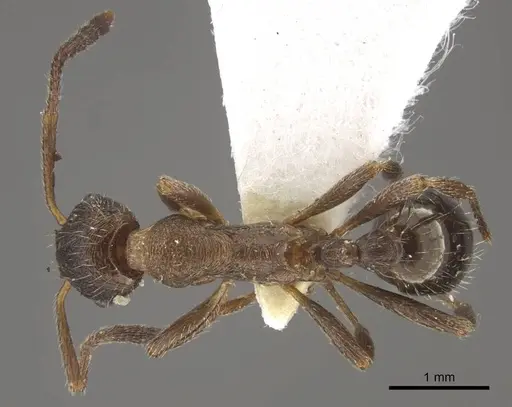
科学文献
正在加载分布地图...正在加载商品...