
Myrmica elbrusi
- 学名
- Myrmica elbrusi
- 族
- Myrmicini
- 亚科
- Myrmicinae
- 命名者
- Radchenko & Yusupov, 2012
- 地理分布
- 分布于 0 个国家/地区
物种引言
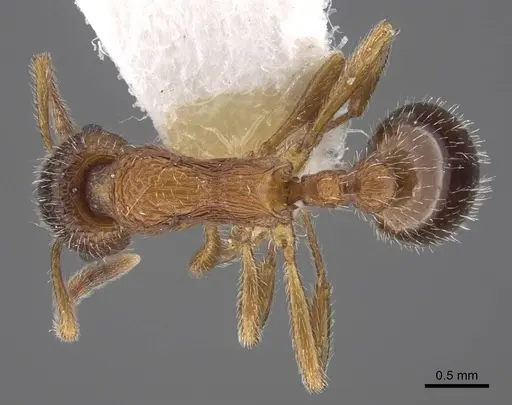
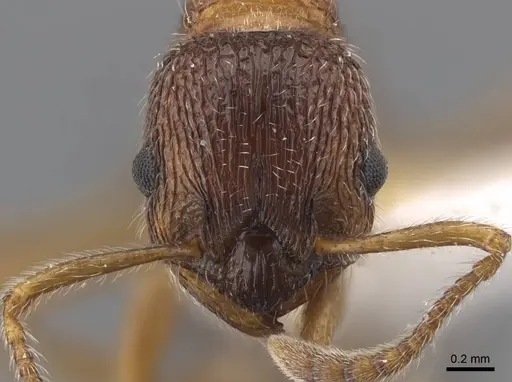
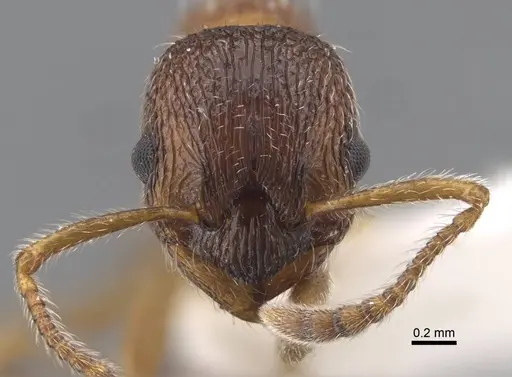
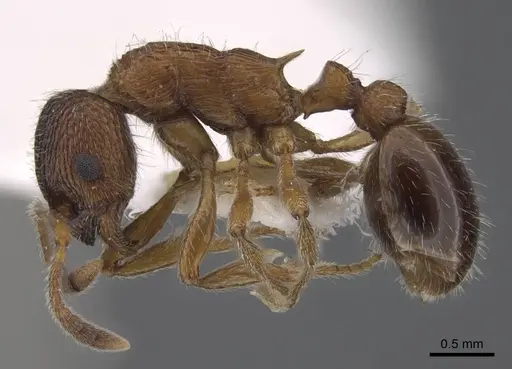
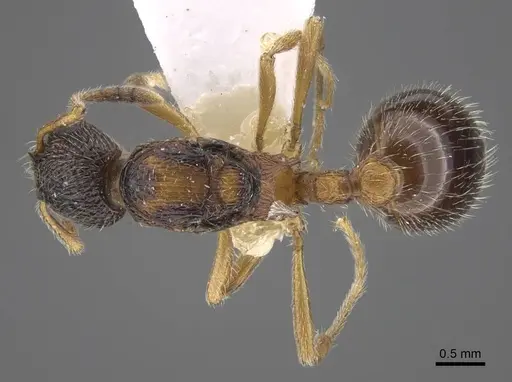
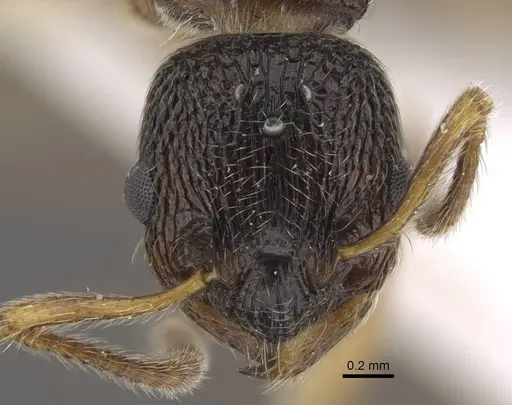
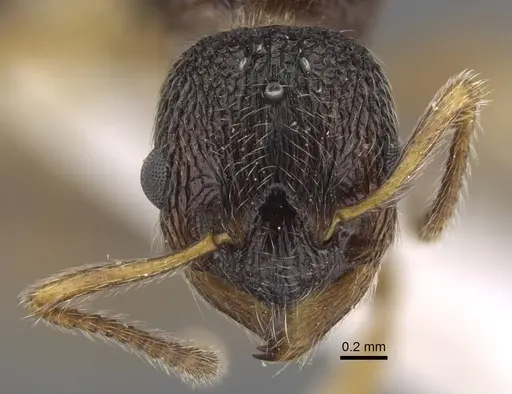
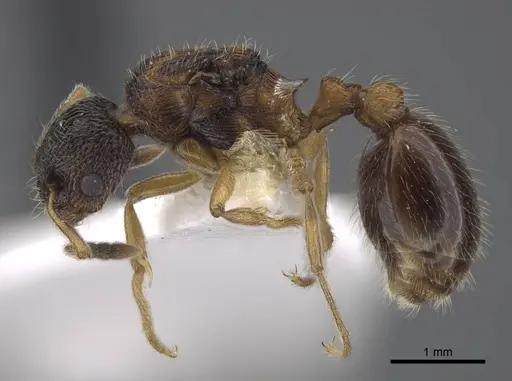
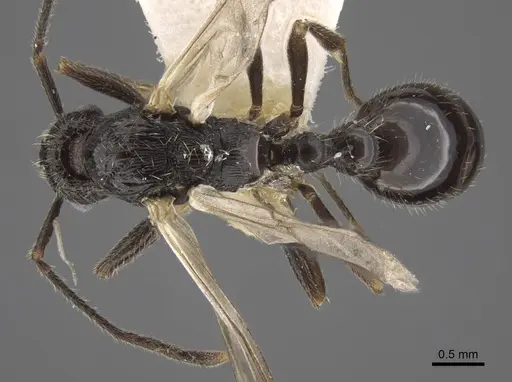
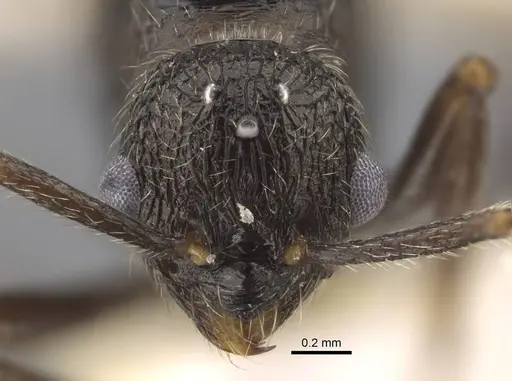
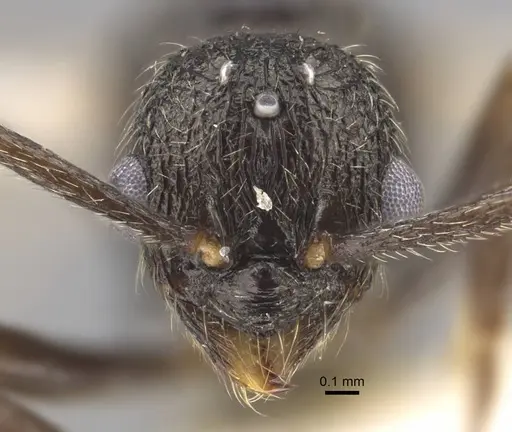
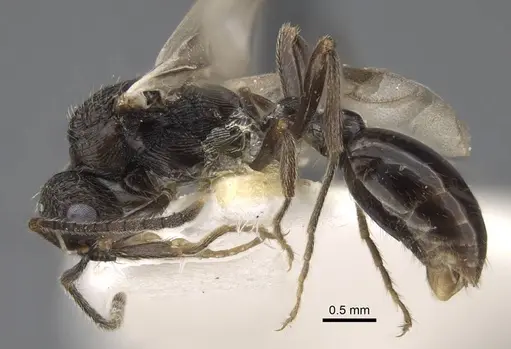
Myrmica elbrusi is a recently described ant species from the high mountains of the North Caucasus in Russia. Workers are small Myrmica ants with a brownish-red mesosoma and waist, brown head, and dark brown gaster. The species is notable for its diagnostic features including a smoothly curved scape without any lobe or carina at the base, and a distinctly prominent anterior clypeal margin. This is a mountain species found only at subalpine elevations between 2070-2130 meters, making it one of the more specialized Myrmica species in Europe. The species was only formally described in 2012 and is currently known exclusively from type material, meaning virtually no captive husbandry information exists. The name derives from the Elbrus mountain region where it was discovered .
Quick Summary
- Difficulty: Expert
- Origin & Habitat: North Caucasus, Kabardino-Balkaria, Russia. Found on subalpine meadows, floodplains of rivers, and edges of mixed pine-birch forests at altitudes 2070-2130 meters [1]. Nests are built in soil, often under stones [1].
- Colony Type: Unknown, only type specimens have been collected. The colony structure has not been documented.
- Size & Growth:
- Queen: ~5-6 mm, inferred from Myrmica genus (queen is ~20% larger than workers) [1]
- Worker: ~4-5 mm, inferred from Myrmica genus [1]
- Colony: Unknown, no colony size data exists for this species
- Growth: Unknown, estimated based on Myrmica genus patterns
- Development: Unknown, no direct development data exists. Based on related Myrmica species, estimate 6-10 weeks at optimal temperature. (No species-specific development data available.)
- Antkeeping:
- Temperature: Likely requires cool to cold conditions given its subalpine mountain origin. Based on similar high-elevation Myrmica species, aim for 15-20°C with winter cooling. Inferred from habitat elevation.
- Humidity: Moderate humidity likely needed. In nature they nest in soil under stones in subalpine meadows, suggesting they tolerate variable conditions. Keep nest substrate moderately moist but not waterlogged. Inferred from nesting behavior.
- Diapause: Yes, this is a mountain species from a cold climate that experiences harsh winters. Expect a 3-4 month winter rest period at reduced temperatures (5-10°C). Inferred from geographic origin and elevation [1].
- Nesting: Natural nesting is in soil, often under stones. In captivity, a naturalistic setup with soil and stones or a plaster nest with moderate chambers would work. Avoid overheating. Inferred from natural nesting [1].
- Behavior: Behavior is unstudied in captivity. Based on Myrmica genus traits, they likely have functional stings and may be moderately aggressive when defending the nest. Workers are small but active foragers. Escape risk is moderate, standard test tube setups work well for Myrmica of this size. Inferred from genus.
- Common Issues: this species has never been kept in captivity, no established husbandry protocols exist, extreme lack of biological data means all care is speculative and may be incorrect, mountain origin suggests specific temperature needs that differ from common Myrmica, no information on colony founding behavior or queen claustral status, risk of obtaining wild-caught colonies that may be stressed or parasitized
Species Overview and Discovery
Myrmica elbrusi was only formally described in 2012 by Radchenko and Yusupov, making it one of the newest ant species to be scientifically named in Europe. It was discovered in the Kabardino-Balkaria region of the North Caucasus in Russia, specifically in the basin of the Chegem River at elevations around 2070-2103 meters. The species name comes from the nearby Mount Elbrus, which is the highest peak in the Caucasus Mountains. What makes this species particularly interesting is that it does not fit into any known Myrmica species groups in the Euro-Caucasian region, suggesting it represents a unique evolutionary lineage. The type specimens were collected from soil nests located under stones in subalpine meadows and floodplain areas. Currently, M. elbrusi is known only from its original type localities, and no additional populations have been documented [1][2][3].
Identification and Morphology
Workers of Myrmica elbrusi can be identified by several distinctive features. The scape (the basal segment of the antenna) is smoothly curved at the base with absolutely no trace of a lobe or carina, this is unusual among Myrmica species which typically have some curvature or angle. The frontal carinae (the ridges running up from the antenna sockets) are very feebly curved and merge with the rugae (wrinkles) that extend to the posterior margin of the head. The anterior clypeal margin is distinctly prominent and narrowly rounded, not notched in the middle. Workers are small Myrmica ants, approximately 4-5mm in total length. The coloration is brownish-red on the mesosoma and waist, brown on the head, and dark brown on the gaster (abdomen). Queens are about 20% larger than workers (approximately 5-6mm) and possess ocelli (simple eyes) along with shorter propodeal spines [1].
Natural Habitat and Ecology
This is a true mountain specialist, found exclusively at subalpine elevations between 2070 and 2130 meters above sea level. The type localities include subalpine meadows, floodplains of the Chegem River, and edges of mixed forests containing pine and birch trees. The nests are built directly in soil, with a preference for locations under stones which likely provides protection from the harsh mountain climate. This elevation in the Caucasus experiences cold temperatures for much of the year, with the subalpine zone characterized by short summers and long, snowy winters. The ants would naturally experience temperature swings far more extreme than typical room conditions. This habitat suggests the species is well-adapted to cool, potentially variable conditions rather than warmth [1].
Keeping Myrmica elbrusi in Captivity
WARNING: This species has never been documented in the antkeeping hobby and no captive husbandry information exists. All care recommendations below are speculative inferences based on the species' habitat and Myrmica genus patterns. Proceed with extreme caution if attempting to keep this species.
Given its high-elevation mountain origin, temperature management is critical. Start with cool conditions around 15-20°C, with a slight gradient allowing the colony to choose its preferred zone. Avoid overheating, this species almost certainly cannot tolerate the warm conditions suitable for tropical ants. A winter cooling period of 3-4 months at 5-10°C is likely necessary, mimicking the harsh winters they experience in the Caucasus Mountains.
For nesting, provide a naturalistic setup with soil substrate and flat stones or a plaster nest with chambers scaled to their small size. Keep the substrate moderately moist but ensure good ventilation to prevent mold. Feed similarly to other Myrmica species: protein sources like small insects or mealworms, and sugar water or honey as an energy source.
This species is NOT recommended for beginners or even intermediate antkeepers due to the complete lack of captive data. If you somehow obtain a colony, document your observations carefully and consider this a pioneering husbandry effort.
Challenges and Considerations
The primary challenge with Myrmica elbrusi is the complete absence of any captive husbandry information. This is not a species where you can look up care guides or draw from established keeper experience, everything would be experimental. The species is only known from a handful of type specimens collected in 2009 and 2012,meaning even basic biology like colony size, reproductive behavior, or seasonal activity patterns remains completely unknown.
Obtaining this species would likely require wild collection from its extremely limited range in the North Caucasus, which presents ethical and legal concerns. Wild-caught colonies often fail in captivity due to stress, parasites, or mismatched conditions. Additionally, since nothing is known about their founding behavior, establishing a colony from a newly caught queen would be extremely high-risk.
For these reasons, Myrmica elbrusi should be considered a species for advanced antkeepers with research interests who are willing to document and share their findings with the scientific community. The species has significant potential value for understanding Myrmica evolution and high-altitude ant adaptations, but this requires responsible captive breeding efforts [1].
Frequently Asked Questions
Is Myrmica elbrusi available in the antkeeping hobby?
No. This species has never been documented in the antkeeping hobby and is only known from type material collected in the North Caucasus. It is not commercially available and would require wild collection from a very limited geographic range [1].
How do I care for Myrmica elbrusi?
No established care protocol exists, this species has never been kept in captivity. Any care would be experimental and speculative. Based on its mountain habitat, it likely needs cool temperatures (15-20°C), moderate humidity, and a winter dormancy period. Do not attempt unless you are an expert antkeeper willing to document experimental results.
What temperature does Myrmica elbrusi need?
Based on its subalpine mountain origin at 2070-2130m elevation, this species almost certainly requires cool conditions. Aim for 15-20°C with a gradient, and provide a winter cooling period of 3-4 months at 5-10°C. Do not keep warm [1].
Does Myrmica elbrusi need hibernation?
Yes. This is a mountain species from a cold climate with harsh winters. A 3-4 month winter rest period at reduced temperatures (5-10°C) is almost certainly required for successful long-term keeping [1].
What does Myrmica elbrusi eat?
Unknown for this specific species. Based on Myrmica genus patterns, they likely accept protein sources (small insects, mealworms) and sugar sources (honey water, sugar water). However, no captive feeding observations exist.
How big do Myrmica elbrusi colonies get?
Unknown. No colony size data exists for this species. Related Myrmica species typically form colonies of several hundred to a few thousand workers.
Does Myrmica elbrusi sting?
Likely yes. Most Myrmica species have functional stings, though their small size limits the effect on humans. The sting is primarily for colony defense rather than predation.
Is Myrmica elbrusi a good species for beginners?
Absolutely not. This is an expert-only species due to the complete lack of captive husbandry information, its specialized mountain habitat requirements, and the fact that no established care protocols exist. Even experienced antkeepers should approach with extreme caution.
Where does Myrmica elbrusi live in the wild?
Only in the North Caucasus, Kabardino-Balkaria region of Russia, at elevations of 2070-2130 meters. It has been found in subalpine meadows, river floodplains, and edges of pine-birch forests. Nests are built in soil under stones [1][2].
Can I keep multiple Myrmica elbrusi queens together?
Unknown. The colony structure (single-queen vs multi-queen) has not been documented for this species. Without any data, combining unrelated queens is not recommended.
Report an Issue
The current care sheet is based fully on literature. See inconsistencies, or something that's incorrect? Please , it will be resolved after review from an admin. Contributing to the blogs tab also helps providing information, to make us be able to further improve the caresheets. Thank you for your support!
References

此饲养指南授权协议为 CC BY-SA 4.0 .
社区博客
科学文献
正在加载分布地图...正在加载商品...