
Myopias papua
- 学名
- Myopias papua
- 族
- Ponerini
- 亚科
- Ponerinae
- 命名者
- Snelling, 2008
- 地理分布
- 分布于 0 个国家/地区
物种引言
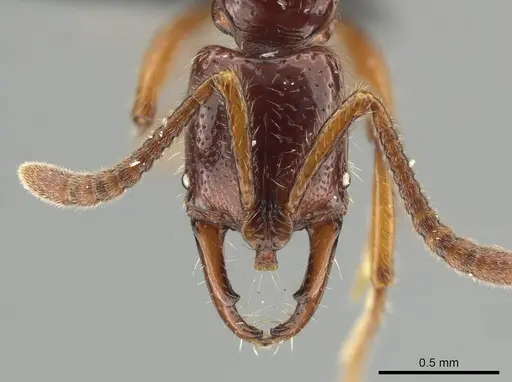
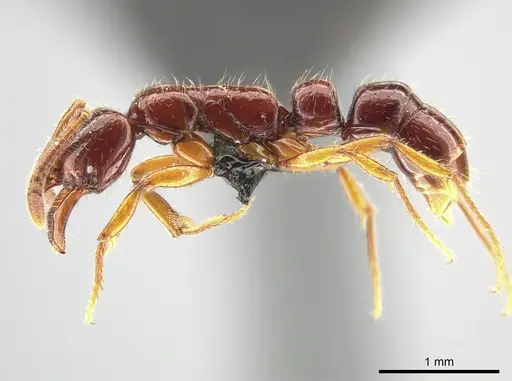
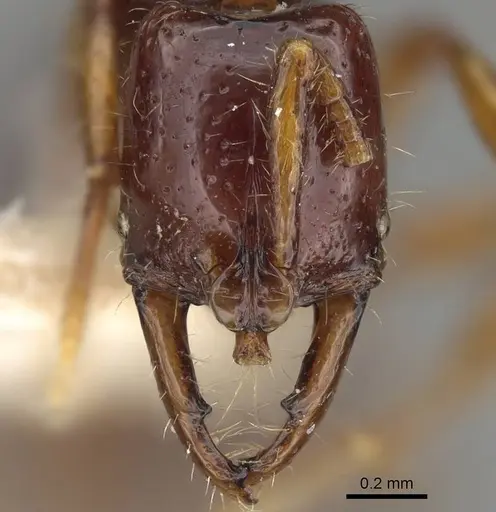
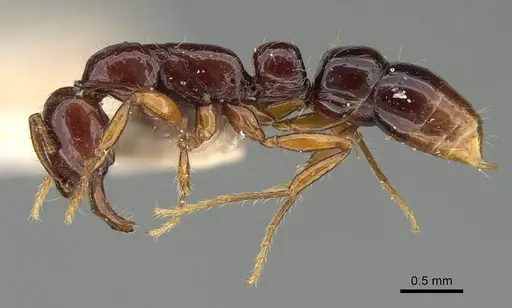
Myopias papua is a small predatory ant species native to New Guinea and Indonesia . The species was originally described as Trapeziopelta punctigera in 1901 but was renamed by Snelling in 2008 after it was discovered to be a junior homonym . As a member of the Ponerinae subfamily, these ants are predatory and possess a functional stinger, making them efficient hunters of small prey. Workers have small, obscurely faceted eyes and a prominent subpetiolar tooth .
Quick Summary
- Difficulty: Medium
- Origin & Habitat: Papua New Guinea and Indonesia, specifically the Huon Peninsula region near Finschafen [1][2].
- Colony Type: Colony structure is unconfirmed.
- Size & Growth:
- Queen: Size data unavailable [1]
- Worker: Size data unavailable [1]
- Colony: Unknown
- Growth: Unknown
- Development: Development timeline is unknown for this species, but based on typical Ponerinae patterns, it may take 6-10 weeks at tropical temperatures [2]. (Specific data for Myopias papua is unavailable.)
- Antkeeping:
- Temperature: Keep warm and stable, roughly 24-28°C, based on tropical distribution [1].
- Humidity: Keep the nest substrate consistently moist but not waterlogged, as they are from humid forest environments [1][2].
- Diapause: No diapause required, as this is a tropical species [1].
- Nesting: Based on typical Myopias preferences, they likely nest in rotting wood or soil. In captivity, use Y-tong or plaster nests with dark, humid conditions [2].
- Behavior: Myopias papua is a predatory ant that hunts small invertebrates. They possess a functional stinger and can deliver painful stings for their size. Workers are active foragers. Escape prevention is critical due to their tiny size, use fine mesh barriers and tight-fitting lids. They are likely more aggressive when defending their nest compared to typical house ants [1][2].
- Common Issues: tiny size makes escape prevention critical, they can squeeze through standard mesh., limited availability in the antkeeping hobby, rarely available., specific humidity requirements mean colonies can fail if kept too dry., predatory diet means they need constant access to live small prey., very limited species-specific information makes care more challenging.
Housing and Nest Setup
Myopias papua requires a humid, dark nesting environment. Given their tiny size and preference for moist conditions, a Y-tong (AAC) nest or moist plaster formicarium works well [2]. The nest chambers should be appropriately scaled to their very small worker size, tight passages are better than open spaces. Keep the nesting area dark as these forest-floor ants prefer dim conditions [2]. An outworld for foraging allows you to observe their hunting behavior. Always use excellent escape prevention, their small size means they can escape through standard mesh. Use fine mesh barriers and ensure all connections are sealed [2].
Feeding and Diet
As predatory Ponerinae ants, Myopias papua requires a protein-rich diet of small live prey. Offer small live insects such as fruit flies, pinhead crickets, small mealworms, and other appropriately-sized arthropods [2]. They likely cannot tackle large prey due to their tiny size. Feed every 2-3 days, removing uneaten prey to prevent mold. Sugar sources may be accepted but are not a primary food source for these predatory ants. Always ensure fresh water is available [2].
Temperature and Humidity
Being from tropical New Guinea, Myopias papua requires warm and humid conditions. Maintain temperatures between 24-28°C using a heating cable if room temperature is below this range [1]. Place the heating cable on top of the nest to create gentle warmth without drying out the nest too quickly. Humidity should be high by keeping the substrate consistently moist but not waterlogged [2]. Monitor condensation levels as an indicator of proper humidity. Avoid both drying out and waterlogging the nest.
Behavior and Temperament
Myopias papua is an active predatory ant with a functional stinger. Workers are small but determined hunters that will tackle small prey items [1]. They are likely more defensive than many common ant species due to their predatory nature and stinger. Colonies may be more aggressive when the nest is disturbed. Their tiny size makes them excellent at hunting small arthropods but also means they can escape easily, always use fine mesh and sealed connections [2].
Frequently Asked Questions
How long does it take for Myopias papua to produce first workers?
The exact timeline is unknown, but based on typical Ponerinae development, expect 6-10 weeks from egg to worker at optimal tropical temperatures [2].
What do Myopias papua ants eat?
They are predatory ants that need small live prey. Offer fruit flies, small mealworms, pinhead crickets, and other tiny arthropods [2]. Remove uneaten prey after 24-48 hours to prevent mold.
What temperature do Myopias papua ants need?
Keep them warm at 24-28°C based on their tropical distribution [1]. This species requires consistent warmth and high humidity to thrive.
Are Myopias papua ants good for beginners?
This species is rated as medium difficulty. Their small size, specific humidity needs, and predatory diet make them more challenging than common species [2]. They are also rarely available in the antkeeping hobby.
How big do Myopias papua colonies get?
Colony size is unknown, as no specific data is available [1].
Can I keep multiple Myopias papua queens together?
This has not been documented. Colony structure is unconfirmed, so combining unrelated queens is not recommended [2].
Why are my Myopias papua ants dying?
Common causes include: too dry conditions (they need high humidity), temperatures outside 24-28°C range, escape through tiny gaps, lack of live prey, or stress from disturbance [2]. Ensure proper humidity and escape prevention first.
Do Myopias papua ants need hibernation?
No. Being a tropical species from New Guinea, they do not require true hibernation [1].
When should I move Myopias papua to a formicarium?
Wait until the colony has at least 20-30 workers and is actively foraging [2]. Ensure the formicarium can maintain high humidity, test tube setups may dry out too quickly for this moisture-dependent species.
Report an Issue
The current care sheet is based fully on literature. See inconsistencies, or something that's incorrect? Please , it will be resolved after review from an admin. Contributing to the blogs tab also helps providing information, to make us be able to further improve the caresheets. Thank you for your support!
References

此饲养指南授权协议为 CC BY-SA 4.0 .
社区博客
CASENT0650197
在 AntWeb 上查看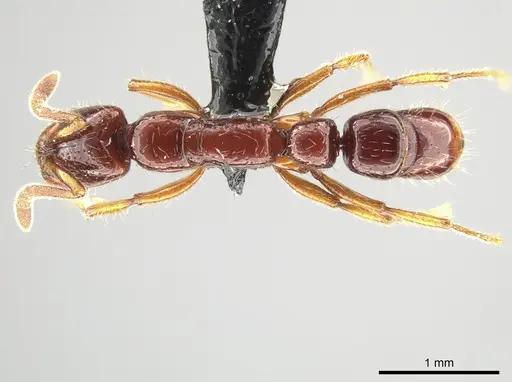
CASENT0922248
在 AntWeb 上查看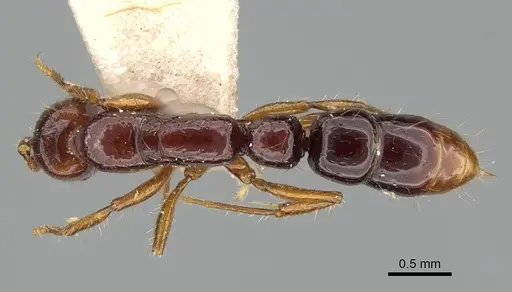
科学文献
正在加载分布地图...正在加载商品...