
Myopias modiglianii
- 学名
- Myopias modiglianii
- 族
- Ponerini
- 亚科
- Ponerinae
- 命名者
- Emery, 1900
- 地理分布
- 分布于 0 个国家/地区
物种引言
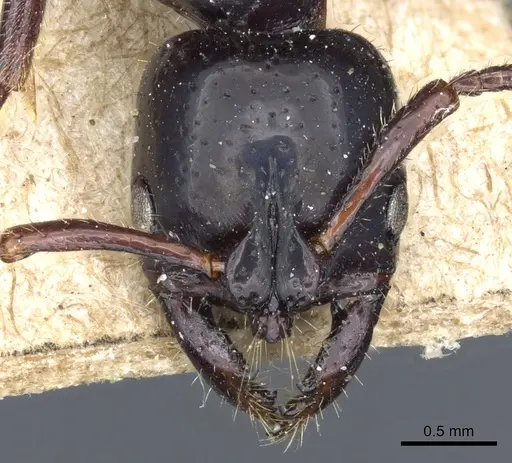
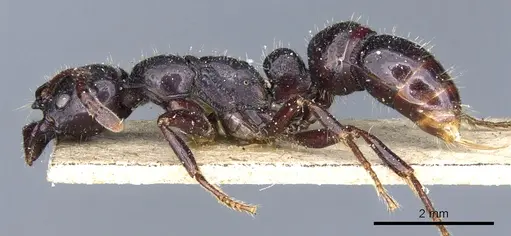
Myopias modiglianii is a medium-sized predatory ant from the subfamily Ponerinae. Workers measure about 11.4–11.5 mm in total length . The species is widely distributed across Southeast Asia, with confirmed records from Sumatra, Borneo, and the Philippines . This ant belongs to the second species group within the genus Myopias, defined by five teeth on the masticatory margin of the mandible, a relatively large eye (more than 10 ommatidia along the longest axis), and a short median clypeal lobe with a convex anterior margin . As a Ponerine, it has a functional sting used for subduing prey. The presence of ergatoid queens (wingless replacement reproductives) has been documented for this species .
Quick Summary
- Difficulty: Medium
- Origin & Habitat: Native to Southeast Asia, specifically Sumatra, Borneo, and the Philippines. Inhabits lowland tropical rainforests typical of the Indomalaya region [2][1].
- Colony Type: Colonies have ergatoid queens (wingless replacement reproductives). The social structure appears to be monogyne, but this is inferred from the presence of ergatoid queens, direct confirmation of queen number is lacking [3].
- Size & Growth:
- Queen: Estimated to be similar to workers (~11.4–11.5 mm) based on ergatoid queen morphology, size data unavailable for queens specifically [1]
- Worker: 11.4–11.5 mm total length [1]
- Colony: Unknown for this species, but related Myopias species reach several hundred workers (inferred from genus)
- Growth: Moderate (typical of Ponerine ants)
- Development: Estimated 6–10 weeks at optimal tropical temperatures (typical Ponerinae pattern, not directly documented) (Ponerine ants generally develop slower than many Formicinae or Myrmicinae species. Direct data for M. modiglianii is not available.)
- Antkeeping:
- Temperature: Keep at 24–28°C (tropical conditions). A slight gradient with cooler areas around 22°C is beneficial. These are lowland tropical ants that need consistent warmth [1][2].
- Humidity: High humidity (70–85%) is essential. Keep nest substrate consistently damp but not waterlogged. This mirrors the moist forest floor habitat.
- Diapause: No true diapause required. As a tropical species from Southeast Asia, they do not undergo hibernation. Maintain consistent temperatures year-round.
- Nesting: Do well in naturalistic setups with moist substrate (soil/peat mix) or in plaster nests that retain humidity. Provide a separate foraging area with live prey. Nest chambers should be dark and humid.
- Behavior: Myopias modiglianii is a predatory Ponerine with active hunting. Workers are medium-sized and robust, using their sting to subdue prey. Colonies are moderately defensive but not excessively aggressive. Workers are relatively slow-moving (typical of Ponerines). They are primarily crepuscular or nocturnal foragers. Escape prevention is important due to their medium size, they can exploit small gaps.
- Common Issues: improper humidity causes brood desiccation or mold, maintain a gradient but err on the moist side, predatory feeding requirements can be challenging, they need consistent access to live prey, slow colony growth tempts overfeeding, leading to mold and mite problems, wild-caught colonies may carry parasites that can devastate a captive colony, temperatures below 22°C slow or stop brood development
Housing and Nest Setup
Myopias modiglianii does well in naturalistic setups that mimic the forest floor. Use a mix of soil and peat or coco fiber as substrate, kept consistently moist. A nest chamber should be dark and humid, plaster nests or setups with a water reservoir work well. Provide a separate outworld for foraging. Because they are predatory, the foraging area should be easy to clean. Use a test tube setup for founding, then move to a larger formicarium once the colony has around 20–30 workers. Ensure all connections are secure, workers will exploit any gaps. [1]
Feeding and Diet
As a Ponerine ant, M. modiglianii is primarily predatory and needs live prey to thrive. Offer small insects such as fruit flies, small crickets, mealworms, and other appropriately-sized arthropods. Prey should be no larger than the ant itself. They are likely nocturnal hunters, so offering prey in the evening or with dimmed lights may improve acceptance. Sugar sources are not a primary food for Ponerines, though they may occasionally accept honey or sugar water. Feed every 2–3 days, adjusting based on colony size and consumption. Remove uneaten prey promptly to prevent mold.
Temperature and Humidity Requirements
Maintain temperatures between 24–28°C for optimal colony development. These are lowland tropical ants from Southeast Asia and don't tolerate cool conditions well. A slight temperature gradient is beneficial, allow the nest to be around 24°C with a warmer spot near 28°C in the foraging area. Humidity should be high (70–85%), with the nest substrate kept consistently moist. The substrate should feel damp but not have standing water. Mist the nest occasionally, but avoid excessive condensation. Room temperature (20–22°C) is too cool, use a heating cable or mat if needed [1][2].
Colony Development and Growth
Colony growth is moderate. A newly mated queen founds a colony alone, likely sealing herself in a chamber (claustral founding is suspected but not confirmed). The first workers (nanitics) will be smaller than mature workers and may take 6–10 weeks to develop (estimated from typical Ponerinae patterns). After the first workers emerge, the colony will grow steadily but slowly compared to many common ants. Expect the colony to reach 50 workers within 6–12 months under good conditions. Mature colonies may reach several hundred workers. The presence of ergatoid queens provides a replacement reproductive if the primary queen dies, a stable adaptation [1][3].
Behavior and Defense
Myopias modiglianii workers are active foragers that hunt small arthropods. They are not overly aggressive but will defend the nest if threatened. Like all Ponerinae, they possess a functional sting that can deliver a painful sting to predators (including human handlers). Workers use chemical trails to recruit nestmates to large prey. They are not polycalic, each colony maintains its own territory. Workers are relatively long-lived, typical of Ponerine species. Observe colony activity, they may be more active at night, reflecting natural crepuscular/nocturnal foraging behavior.
Frequently Asked Questions
How long does it take for Myopias modiglianii to produce first workers?
Expect 6–10 weeks from egg to first worker at optimal temperatures (24–28°C). This is estimated from typical Ponerinae development patterns, direct data for this species is not available.
What do Myopias modiglianii eat?
They are mainly predatory and need live prey. Offer small insects like fruit flies, small crickets, mealworms, and other arthropods. They may occasionally take sugar water or honey, but protein from live prey is essential for colony health.
Are Myopias modiglianii good for beginners?
They are intermediate difficulty. Their humidity and temperature requirements are stricter than many common ants, and they need a steady supply of live prey. Not recommended as a first ant unless you have experience with Ponerines.
How big do Myopias modiglianii colonies get?
Colonies typically reach several hundred workers (inferred from related species). Growth is moderate, expect several months to reach 50 workers and a year or more for a substantial colony.
Do Myopias modiglianii need hibernation?
No, they do not require hibernation. As tropical ants from Southeast Asia, they need consistent warmth year-round. Temperatures below 22°C can harm the colony [2].
Can I keep multiple Myopias modiglianii queens together?
This species is thought to be monogyne (single queen) with ergatoid replacement reproductives. Combining unrelated queens is not recommended as it has not been documented and would likely result in fighting.
What temperature range is best for Myopias modiglianii?
Keep them at 24–28°C. They are lowland tropical ants and do not tolerate cool conditions. A heating cable or mat may be necessary in cooler climates [1].
When should I move my colony to a formicarium?
Move to a larger nest once the colony reaches 20–30 workers and the test tube becomes crowded. Ensure the new setup maintains the humidity levels they need.
Why is my Myopias modiglianii colony declining?
Common causes include: too low temperature (below 22°C), improper humidity (too dry or too wet), lack of live prey, mold from overfeeding, or parasites from wild-caught colonies. Review all care parameters and adjust accordingly.
Report an Issue
The current care sheet is based fully on literature. See inconsistencies, or something that's incorrect? Please , it will be resolved after review from an admin. Contributing to the blogs tab also helps providing information, to make us be able to further improve the caresheets. Thank you for your support!
References

此饲养指南授权协议为 CC BY-SA 4.0 .
社区博客
CASENT0903923
在 AntWeb 上查看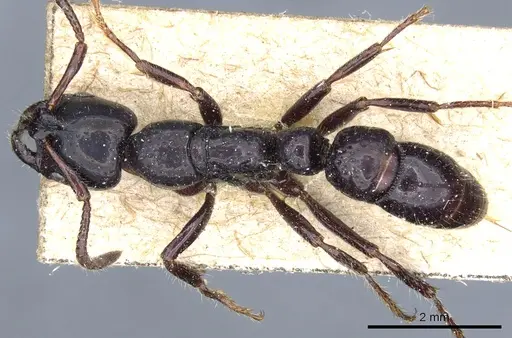
科学文献
正在加载分布地图...正在加载商品...