
Monomorium suleyile
- 学名
- Monomorium suleyile
- 族
- Solenopsidini
- 亚科
- Myrmicinae
- 命名者
- Collingwood & Agosti, 1996
- 地理分布
- 分布于 0 个国家/地区
物种引言
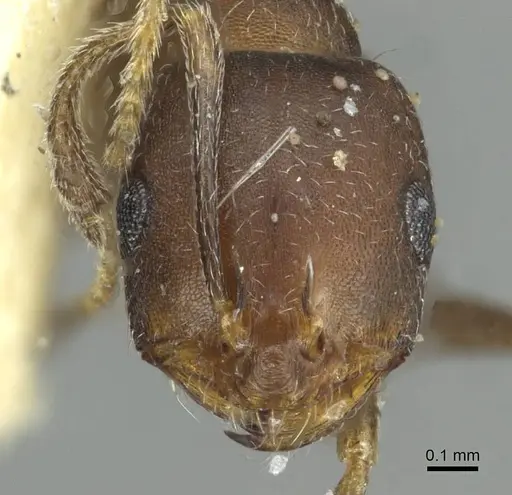
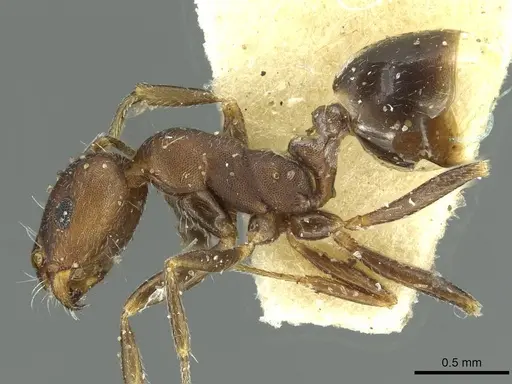
Monomorium suleyile is a small ant species endemic to the Arabian Peninsula, found only in Saudi Arabia and Oman . Workers measure approximately 3.1-3.3mm in total length, with a distinctive brown body coloration where the head, mesosoma, and waist segments are noticeably darker than the gaster . This species belongs to the Monomorium salomonis species group and is similar to Monomorium junodi, but can be distinguished by its longer antennal scapes that extend past the posterior head margin . The biology of this species remains completely unstudied in scientific literature. The type specimens were collected from desert environments in Saudi Arabia (Suleyil desert, Hofuf, Al-Qatif, Riyadh) and Oman (Barr al-Hickman, Jabal Maram) between February and April .
Quick Summary
- Difficulty: Unknown, no captive husbandry data exists for this species
- Origin & Habitat: Endemic to Saudi Arabia and Oman, found in desert and arid environments [1][2]. Type specimens collected from Suleyil desert, Hofuf, Al-Qatif, Riyadh in Saudi Arabia, and Barr al-Hickman and Jabal Maram in Oman [3].
- Colony Type: Colony structure is unconfirmed, no documented observations of queen number or colony organization exist in available research.
- Size & Growth:
- Queen: Size data unavailable, the type description provides head measurements (head length 1.10mm) but not total body length for queens [3]. Estimated 5-7mm based on worker size and typical Monomorium queen proportions.
- Worker: Approximately 3.1-3.3mm total length [2].
- Colony: Unknown, no colony size data exists in available research.
- Growth: Unknown, no development data exists for this species.
- Development: Estimated 4-8 weeks at warm temperatures based on typical Monomorium patterns. (Timeline is entirely speculative. Actual development time is unknown.)
- Antkeeping:
- Temperature: Likely prefers warm conditions. Based on Arabian desert origin, aim for 24-30°C with a gradient, but this is an estimate rather than confirmed requirement.
- Humidity: Likely adapted to dry conditions. Provide moderate humidity with dry areas available, perhaps 40-60% relative humidity with a moist nesting area.
- Diapause: Unknown, no research on seasonal behavior. Desert species may reduce activity during hottest months rather than requiring winter diapause.
- Nesting: Natural nesting habitat is unconfirmed. Based on collection data, likely nests in soil or under stones in desert ground. In captivity, standard test tubes or Y-tong nests would be appropriate.
- Behavior: Behavior is completely unstudied. Based on genus-level patterns, Monomorium species are typically generalist foragers. Workers are small at around 3mm, so standard escape prevention using fluon or similar barriers should suffice. This species has a sting capability typical of Myrmicinae, though Monomorium species are not known for aggressive stinging.
- Common Issues: no biological data exists, all care recommendations are speculative estimates based on genus patterns, desert origin means humidity requirements are uncertain, start conservative and observe colony behavior, growth rate is unknown so keepers may struggle to assess if conditions are optimal, no documented diet preferences, keepers must experiment with standard ant foods
Species Background and Identification
Monomorium suleyile was described by Collingwood and Agosti in 1996 from specimens collected in Saudi Arabia and Oman. It belongs to the Monomorium salomonis species group, which contains several similar-looking desert ants. The species was identified from type material collected at multiple locations including Suleyil desert (the type locality), Hofuf, Al-Qatif, and Riyadh in Saudi Arabia, as well as Barr al-Hickman and Jabal Maram in Oman [3]. Workers are small at 3.1-3.3mm total length with distinctive brown coloration, the head, mesosoma, and waist segments are noticeably darker than the gaster. The most distinguishing feature is the long antennal scapes that extend past the posterior head margin by about the length of the pedicel [2]. Queens are larger with densely sculptured body surfaces.
Known Distribution and Habitat
This is an endemic species known only from the Arabian Peninsula, specifically Saudi Arabia and Oman. The known distribution covers the southern Palaearctic region and extends into the Afrotropical zone in Arabia. Specimens have been collected from desert environments including Suleyil desert at coordinates 25°40'N,45°50'E, as well as Hofuf and Riyadh in eastern Saudi Arabia. Omani records come from Barr al-Hickman and Jabal Maram. Collection dates span from February through April, suggesting the species is active during the cooler months in these desert regions [3]. The specific microhabitat preferences within these desert environments remain unstudied.
Care Recommendations (Speculative)
Since no biological data exists for this species, all care recommendations must be considered speculative estimates based on genus-level patterns and habitat inference. For temperature, aim for warm conditions in the 24-30°C range, reflecting its Arabian desert origin. For humidity, err on the drier side initially, perhaps 40-60% ambient humidity with a moist test tube water reservoir. Feeding should start with standard ant foods: sugar water or honey as an energy source, and protein sources like mealworms, fruit flies, or small crickets. Observe your colony's preferences and adjust accordingly. The small worker size (around 3mm) means standard escape prevention using fluon or similar barriers should be adequate, though tiny gaps should be avoided.
Research Gaps and What We Don't Know
The most significant challenge in keeping Monomorium suleyile is that literally no biological research has been published on this species. The AntWiki database explicitly states 'Nothing is known about the biology of M. suleyile.' This means we have no confirmed information about: colony founding behavior, colony structure, development time from egg to worker, exact temperature and humidity preferences, diet preferences, nuptial flight timing, or overwintering requirements. Keepers who successfully establish colonies of this species have an opportunity to contribute genuinely new knowledge to ant biology. Document your observations carefully, feeding acceptance, growth rates, behavior, and any colony dynamics. [3]
Frequently Asked Questions
How do I care for Monomorium suleyile ants?
Care is speculative since no biological data exists for this species. Based on its Arabian desert origin, provide warm temperatures (24-30°C), moderate humidity with dry areas available, standard test tube or Y-tong housing, and a diet of sugar sources plus protein. Adjust based on colony behavior.
What do Monomorium suleyile ants eat?
Diet is unconfirmed for this species. Based on typical Monomorium behavior, they likely accept sugar water or honey and protein sources like small insects. Experiment with standard ant foods and observe what your colony prefers.
How long does it take for Monomorium suleyile to produce first workers?
Unknown, no development data exists. Based on typical Monomorium and desert ant patterns, estimate 4-8 weeks at warm temperatures, but this is purely speculative.
What temperature do Monomorium suleyile ants need?
Temperature requirements are unconfirmed. Based on Arabian desert origin, aim for warm conditions around 24-30°C. Provide a temperature gradient so the colony can choose its preferred zone.
Are Monomorium suleyile good for beginners?
Not recommended for beginners due to complete lack of biological data. All care is speculative, making it difficult to diagnose problems or optimize conditions. This species is best suited for experienced keepers interested in contributing to new knowledge.
How big do Monomorium suleyile colonies get?
Unknown, no colony size data exists. Related Monomorium species typically reach several hundred to a few thousand workers, but actual maximum size for this species is unconfirmed.
Do Monomorium suleyile need hibernation?
Diapause requirements are unknown. Desert species may have different seasonal patterns than temperate ants. Observe your colony's activity levels and adjust care accordingly, they may reduce activity during hottest months rather than requiring winter cold.
Can I keep multiple Monomorium suleyile queens together?
Unknown, colony structure has not been documented. No information exists on whether this species is single-queen or multi-queen, or whether they tolerate colony-founding pleometrosis.
Where is Monomorium suleyile found?
This species is endemic to the Arabian Peninsula, found only in Saudi Arabia and Oman. Known locations include Suleyil desert, Hofuf, Al-Qatif, and Riyadh in Saudi Arabia, plus Barr al-Hickman and Jabal Maram in Oman.
Report an Issue
The current care sheet is based fully on literature. See inconsistencies, or something that's incorrect? Please , it will be resolved after review from an admin. Contributing to the blogs tab also helps providing information, to make us be able to further improve the caresheets. Thank you for your support!
References

此饲养指南授权协议为 CC BY-SA 4.0 .
社区博客
CASENT0913854
在 AntWeb 上查看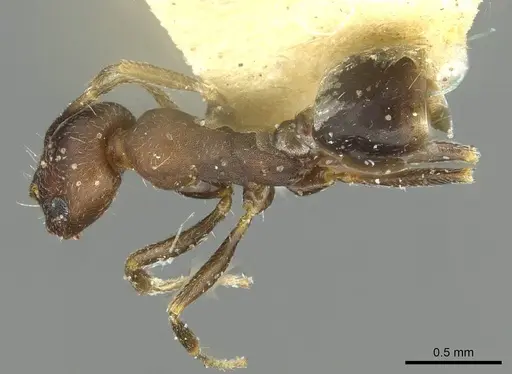
科学文献
正在加载分布地图...正在加载商品...