
Monomorium inquietum
- 学名
- Monomorium inquietum
- 族
- Solenopsidini
- 亚科
- Myrmicinae
- 命名者
- Santschi, 1926
- 地理分布
- 分布于 0 个国家/地区
物种引言
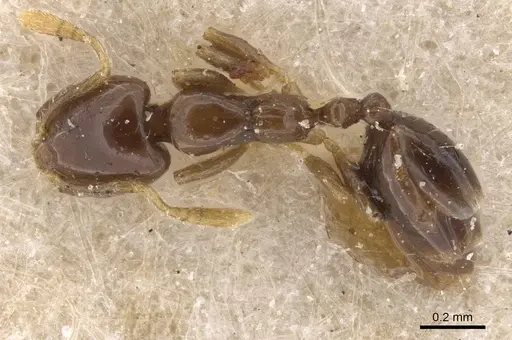
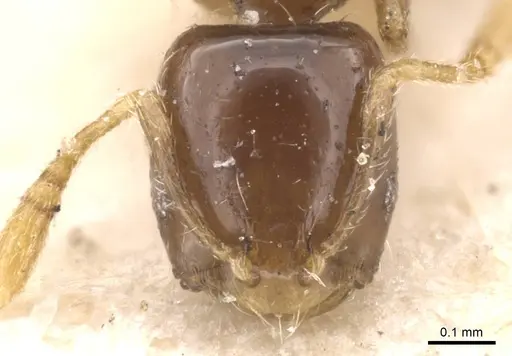
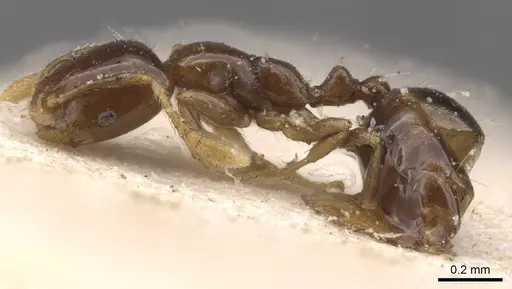
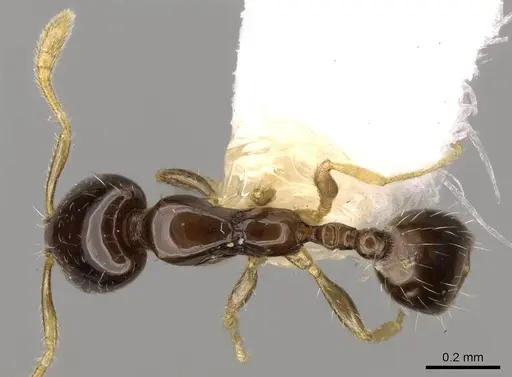
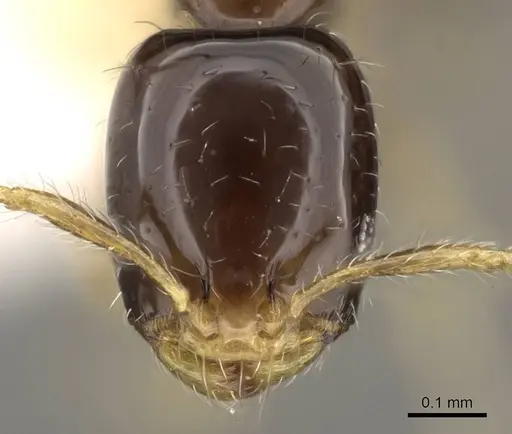
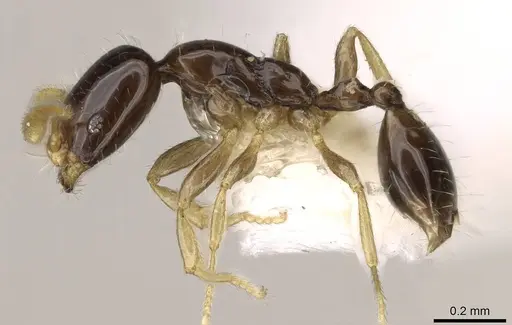
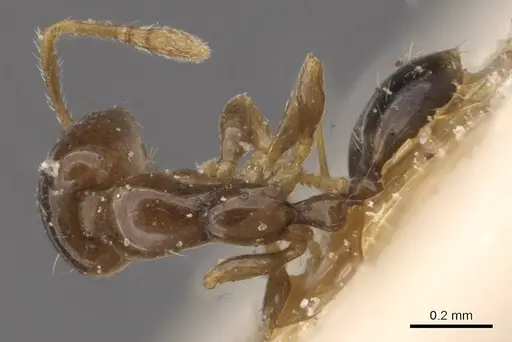
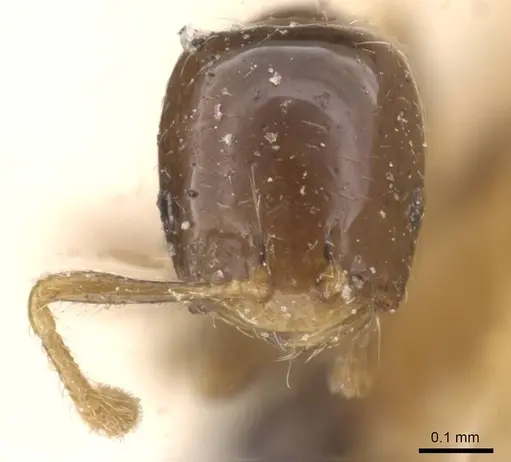
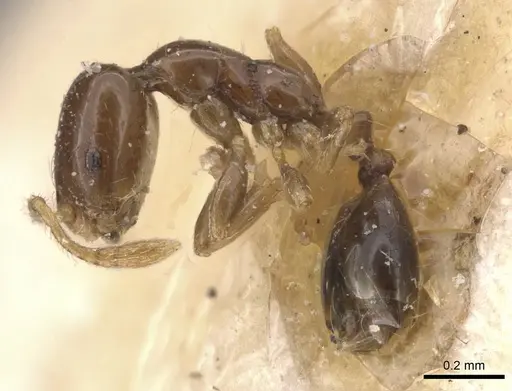
Monomorium inquietum is a small ant species native to Central and West Africa, documented in the Democratic Republic of Congo and forest-savanna mosaic regions of West Africa . Workers are tiny, typically around 2-3mm based on genus morphology, with the genus characterized by 10-segmented antennae featuring a 2-segmented club. The species was captured through arboreal sampling methods including beating, funnel traps, and pitfall traps, indicating they are active foragers in vegetation above ground level . This arboreal foraging behavior makes them unusual compared to many Monomorium species that nest primarily in soil. The colony size and detailed biology remain poorly documented in scientific literature.
Quick Summary
- Difficulty: Medium
- Origin & Habitat: Democratic Republic of Congo and West Africa, found in forest-savanna mosaic habitats [1][2]. They inhabit tropical to subtropical climates with seasonal rainfall patterns.
- Colony Type: Colony structure is unconfirmed. Based on typical genus patterns, likely single queen.
- Size & Growth:
- Queen: ~5-7mm, inferred from Monomorium genus patterns
- Worker: ~2-3mm, inferred from genus morphology
- Colony: Likely up to several hundred workers based on related species
- Growth: Moderate
- Development: Approximately 6-8 weeks at optimal temperature, inferred from related Monomorium species (Development time is inferred from related species, specific data for M. inquietum unavailable)
- Antkeeping:
- Temperature: Keep around 24-28°C. They come from warm tropical regions and need consistent heat.
- Humidity: Moderate to high humidity (60-80%). Their West African habitat experiences humid conditions.
- Diapause: No true diapause required given their tropical origin. May show reduced activity during dry seasons.
- Nesting: Based on arboreal foraging observations, they likely nest in elevated locations or rotting wood. In captivity, a Y-tong nest or plaster nest with small chambers works well. Provide climbing structures.
- Behavior: Active foragers that travel along trails. Based on genus behavior, they are generally non-aggressive but will defend their nest if threatened. Their small size makes them capable of escaping through tiny gaps, excellent escape prevention is essential. They likely accept sugar sources and small protein prey.
- Common Issues: escape prevention is critical due to their tiny size, they can squeeze through gaps smaller than 1mm, limited availability in the antkeeping hobby makes established colonies rare, tropical origin means they are sensitive to temperature drops below 24°C, wild-caught colonies may carry parasites that are difficult to treat, slow colony growth can frustrate beginners
Housing and Nest Setup
Monomorium inquietum requires careful housing due to their tiny size and arboreal tendencies. A Y-tong nest or plaster nest with small, tight chambers works well, avoid large open spaces that can overwhelm such small ants. Since they were captured through arboreal sampling methods, include climbing structures like twigs, plants, or mesh in their outworld [2]. Test tube setups work for founding colonies, but be prepared to upgrade as the colony grows. Escape prevention must be excellent, these ants can squeeze through gaps smaller than 1mm. Apply fluon or use fine mesh on all openings.
Feeding and Diet
Based on typical Monomorium genus behavior, these ants are generalist feeders. Offer sugar water, honey, or diluted nectar as a constant carbohydrate source. For protein, provide small prey items like fruit flies, pinhead crickets, or tiny mealworms. They are small enough that standard prey items may be too large, consider chopping prey into smaller pieces or culturing small feeder insects. Feed protein 2-3 times per week, and ensure sugar sources are always available.
Temperature and Heating
As a tropical African species, Monomorium inquietum requires warm conditions. Maintain temperatures between 24-28°C consistently. A small heating cable or mat on one side of the nest creates a temperature gradient allowing the ants to self-regulate. Place the heating on top of the nest to avoid evaporating moisture. Room temperature may be insufficient if your home is below 24°C, monitor with a thermometer. Avoid temperature fluctuations, as these can stress the colony.
Humidity and Water
Keep nest substrate moderately moist but not waterlogged. The West African habitat experiences humid conditions, so aim for 60-80% relative humidity. Provide a water tube or cotton ball with fresh water in the outworld at all times. Monitor for condensation, some moisture is good, but excessive condensation can drown small ants. Allow the substrate to dry slightly between waterings rather than keeping it constantly saturated.
Colony Development
Colony growth is likely moderate, with founding colonies starting slowly. Queens probably lay eggs within days of establishing, with eggs hatching into larvae within 1-2 weeks. The larval stage lasts several weeks before pupation. First workers typically emerge smaller than mature workers and may take 6-8 weeks total from egg to worker at optimal temperature. After the first workers arrive, colony growth typically accelerates as more brood is raised simultaneously.
Behavior and Temperament
These ants are active foragers, likely establishing trails to food sources. They are not particularly aggressive and typically flee rather than engage threats. However, they will defend their nest if threatened. Their small size means they are often overlooked by keepers but can be quite active and engaging when observed. They possess a sting but due to their tiny size, any sting is negligible to humans. The primary behavioral concern is their escape ability, they will exploit any gap in their enclosure.
Frequently Asked Questions
How long does it take for Monomorium inquietum to produce first workers?
Expect first workers in approximately 6-8 weeks at optimal temperature (24-28°C). This estimate is based on related Monomorium species, as specific development data for M. inquietum is not documented.
What do Monomorium inquietum ants eat?
They accept sugar sources (honey, sugar water) and small protein prey like fruit flies, pinhead crickets, or tiny mealworms. Cut prey into small pieces since their workers are only about 2-3mm.
Do Monomorium inquietum ants need hibernation?
No, they do not require hibernation. As a tropical African species, they need consistent warmth year-round. Maintain temperatures of 24-28°C throughout the year.
Are Monomorium inquietum good for beginners?
They are rated as medium difficulty. Their small size makes escape prevention challenging, and they are less commonly available than beginner species. They require warm, stable conditions but are otherwise relatively straightforward to keep.
How big do Monomorium inquietum colonies get?
Based on related species, colonies likely reach up to several hundred workers. Exact maximum size is unknown as this species has not been extensively studied in captivity.
Can I keep multiple Monomorium inquietum queens together?
Colony structure is not well-documented for this species. Based on typical Monomorium patterns, they likely form single-queen colonies. Combining unrelated queens is not recommended without documented evidence of pleometrosis in this species.
What temperature is best for Monomorium inquietum?
Keep them at 24-28°C consistently. This matches their tropical West African origin. A slight gradient allowing them to move between warmer and cooler areas is ideal.
Why are my Monomorium inquietum ants escaping?
Their tiny size allows them to squeeze through extremely small gaps. Use fluon on enclosure edges, fine mesh on ventilation holes, and ensure all lids fit tightly. Check for gaps smaller than 1mm.
When should I move Monomorium inquietum to a formicarium?
Move from test tube to a proper nest when the colony reaches 20-30 workers or the test tube becomes crowded. Ensure the new nest has appropriately sized chambers for their small workers.
Report an Issue
The current care sheet is based fully on literature. See inconsistencies, or something that's incorrect? Please , it will be resolved after review from an admin. Contributing to the blogs tab also helps providing information, to make us be able to further improve the caresheets. Thank you for your support!
References

此饲养指南授权协议为 CC BY-SA 4.0 .
社区博客
科学文献
正在加载分布地图...正在加载商品...