
Messor luridus
- 学名
- Messor luridus
- 族
- Stenammini
- 亚科
- Myrmicinae
- 命名者
- Santschi, 1927
- 地理分布
- 分布于 0 个国家/地区
物种引言
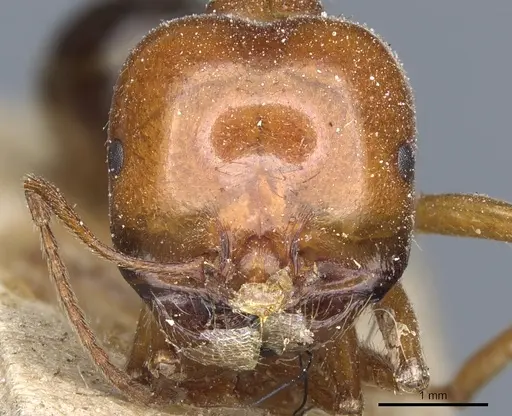
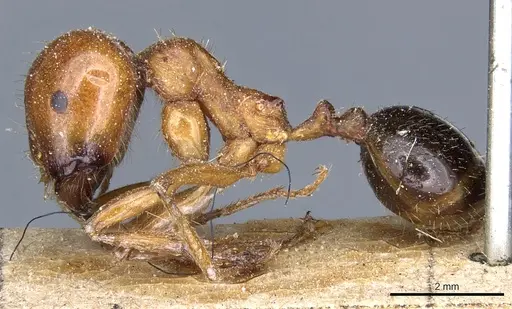
Messor luridus is a harvester ant native to Turkey and Syria in the Palaearctic region . Workers are polymorphic, with major workers having large mandibles for seed cracking and minor workers handling foraging . The species is dark reddish-brown to black . Size data is unavailable from research, but queens are larger than workers, inferred from Messor genus patterns . Founding behavior is unconfirmed . This species is known for seed-harvesting behavior, where workers collect and store seeds in underground granaries .
Quick Summary
- Difficulty: Easy
- Origin & Habitat: Native to Turkey and Syria in dry, open habitats [1][2][3].
- Colony Type: Based on Messor patterns, likely monogyne with single queen colonies [3].
- Size & Growth:
- Queen: Size data unavailable, inferred from Messor genus [3]
- Worker: Size data unavailable, inferred from Messor genus [3]
- Colony: Up to several thousand workers estimated [3]
- Growth: Moderate
- Development: 6-10 weeks estimated [3] (Development time varies with temperature, warmer conditions speed development)
- Antkeeping:
- Temperature: Keep at room temperature, roughly 20-26°C, with a gradient using a heating cable [3]
- Humidity: Keep nest substrate relatively dry with a small water tube for moisture [3]
- Diapause: Yes, requires winter diapause for 2-3 months at 10-15°C [3]
- Nesting: Test tubes work for founding colonies, transfer to a formicarium with dry nest chamber connected to an outworld [3]
- Behavior: These are peaceful ants that focus on seed harvesting rather than aggressive defense [3]. Workers are active foragers and not aggressive toward keepers [3]. Escape prevention is straightforward due to medium size, standard barriers work well [3].
- Common Issues: mold growth from overwatering, keep nest dry and only provide moisture through a water tube [3], colonies can outgrow small test tubes quickly, monitor growth and transfer to formicarium before workers escape [3], seed storage can attract pests, keep the outworld clean and remove uneaten seeds before they mold [3], hibernation failure if temperatures don't drop enough, ensure proper winter cooling period [3], major workers can crack and escape through standard barriers if cotton is loose, use secure barriers [3]
Nest Preferences and Setup
Messor luridus naturally nests in dry soil in open habitats [3]. In captivity, use test tubes for founding, a standard test tube with water reservoir sealed with cotton plug [3]. Once the colony reaches 20-30 workers, transfer to a small formicarium with a dry nest chamber connected to an outworld [3]. Keep the nest completely dry to prevent mold, as this species is adapted to arid conditions [3].
Feeding and Diet
As harvester ants, Messor luridus primarily eats seeds and grains, provide millet, chia, flax, or bird seed mixes [3]. Major workers crack larger seeds with their mandibles [3]. Offer protein from small insects like fruit flies or mealworms once or twice a week [3]. Remove uneaten seeds to prevent molding [3].
Temperature and Seasonal Care
Messor luridus prefers warm, dry conditions, keep nest at 20-26°C with a gradient [3]. During winter, reduce temperature to 10-15°C for 2-3 months for diapause [3]. Do not feed during hibernation and minimize moisture [3].
Behavior and Colony Dynamics
Workers establish foraging trails and process seeds together [3]. The colony is likely monogyne with a single queen [3]. Workers are polymorphic, majors handle seed cracking and defense, minors forage and care for brood [3]. They are docile and rarely sting [3]. Escape prevention is straightforward with standard barriers [3].
Frequently Asked Questions
How long does it take for Messor luridus to get first workers?
From egg to first worker, expect roughly 6-10 weeks at room temperature [3]. The queen raises the first brood alone in a claustral chamber [3].
Can I keep Messor luridus in a test tube?
Yes, test tubes work well for founding colonies, use a standard test tube with water reservoir and cotton plug [3]. Transfer to a formicarium when the colony reaches 20-30 workers [3].
What do Messor luridus ants eat?
They are harvester ants, primary food is seeds and grains like millet or bird seed [3]. They also need protein from small insects twice weekly [3].
Do Messor luridus ants need hibernation?
Yes, they require a winter diapause period at 10-15°C for 2-3 months [3]. Do not feed during this time and keep moisture minimal [3].
Are Messor luridus ants good for beginners?
Yes, they are docile and easy to care for, with forgiving humidity needs [3]. Main challenges are preventing mold and providing proper hibernation [3].
How big do Messor luridus colonies get?
Colonies can grow to several thousand workers over several years [3].
Do Messor luridus ants sting?
They can bite but rarely sting, major workers may bite if handled roughly [3]. They are generally docile toward keepers [3].
When should I move Messor luridus to a formicarium?
Transfer when the colony reaches 20-30 workers or when foraging activity increases [3]. Provide a dry nest chamber connected to an outworld [3].
What temperature do Messor luridus need?
Keep at 20-26°C with a gradient using a heating cable [3]. Avoid temperatures below 15°C except during hibernation [3].
Why is my Messor luridus colony dying?
Common causes are overwatering leading to mold, improper hibernation, or poor diet [3]. Keep nest dry, provide seeds and protein, and ensure proper winter cooling [3].
Report an Issue
The current care sheet is based fully on literature. See inconsistencies, or something that's incorrect? Please , it will be resolved after review from an admin. Contributing to the blogs tab also helps providing information, to make us be able to further improve the caresheets. Thank you for your support!
References

此饲养指南授权协议为 CC BY-SA 4.0 .
社区博客
CASENT0904125
在 AntWeb 上查看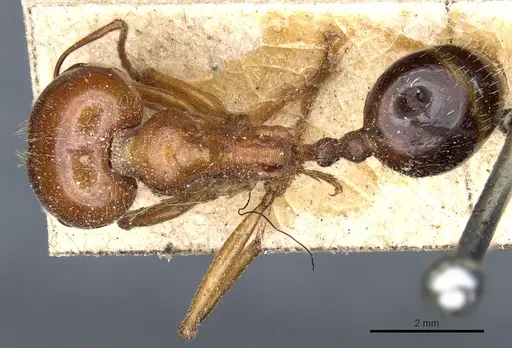
科学文献
正在加载分布地图...正在加载商品...