
Leptogenys mastax
- 学名
- Leptogenys mastax
- 族
- Ponerini
- 亚科
- Ponerinae
- 命名者
- Bolton, 1975
- 地理分布
- 分布于 0 个国家/地区
物种引言
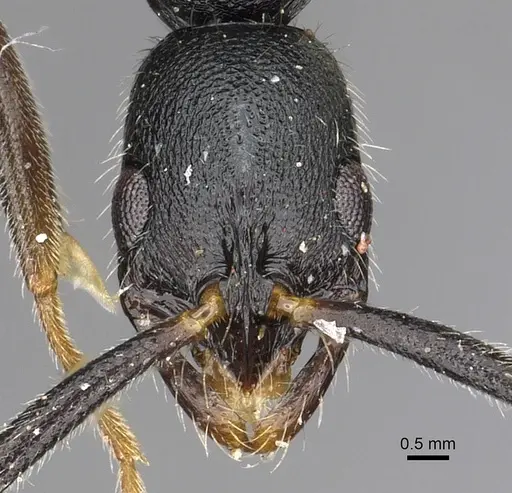
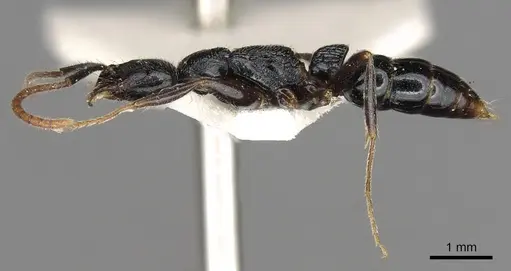
Leptogenys mastax is a slender, medium-sized predatory ant species from the Ponerinae subfamily, described by Bolton in 1975. Workers have the characteristic long, narrow body and elongated legs typical of the genus, with a dark brown to black coloration. Queens are slightly larger and more robust than workers. This species is known only from West Africa, specifically Ghana and Ivory Coast, where it inhabits tropical forest environments. The species is extremely rare in both research collections and the wild, with only four recorded occurrences all from protected forest areas in Ivory Coast . As a Ponerine ant, L. mastax is predatory, using its stinger to subdue prey.
Quick Summary
- Difficulty: Medium
- Origin & Habitat: West Africa (Ghana and Ivory Coast) in tropical forest habitats. All known specimens have been collected from protected forest areas in Ivory Coast [1].
- Colony Type: Colony structure has not been documented for this species. Based on typical Leptogenys genus patterns, colonies are likely single-queen.
- Size & Growth:
- Queen: Size data unavailable, no species-specific measurements exist for this species
- Worker: Size data unavailable, no species-specific measurements exist for this species
- Colony: Unknown, only four specimens have ever been recorded [1]
- Growth: Moderate, based on typical Ponerine development patterns
- Development: Development timeline is unconfirmed for this species (No species-specific development data exists. Related Ponerine species typically take several months from egg to adult worker.)
- Antkeeping:
- Temperature: Keep around 24-28°C. As a West African tropical species, they prefer warm conditions. A heating cable on one side of the nest creates a suitable gradient.
- Humidity: Moderate to high humidity (60-80%). Keep the nest substrate moist but not waterlogged. Ponerine ants typically prefer damp conditions.
- Diapause: No true diapause required, West African species experience year-round warm conditions. However, a slight reduction in temperature during winter months may be beneficial.
- Nesting: In nature, Leptogenys species typically nest in soil, under stones, or in rotting wood. In captivity, a Y-tong (AAC) nest or plaster nest with good moisture retention works well. Provide narrow chambers scaled to their medium size.
- Behavior: Leptogenys mastax is a predatory ant that hunts using its stinger. Workers are active foragers, typically hunting alone or in small groups. They are not aggressive toward humans but will sting if threatened. Escape risk is moderate, they are medium-sized ants but active and curious, so standard barrier methods are recommended.
- Common Issues: very limited species-specific information makes care recommendations uncertain, only four wild specimens have ever been recorded, so natural behavior is poorly understood, predatory nature requires live prey, they may not accept dead food easily, slow colony growth typical of Ponerine ants may frustrate beginners, humidity control is important, too dry can be fatal, too wet can cause mold
Housing and Nest Setup
Leptogenys mastax requires a nest that maintains moderate to high humidity while providing adequate ventilation. A Y-tong (AAC) formicarium or a plaster nest works well for this species. The chambers should be appropriately sized for medium-sized ants, not too tight, but not excessively large either. Provide a water reservoir connected to the nest to maintain humidity through capillary action. In the outworld, include a shallow water dish and ensure escape prevention is in place, though this species is not as prone to escaping as tiny ants. A gradient between the nest and outworld allows ants to regulate their temperature.
Feeding and Diet
As a Ponerine ant, Leptogenys mastax is predatory and requires live prey to thrive. Feed them small insects such as fruit flies, small crickets, mealworms, and other appropriately sized arthropods. They typically hunt alone, so prey should be small enough for a single worker to subdue. Some Leptogenys species will accept protein gels or dead prey if hungry enough, but live prey is always preferred. Sugar water or honey can be offered occasionally, but protein-rich prey is the primary food source. Feed every 2-3 days, adjusting based on colony size and consumption rate.
Temperature and Seasonal Care
This West African species requires warm conditions year-round. Maintain temperatures between 24-28°C in the nest area. A heating cable placed on top of the nest (never underneath to avoid excessive drying) can create a gentle warmth gradient. Since they come from a tropical climate with minimal seasonal variation, they do not require a true hibernation period. However, a slight temperature reduction of a few degrees during winter months (down to around 20-22°C) may help simulate natural seasonal cycles and potentially trigger breeding behavior. Avoid sudden temperature changes.
Behavior and Temperament
Leptogenys mastax workers are active hunters that forage individually or in small groups. They use their stinger to subdue prey, which makes them effective predators but also means they can deliver a sting if threatened. They are not typically aggressive toward humans and will flee rather than attack when given the chance. Workers are moderately fast-moving and curious about their surroundings. Colonies are likely to grow at a moderate pace, with the queen producing eggs continuously once established. The species is not known to be particularly territorial or aggressive toward other colonies.
Frequently Asked Questions
How long does it take for Leptogenys mastax to produce first workers?
Development timeline is unconfirmed for this species. Based on typical Ponerine development, expect first workers several months after the queen lays eggs, assuming optimal temperature around 26°C. This is an estimate since species-specific development data is not available.
What do Leptogenys mastax ants eat?
They are predatory ants that require live prey. Feed small insects like fruit flies, pinhead crickets, small mealworms, and other tiny arthropods. Some keepers report success with protein gels, but live prey is always preferred.
Are Leptogenys mastax good for beginners?
This species is rated as Medium difficulty. While not the most challenging ant to keep, the very limited species-specific information makes care somewhat uncertain. Beginners should be comfortable with predatory ant species that require live prey.
How big do Leptogenys mastax colonies get?
Colony size is unknown as only four wild specimens have ever been recorded [1]. The maximum colony size for this species has not been documented.
What temperature do Leptogenys mastax need?
Keep them warm at 24-28°C. As a West African tropical species, they do not tolerate cool conditions. A heating cable or mat can maintain appropriate temperatures.
Do Leptogenys mastax need hibernation?
No, they do not require true hibernation. As a tropical species from West Africa, they experience year-round warm conditions. A slight temperature reduction in winter may be beneficial but is not necessary.
Can I keep multiple Leptogenys mastax queens together?
This is not recommended. Colony structure is not documented for this species, and Leptogenys species are typically single-queen. Combining unrelated queens has not been studied and could result in fighting.
What humidity level do Leptogenys mastax need?
Maintain moderate to high humidity (60-80%) in the nest. Keep the substrate moist but not waterlogged. Good ventilation is also important to prevent mold buildup.
When should I move Leptogenys mastax to a formicarium?
You can keep them in a test tube setup for the founding stage. Once the colony reaches 15-20 workers and the test tube space becomes cramped, transfer to a proper formicarium with adequate space and humidity control.
Report an Issue
The current care sheet is based fully on literature. See inconsistencies, or something that's incorrect? Please , it will be resolved after review from an admin. Contributing to the blogs tab also helps providing information, to make us be able to further improve the caresheets. Thank you for your support!
References

此饲养指南授权协议为 CC BY-SA 4.0 .
社区博客
CASENT0902605
在 AntWeb 上查看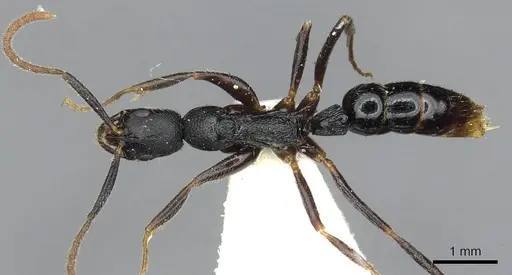
科学文献
正在加载分布地图...正在加载商品...