
Leptanilla oceanica
- 学名
- Leptanilla oceanica
- 族
- Leptanillini
- 亚科
- Leptanillinae
- 命名者
- Baroni Urbani, 1977
- 地理分布
- 分布于 0 个国家/地区
物种引言
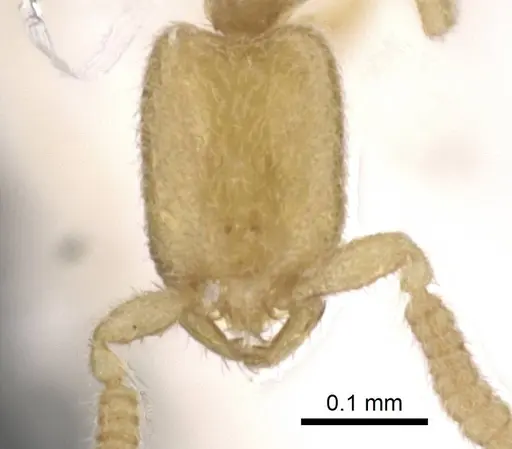
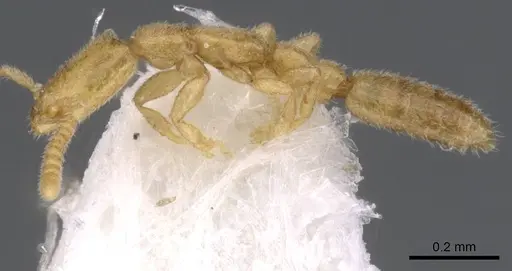
Leptanilla oceanica is an extremely rare subterranean ant species known only from the Ogasawara Islands (Bonin Islands) in Japan . These are among the smallest ants in the world, with workers measuring approximately 1-2mm in total length - roughly the size of a grain of sand . They belong to the subfamily Leptanillinae, a group of cryptic, underground-dwelling ants that are rarely encountered and poorly studied in the wild . The genus Leptanilla is characterized by tiny size, reduced eyes, and specialized morphology for life beneath the soil surface. This species was described in 1977 and remains known almost exclusively from the type specimen, making any captive care information essentially unprecedented.
Quick Summary
- Difficulty: Expert
- Origin & Habitat: Ogasawara Islands (Bonin Islands), Japan, subtropical island environment [1][2]. These ants live underground in soil, typical of the hypogaeic (subterranean) Leptanilla genus [5].
- Colony Type: Colony structure is unconfirmed. The Ogasawara Islands are remote volcanic islands with subtropical climate.
- Size & Growth:
- Queen: Unknown, no queen specimens have been described [6]
- Worker: Approximately 1-2mm in total length, inferred from Leptanilla genus patterns [3][4]
- Colony: Unknown, only a single worker specimen has been documented [6]
- Growth: Unknown
- Development: Unknown, no development data exists for this species (Based on related Leptanilla species and their tiny size, development is likely several months but this is entirely estimated)
- Antkeeping:
- Temperature: Aim for warm subtropical conditions around 24-28°C, consistent with their Ogasawara Islands origin. A gentle heat gradient allows the colony to self-regulate.
- Humidity: High humidity is essential, these are subterranean ants from a humid island environment. Keep the nest substrate consistently moist but not waterlogged.
- Diapause: Unknown, subtropical island populations may have minimal dormancy requirements, but this has not been studied
- Nesting: Subterranean lifestyle requires a setup that allows them to remain hidden. Tight chambers scaled to their minute size are essential. A plaster or soil nest with very small chambers works well.
- Behavior: Virtually nothing is known about their behavior in captivity. As subterranean Leptanilla, they likely forage underground for tiny soil arthropods like springtails and mites. Their extreme small size means escape prevention is absolutely critical, they can squeeze through gaps invisible to the naked eye. Expect shy, cryptic behavior with minimal surface activity.
- Common Issues: extreme small size makes escape prevention extremely difficult, use finest mesh available, no biological data exists for this species, all care is experimental, subterranean lifestyle means they may rarely be visible, risk of colony collapse from standard antkeeping mistakes due to unknown requirements, virtually impossible to find wild colonies to acquire
Why This Species Is Extremely Challenging
Leptanilla oceanica represents one of the most difficult ant species to keep in captivity, possibly the most difficult overall. This species has never been documented in the antkeeping hobby, and almost no biological information exists in scientific literature, we do not know their colony size, founding behavior, diet preferences, temperature tolerance, or any basic husbandry requirements. The only known specimens are workers collected from the Ogasawara Islands. Before attempting to keep this species, you should have extensive experience with other difficult subterranean ants like Leptanilla or Opamyrma. Even then, success is far from guaranteed, this is truly pioneering antkeeping at the frontier of what we know. [1][6]
Housing and Escape Prevention
Because workers measure only about 1-2mm in total length, standard antkeeping barriers may be completely ineffective. You will need laboratory-grade fine mesh on all openings. These ants can potentially squeeze through microscopic gaps. Housing should consist of very small, tight chambers scaled to their tiny size. A custom nest with passages just 1-2mm wide would be appropriate. Test tubes with cotton plugs may be too large, the ants could potentially escape through the cotton fibers themselves. Consider sealed setups with no gaps anywhere. [3][4]
Feeding and Diet
The diet of Leptanilla oceanica is completely unstudied, but related Leptanilla species are known to be predators of tiny soil arthropods. Based on genus patterns, they likely hunt springtails, soil mites, and other microscopic invertebrates. Live prey will almost certainly be required, these are specialized predators, not scavengers. Offer very small live prey like springtails, newly hatched isopods, or tiny fruit fly larvae. Sugar sources are unlikely to be accepted given their predatory nature. Feed small amounts frequently and remove uneaten prey to prevent mold. Start with springtails as a baseline and experiment cautiously with other micro-arthropods. [5]
Temperature and Environment
The Ogasawara Islands have a subtropical climate with warm temperatures year-round. Aim for nest temperatures around 24-28°C, with a slight gradient allowing the colony to choose their preferred zone. Heating should be gentle, a low-wattage heating cable on one side of the nest, never directly on the ants. High humidity is critical for these subterranean ants, think damp forest floor, not dry room air. Maintain humidity around 70-85% in the nest area. Use a water reservoir connected to the nest to maintain consistent moisture without daily misting. Avoid temperature fluctuations and drafts. [1]
Acquisition: The Biggest Challenge
Acquiring Leptanilla oceanica is perhaps the most difficult aspect of all. This species is known only from the Ogasawara Islands, a remote Japanese archipelago. No colonies have ever been documented in captivity, and finding wild colonies would require specialized subterranean sampling techniques in a location few ant researchers have ever visited. The realistic answer for antkeepers is: this species is essentially unavailable. If you are determined to attempt keeping Leptanilla, consider related species like Leptanilla japonica which may occasionally be available from specialized dealers, or work with researchers studying Japanese ants to potentially obtain specimens for research purposes. [1][7]
Frequently Asked Questions
Can I keep Leptanilla oceanica as a pet ant?
Practically speaking, no, this species is essentially impossible to acquire. It is known only from the remote Ogasawara Islands in Japan, and no captive colonies have ever been documented. Even if you could obtain specimens, the complete lack of biological data would make successful keeping extremely unlikely. Consider related Leptanilla species that are occasionally available from specialized ant dealers.
How big do Leptanilla oceanica colonies get?
Unknown, only a single worker specimen has ever been documented. Related Leptanilla species typically have colonies of a few dozen to a few hundred workers, but this is purely speculative for L. oceanica.
What do Leptanilla oceanica ants eat?
Unconfirmed, but based on genus patterns they are likely predators of tiny soil arthropods like springtails and mites. Live prey would almost certainly be required. Sugar sources are unlikely to be accepted.
Do Leptanilla oceanica ants sting?
Unknown, their extreme small size means any sting would be negligible to humans even if present. Most Leptanilla species do not have painful stings due to their minute size.
What temperature do Leptanilla oceanica ants need?
Based on their Ogasawara Islands origin, aim for warm subtropical conditions around 24-28°C. This is an estimate since no temperature data exists for this species.
How long does it take for Leptanilla oceanica to develop from egg to worker?
Unknown, no development data exists for this or virtually any Leptanilla species. Given their tiny size, development likely takes several months, but this is entirely speculative.
Are Leptanilla oceanica good for beginners?
Absolutely not. This is an expert-only species at best, and more accurately, a species that essentially cannot be kept due to acquisition impossibility and complete lack of biological data. Even experienced antkeepers should not attempt this species.
Do Leptanilla oceanica need hibernation?
Unknown, the Ogasawara Islands have a subtropical climate with mild winters, so any dormancy requirement would likely be minimal. However, this has never been studied for this species.
Report an Issue
The current care sheet is based fully on literature. See inconsistencies, or something that's incorrect? Please , it will be resolved after review from an admin. Contributing to the blogs tab also helps providing information, to make us be able to further improve the caresheets. Thank you for your support!
References

此饲养指南授权协议为 CC BY-SA 4.0 .
社区博客
CASENT0911452
在 AntWeb 上查看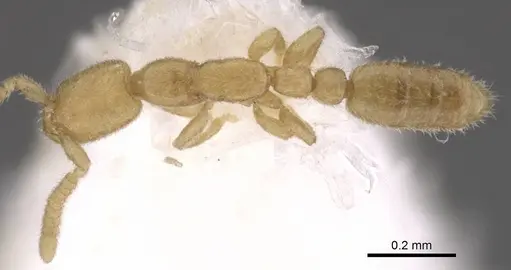
科学文献
正在加载分布地图...正在加载商品...