
Leptanilla najaphalla
- 学名
- Leptanilla najaphalla
- 族
- Leptanillini
- 亚科
- Leptanillinae
- 命名者
- Griebenow, 2024
- 地理分布
- 分布于 0 个国家/地区
物种引言
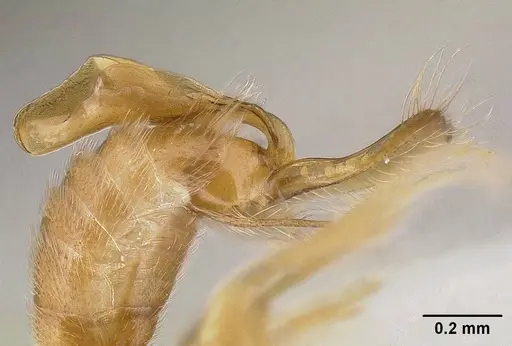
Leptanilla najaphalla is an extremely newly described ant species from the Leptanillinae subfamily, known only from male specimens collected in Sabah, Malaysia . Males are tiny ants - the genus Leptanilla typically has workers around 1-2mm in length, and males are similar in size . The species was formally described in 2024 and remains one of the most poorly known ants in the world, with workers, queens, and complete colony biology never documented . The species name 'najaphalla' combines 'Naja' (cobra) with '-phalla' (penis) due to the elaborate penial sclerites that resemble a cobra's threat display . This is a species for professional myrmecologists only - there is no established care information for this or most Leptanilla species.
Quick Summary
- Difficulty: Expert
- Origin & Habitat: Known only from a single locality in Sipitang District, Sabah, Malaysia (Mendolong at approximately 4.917°N,115.767°E). The habitat at the collection site is not described in available literature [1].
- Colony Type: Unknown, the species is only known from male specimens. Colony structure (single-queen vs multi-queen), queen morphology, and worker caste have never been described [1].
- Size & Growth:
- Queen: Unknown, queens have not been described [1]
- Worker: Unknown, workers have not been described. Based on typical Leptanilla genus size, workers are likely around 1-2mm [2]
- Colony: Unknown, colony size has not been documented [1]
- Growth: Unknown
- Development: Unknown, no breeding or development data exists for this species [1] (This species was described in 2024 from specimens collected in 1988. No biological observations beyond male morphology have been published.)
- Antkeeping:
- Temperature: Unknown, no temperature data exists for this species. The genus Leptanilla contains subterranean ants that typically live in stable, moderate temperatures underground, but L. najaphalla-specific requirements are unconfirmed.
- Humidity: Unknown, no humidity data exists for this species. General Leptanilla biology suggests they prefer stable, moderately humid subterranean conditions, but this is unconfirmed for L. najaphalla.
- Diapause: Unknown, no seasonal biology data exists for this species [1].
- Nesting: Unknown, no nesting observations exist for this species. The genus Leptanilla consists of tiny, subterranean (hypogaeic) ants that rarely venture above ground, but L. najaphalla-specific nesting preferences are unconfirmed [1].
- Behavior: Unknown, no behavioral observations exist for this species. The genus Leptanilla is known for being extremely cryptic, subterranean, and rarely collected, but L. najaphalla-specific behavior is unconfirmed [1]. Escape risk cannot be assessed without worker descriptions.
- Common Issues: this species has no established care guidelines, keeping it would be entirely experimental, workers and queens have never been described, making it impossible to provide accurate housing recommendations, no feeding observations exist, what this species eats in captivity is completely unknown, the species may be extremely difficult to locate or acquire even for research purposes, attempting to keep this species would require significant experimental husbandry with no guarantee of success
Species Discovery and Taxonomy
Leptanilla najaphalla was formally described in 2024 by Zachary Griebenow as part of a comprehensive systematic revision of the Leptanillinae subfamily [1]. The species is known only from male specimens collected in April and May 1988 in Sipitang District, Sabah, Malaysia [1]. The type locality is Mendolong, at approximately 4.917°N,115.767°E [1]. The species was included in phylogenetic analyses under the provisional identifier 'Leptanilla zhg-my02' before being formally named [1]. The 'Bornean morphospecies group' to which this species belongs was previously known only from male specimens, making L. najaphalla one of many Leptanilla species described exclusively from males [1]. The species name 'najaphalla' derives from the genus Naja (cobras) and '-phalla' (penis), referring to the elaborate penial sclerites that resemble a cobra's threat display [1].
Why This Species Is Not Suitable for Typical Antkeeping
Leptanilla najaphalla represents one of the most poorly known ant species in the world and is absolutely not suitable for typical antkeeping. The species has only ever been observed in male form, workers, queens, and all colony biology remain completely undocumented [1]. This is not a case of incomplete data, the species was only described in 2024 and was based on specimens collected in 1988 that had been sitting in museum collections [1]. Without workers or queens, it is impossible to determine housing requirements, feeding needs, temperature preferences, colony size, or any of the basic parameters antkeepers need. Even the most experienced antkeepers would be unable to maintain this species, as there is simply no biological information to guide husbandry. This species is of interest only to professional myrmecologists conducting taxonomic research [1].
What We Know About the Male
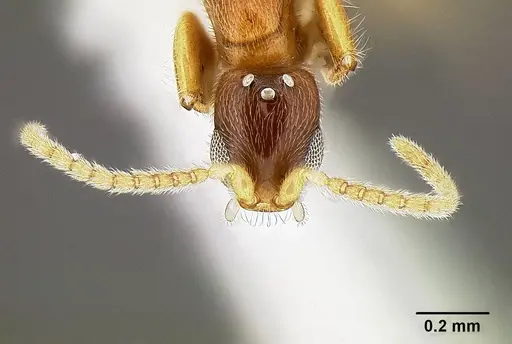
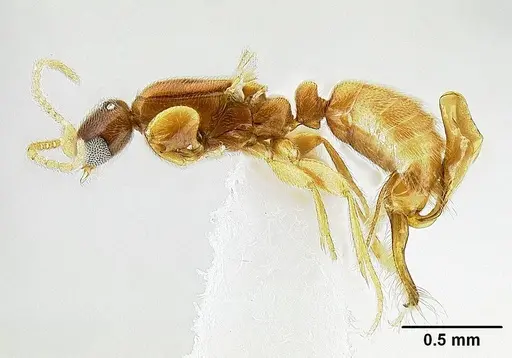
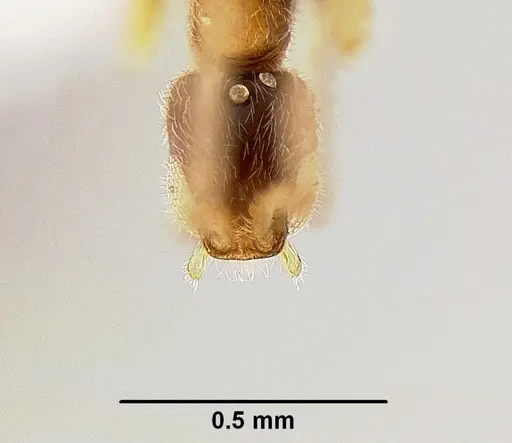
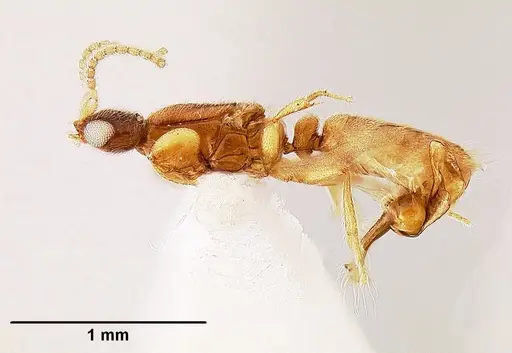
The male Leptanilla najaphalla has been thoroughly described morphologically. Males have distinctive morphological features including a quadrate cranial outline with an emarginate occiput, and the frons is produced into an anterior shelf [1]. The mandibles are distinctly longer than broad and articulated to the gena [1]. Compound eyes are somewhat longer than wide, and the mesoscutum is longer than broad [1]. The propodeum is convex in profile with distinct dorsal and posterior faces [1]. Wing venation includes costal infuscation, and the abdominal segment II is slightly broader than long [1]. The most distinctive feature is the elaborate genitalia, the penial sclerites are not dorsoventrally compressed and are basally recurved, with lateral laminate flanges giving the appearance of a cobra's threat display [1]. These males were collected in April and May 1988 using various collection methods at the Mendolong locality [1].
The Genus Leptanilla - General Context
While L. najaphalla-specific biology is unknown, the genus Leptanilla provides some general context, though this should be treated with caution as species-level biology can differ significantly. Leptanilla species are among the smallest ants in the world, with workers typically measuring 1-2mm in length [2]. They are hypogaeic (subterranean), meaning they live underground and rarely come to the surface [2]. The genus is known for its extreme cryptic lifestyle, Leptanilla ants are among the rarest collected ants in the world, with most species known from only a handful of specimens [2]. Their biology is poorly understood, but they are believed to be predators or to have specialized diets [2]. The subfamily Leptanillinae is considered primitive among ants, with several unusual morphological features [2]. However, none of this general genus information has been confirmed for L. najaphalla specifically, and applying this knowledge to keeping this species would be purely speculative [1].
Frequently Asked Questions
Can I keep Leptanilla najaphalla as a pet?
No. This species is not suitable for antkeeping. Workers and queens have never been described, and no biological information exists to guide captive care. The species was only described in 2024 and is known only from male specimens collected in 1988. Keeping this species would be entirely experimental with no chance of success.
What do Leptanilla najaphalla ants eat?
Unknown. No feeding observations exist for this species. While other Leptanilla species are believed to be predatory or have specialized diets, L. najaphalla-specific feeding behavior has never been documented [1].
How do I house Leptanilla najaphalla?
No housing recommendations can be provided. Without workers or queens ever being described, there is no information about the species' size, nesting preferences, or colony requirements. Standard antkeeping approaches would not be applicable [1].
Are Leptanilla najaphalla ants dangerous?
Unknown. No sting observations or toxicity data exists for this species. Workers have never been described, so the presence or absence of a stinger is unconfirmed [1].
How big do Leptanilla najaphalla colonies get?
Unknown. Colony size has never been documented. The only specimens ever collected are males, which were likely dispersing from colonies. The size of established colonies is completely unknown [1].
Do Leptanilla najaphalla queens fly?
Unknown. Queens have never been described for this species. The nuptial flight behavior, timing, and any mating habits are completely undocumented [1].
What is the temperature requirement for Leptanilla najaphalla?
Unknown. No temperature data exists for this species. While the genus Leptanilla consists of subterranean ants that typically live in stable underground temperatures, L. najaphalla-specific requirements are unconfirmed [1].
Does Leptanilla najaphalla need hibernation?
Unknown. No seasonal biology data exists for this species. The collection date (April-May) suggests the males were dispersing at that time, but hibernation requirements are completely undocumented [1].
Where can I get Leptanilla najaphalla?
This species is extremely unlikely to be available through any antkeeping source. It was only described in 2024,is known only from a single locality in Sabah, Malaysia, and has never been collected by antkeepers. Even professional researchers have difficulty locating Leptanilla species due to their subterranean lifestyle [1].
Is Leptanilla najaphalla a good beginner ant?
No. This species is absolutely not suitable for beginners or any antkeeper. There are no care guidelines, no established husbandry methods, and no possibility of obtaining a colony. Even expert antkeepers would be unable to maintain this species [1].
Report an Issue
The current care sheet is based fully on literature. See inconsistencies, or something that's incorrect? Please , it will be resolved after review from an admin. Contributing to the blogs tab also helps providing information, to make us be able to further improve the caresheets. Thank you for your support!
References

此饲养指南授权协议为 CC BY-SA 4.0 .
社区博客
CASENT0106416
在 AntWeb 上查看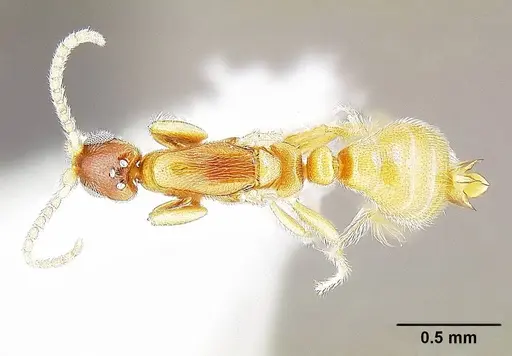
CASENT0106451
在 AntWeb 上查看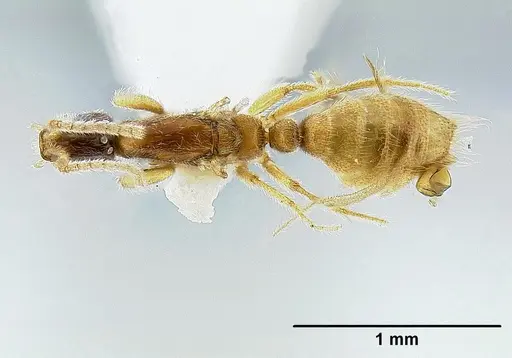
科学文献
正在加载分布地图...正在加载商品...