
Leptanilla astylina
- 学名
- Leptanilla astylina
- 族
- Leptanillini
- 亚科
- Leptanillinae
- 命名者
- Petersen, 1968
- 地理分布
- 分布于 0 个国家/地区
物种引言
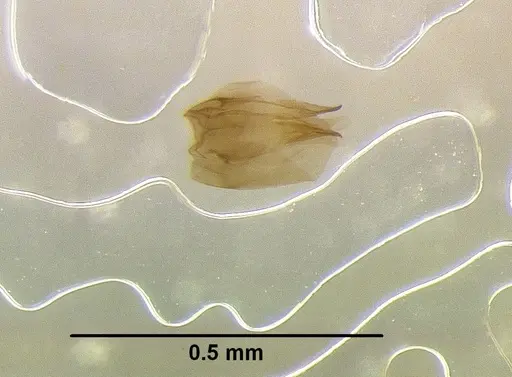
Leptanilla astylina is one of the most poorly known ants in the world, known only from a single male specimen collected in 1961 in Palawan, Philippines . This minute ant measures about 1.15 mm in body length without antennae, making it among the smallest ants documented . It is distinguished by its highly reduced wing venation – only the subcosta vein is present, the most reduced state known in the subfamily Leptanillinae – and its unusual genitalia that lack gonostyli entirely . The specimen was captured in a Malaise trap placed inside primary forest at 600 m elevation . No workers, queens, or colonies have ever been observed or collected. This species represents a complete gap in ant biology: its captive care requirements are entirely unknown because the worker and queen castes remain undescribed .
Quick Summary
- Difficulty: Expert
- Origin & Habitat: Palawan, Philippines – tropical primary forest at 600 m elevation [1][2]
- Colony Type: Unknown – only a male has been described, colony structure, queen number, and social organization are unconfirmed [1]
- Size & Growth:
- Queen: Unknown – queens have never been described [1]
- Worker: Unknown – workers have never been described [1]
- Colony: Unknown – no colonies have been observed [1]
- Growth: Unknown
- Development: Unknown – workers have never been described [1] (Development timeline cannot be estimated as the worker caste is unknown.)
- Antkeeping:
- Temperature: Unknown – no captive data exists. Based on the Palawan location (tropical), this species likely prefers warm conditions in the mid-to-high 20s °C, but this is entirely speculative [1].
- Humidity: Unknown – no captive data exists. Tropical forest location suggests high humidity preference, but unconfirmed [1].
- Diapause: Unknown – no seasonal data available from the single specimen capture [3].
- Nesting: Unknown – no nesting observations exist. Related Leptanilla species are typically hypogaeic (subterranean), so this species likely nests in soil or rotting wood, but this is inferred from genus-level patterns, not direct observation [1].
- Behavior: Unknown – the only known specimen is a male captured in a Malaise trap, providing no behavioral observations. Based on genus-level patterns, Leptanilla species are typically predatory on small arthropods and live subterranean lives, but these behaviors have not been confirmed for L. astylina specifically. Escape risk cannot be assessed as workers are unknown [1].
- Common Issues: This species cannot be kept in captivity – workers and queens have never been described or collected., No captive husbandry information exists for this species., The single known specimen provides no ecological or behavioral data., Related Leptanilla species are extremely difficult to maintain in captivity due to their specialized predatory diets and subterranean habits., Even locating this species in the wild would require specialized field work since only one male has ever been found.
Why This Species Cannot Be Kept
Leptanilla astylina represents one of the most extreme cases of limited data in ant taxonomy. The entire scientific knowledge of this species consists of a single male specimen collected in 1961 [1]. No workers, no queens, no colonies, and no ecological observations exist. This is not a case of rare or difficult species – it is a species that has effectively never been found since that initial discovery. Without workers, nobody can identify workers in the field. Without queens, colonies cannot be established. Without any behavioral data, care instructions cannot be provided. Even if you were to travel to Palawan and attempt to collect this species, you would have no way to identify workers in the field because no one knows what they look like. This makes L. astylina fundamentally different from other rare or cryptic ant species that at least have described worker castes [3].
What We Know About the Known Specimen
The holotype male (the only known specimen) measures about 1.15 mm in body length without antennae, with antennae adding another 0.6 mm [3]. The specimen is light brownish to testaceous in color, with no conspicuous sculpture and only inconspicuous short semi-erect setae. The eyes are hairy with large facets. Most notably, the wing venation is extremely reduced – only the subcosta vein is present, representing the most reduced state known in the entire subfamily Leptanillinae [3]. The genitalia are highly unusual: the gonocoxites do not meet ventrally, gonostyli are completely absent, and the volsellar plates are medially fused into a single tongue-shaped structure. This unique genital morphology initially prompted consideration of placing it in a new genus, though researchers ultimately kept it in Leptanilla due to insufficient knowledge of the group [1][4].
Phylogenetic Placement
Recent phylogenetic research places Leptanilla astylina within the Leptanilla bethyloides species-group, recovered as sister to an undescribed species (Leptanilla TH07) with moderate support (BPP = 0.82) [5]. This placement differs from an earlier provisional assignment to the L. revelierii species-group. The species shares with Leptanilla TH07 an apomorphic character state: the distinction between the metapleuron and the rest of the metapectal-propodeal complex is lost [5]. However, researchers note that this placement may be an artifact of bare-branch attraction due to missing morphological data for Leptanilla TH07 (15 characters pertaining to male genitalia were not coded for that species) [5]. This phylogenetic information tells us about evolutionary relationships but provides no guidance for captive care.
What This Means for Antkeepers
If you are interested in keeping Leptanilla ants, look for other described species in the genus. Leptanilla is a genus of very small, predatory ants that are typically subterranean. Several species have been described with known workers and can potentially be kept by experienced antkeepers willing to provide specialized care. However, L. astylina specifically is not available and cannot be obtained – it exists only as a museum specimen. The Philippines (particularly Palawan) does host multiple Leptanilla species, and future field work may eventually discover workers of this species, but for now, this remains a species known only to taxonomists studying pinned specimens [1][2]. Do not expect to find this species for sale, and do not attempt to seek it out in the field without professional taxonomic guidance.
Frequently Asked Questions
Can I keep Leptanilla astylina as a pet?
No. This species cannot be kept because workers and queens have never been described or collected. The entire species is known from a single male specimen in a museum. There is no way to obtain this species or establish a colony [1].
Where can I find Leptanilla astylina for sale?
This species is not available in the antkeeping hobby. It has never been collected since the original 1961 specimen, and even if it were found, the worker caste is unknown so it cannot be identified or maintained [1][3].
What do Leptanilla astylina ants eat?
Unknown. No observations of feeding behavior exist. Based on genus-level patterns, Leptanilla species are typically predatory on small arthropods, but this has not been confirmed for this specific species [1].
How big do Leptanilla astylina colonies get?
Unknown. No colonies have ever been observed or collected. The maximum colony size is completely unrecorded [1].
What temperature do Leptanilla astylina ants need?
Unknown. No captive data exists. The species was collected in Palawan, Philippines (tropical primary forest at 600 m), suggesting warm, humid conditions, but specific requirements are unconfirmed [1].
Are Leptanilla astylina ants aggressive?
Unknown. No behavioral observations exist. The only known specimen is a male captured in a passive trap that provides no behavioral data [1].
Do Leptanilla astylina ants need hibernation?
Unknown. No seasonal data is available from the single specimen capture [3].
What does the queen look like?
Unknown. Queens have never been described or observed. The species is known only from a single male specimen [1].
How long does development take from egg to worker?
Unknown. Workers have never been described, so no development timeline exists [1].
Is Leptanilla astylina a good species for beginners?
No ant species is suitable for beginners when only a single museum specimen exists. This species cannot be kept at all. For beginner-friendly Leptanilla species with described workers, you would need to seek other, better-documented species [1].
Can I collect Leptanilla astylina from the wild?
This would be extremely impractical and unlikely to succeed. The species has only been collected once (in 1961), and without knowing what the workers look like, you would not be able to identify them in the field. Additionally, Palawan is a protected area with collection regulations [1].
What makes Leptanilla astylina different from other Leptanilla species?
It has the most reduced wing venation of any Leptanillinae (only the subcosta vein present), unique genitalia lacking gonostyli entirely, and is known only from a single male specimen – making it one of the most poorly known ant species in the world [3][4].
Report an Issue
The current care sheet is based fully on literature. See inconsistencies, or something that's incorrect? Please , it will be resolved after review from an admin. Contributing to the blogs tab also helps providing information, to make us be able to further improve the caresheets. Thank you for your support!
References

此饲养指南授权协议为 CC BY-SA 4.0 .
社区博客
ZMUC00240037
在 AntWeb 上查看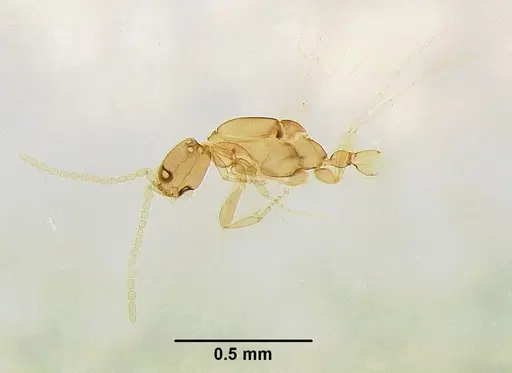
科学文献
正在加载分布地图...正在加载商品...