
Lasius karpinisi
- 学名
- Lasius karpinisi
- 族
- Lasiini
- 亚科
- Formicinae
- 命名者
- Seifert, 1992
- 地理分布
- 分布于 0 个国家/地区
物种引言
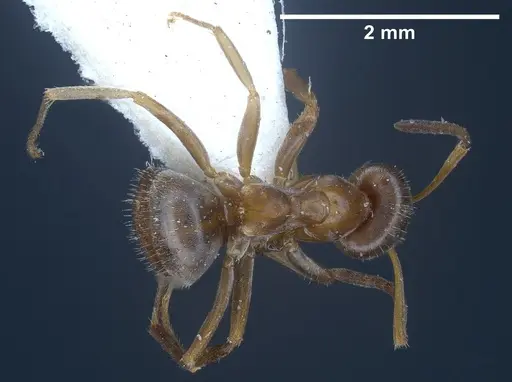
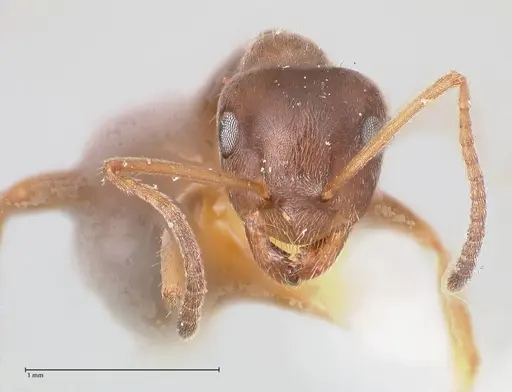
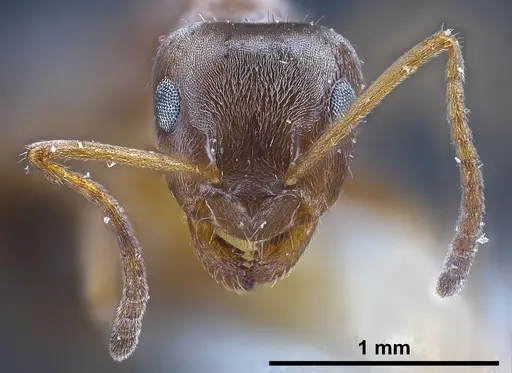
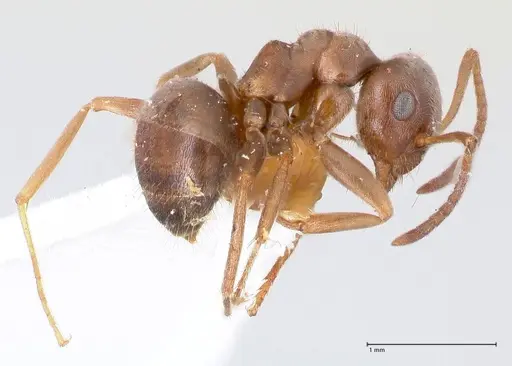
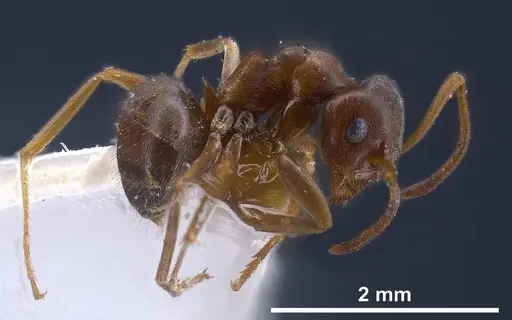
Lasius karpinisi is a small ant belonging to the Lasius niger clade, endemic to the Pindos Mountains in central Greece. Workers have a distinctive two-tone coloration: the head and gaster are dark brown with a reddish tinge, while the mesosoma, petiole, coxae, and femora are reddish brown . The most notable morphological feature is their unusually long antennal scape relative to head length, which helps distinguish them from similar species . This species is known only from a single collection in 1982,making it one of the rarest and least-studied European ants . Size data is unavailable - only head measurements exist in the literature .
Quick Summary
- Difficulty: Unknown, extremely limited data
- Origin & Habitat: Endemic to the Pindos Mountains, Greece, specifically Mt. Timfristos near Karpinisi at approximately 38.92°N and 21.86°E [3]. The specific habitat type at the type locality is not documented.
- Colony Type: Unknown, only worker caste has been described.
- Size & Growth:
- Queen: Size data unavailable, queen caste has not been described
- Worker: Size data unavailable, only head measurements exist in the literature [3]
- Colony: Unknown, no colony data exists
- Growth: Unknown, no development data exists
- Development: Unknown, no species-specific data exists (Development timeline has not been studied for this species)
- Antkeeping:
- Temperature: Unknown for this species. Based on its Greek mountain habitat at approximately 39°N, it likely prefers cooler to moderate temperatures. No species-specific data exists.
- Humidity: Unknown. No habitat moisture data exists for this species.
- Diapause: Likely yes, as a temperate Greek mountain species, winter diapause is probable based on similar Lasius species, though not documented for this specific species.
- Nesting: Unknown, no natural nesting observations exist for this species.
- Behavior: Not documented. No behavioral observations exist in the scientific literature.
- Common Issues: No captive husbandry data exists, this species has never been kept in captivity, Extremely rare and only known from a single wild collection, availability is likely nil, No information on founding behavior, unknown if claustral or semi-claustral, No colony size data, growth expectations are completely unknown
Species Overview and Rarity
Lasius karpinisi is an extraordinarily rare ant species that has only ever been recorded once in the wild, a single collection from Mt. Timfristos in central Greece in 1982 [1]. This makes it one of the least-studied ants in Europe. The species was formally described by Bernhard Seifert in 1992 based on just a few worker specimens [1]. Since then, no additional specimens have been found, and absolutely no biological data exists about this species in the scientific literature [4]. This means we know what the workers look like, where they were found, and very little else. As a keeper, you will almost certainly never encounter this species for sale, it is not in the antkeeping hobby trade and may well be extinct or nearly so in the wild.
Identification and Distinction
Lasius karpinisi can be identified by a combination of features: very long antennal scapes relative to head length, a broad head with a slightly concave back, a well-developed ridge on the face (clypeal carina), and reddish-brown coloring on the middle body section (mesosoma) [4]. The most reliable distinguishing feature from similar species is that the scapes have no standing hairs on top, and the hind tibiae have only a few semi-erect hairs [1]. Related species like Lasius illyricus have more obvious standing hairs on the antennae and usually more than 4 standing hairs on the hind tibiae [4]. For antkeepers, this is a 'collector only' species in terms of identification interest, actually obtaining and keeping live colonies is essentially impossible given how rarely it's found.
Distribution and Habitat
This species is known only from the Pindos Mountains in central Greece, specifically from Mt. Timfristos (also called Vardousia), located about 4 km east of Karpinisi (Karpenisi) in the Evritania region [3]. The type locality sits at approximately 38.92°N and 21.86°E [3]. This is a mountainous area in central Greece, which suggests the species may prefer cooler, higher-elevation habitats. However, no specific habitat information was recorded with the original specimens [1]. The species is considered a Greek endemic, it has never been found anywhere else in the world [5][2].
Care Recommendations (Highly Speculative)
Since no live specimens have ever been kept and no biological research exists on this species, all care recommendations are educated guesses based on what we know about related Lasius ants. Keep temperature moderate, around 18-22°C, with a slight gradient if possible. Use standard Lasius-style housing, test tubes for founding colonies, Y-tong or plaster nests for established colonies. Humidity should be moderate, not bone dry, but not damp either. Provide a winter rest period of 2-3 months at 5-10°C, as this is a temperate species from a mountain region. Feed sugar water/honey and small protein sources like fruit flies or pinhead crickets, as you would for any Lasius. These recommendations have no species-specific validation, this ant may have completely different needs, but we have no way of knowing.
Availability and Legal Considerations
Lasius karpinisi is almost certainly not available in the antkeeping hobby. This species is known from perhaps 4 worker specimens collected in 1982 and has never been found again since [1]. It may be extremely rare in the wild, possibly even endangered or extinct. Even if specimens were somehow collected, they would be of significant scientific interest and should not be kept as pets. If you encounter what appears to be this species for sale, it is almost certainly a misidentification, other similar Lasius like Lasius niger, Lasius emarginatus, or Lasius brunneus are commonly sold. Do not purchase or keep wild-caught specimens of rare endemic species. Instead, consider keeping the more common and well-documented Greek Lasius species like Lasius emarginatus or Lasius niger.
Frequently Asked Questions
Can I keep Lasius karpinisi as a pet?
No, this species is not available in the antkeeping hobby and has never been documented in captivity. It is known only from a single collection in 1982 and may be extremely rare or extinct in the wild. Even if you could obtain one, it would be of significant scientific interest and should not be kept as a pet.
How do I identify Lasius karpinisi?
Lasius karpinisi workers have very long antennal scapes relative to their head length, a broad head with a slightly concave back, and reddish-brown coloring on the mesosoma. The key distinguishing feature is the complete absence of standing hairs on top of the scape and very few hairs on the hind tibiae. However, accurate identification requires expert-level ant taxonomy knowledge.
Where does Lasius karpinisi live?
This species is only known from the Pindos Mountains in central Greece, specifically Mt. Timfristos near Karpinisi. It is a Greek endemic that has never been found anywhere else in the world.
What do Lasius karpinisi eat?
Unknown, no feeding observations exist for this species.
Do Lasius karpinisi need hibernation?
Likely yes, as a temperate species from mountain Greece, winter diapause is probable based on similar Lasius species, though not documented for this specific species.
How big do Lasius karpinisi colonies get?
Unknown, no colony size data exists for this species.
How long does it take for Lasius karpinisi to develop from egg to worker?
Unknown, no development data exists for this species.
Are Lasius karpinisi aggressive?
Unknown, no behavioral observations exist for this species.
Can I find Lasius karpinisi in the wild?
Extremely unlikely. This species has only been recorded once, in 1982,from a specific mountain in central Greece. Even professional myrmecologists have not found additional specimens since then.
What is the best nest type for Lasius karpinisi?
Unknown, no captive husbandry exists for this species.
Report an Issue
The current care sheet is based fully on literature. See inconsistencies, or something that's incorrect? Please , it will be resolved after review from an admin. Contributing to the blogs tab also helps providing information, to make us be able to further improve the caresheets. Thank you for your support!
References

此饲养指南授权协议为 CC BY-SA 4.0 .
社区博客
FOCOL0744
在 AntWeb 上查看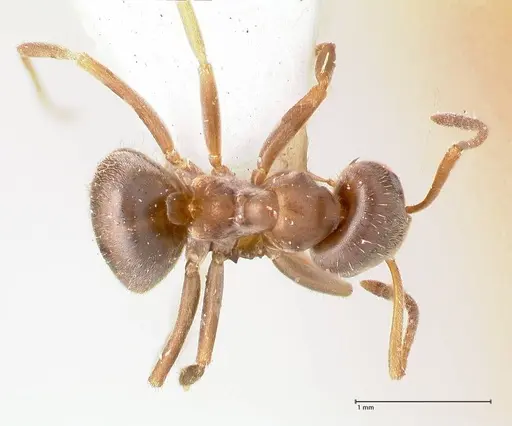
科学文献
正在加载分布地图...正在加载商品...