
Hypoponera ceylonensis
- 学名
- Hypoponera ceylonensis
- 族
- Ponerini
- 亚科
- Ponerinae
- 命名者
- Mayr, 1897
- 地理分布
- 分布于 0 个国家/地区
物种引言
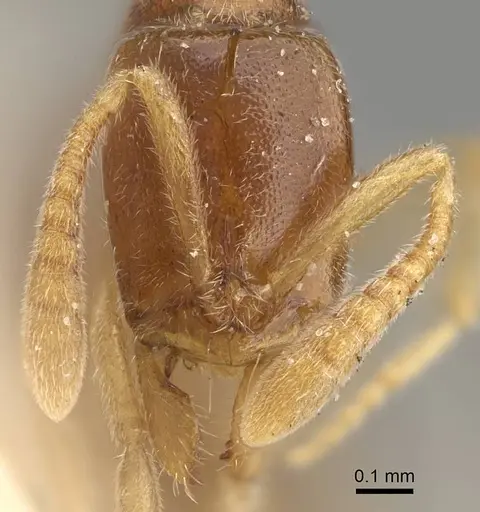
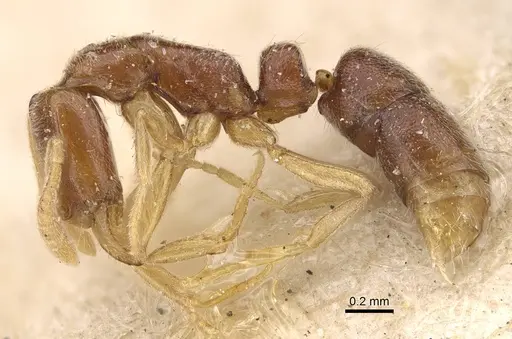
Hypoponera ceylonensis is a tiny predatory ant native to Sri Lanka and southern China. Workers measure 2.6mm and are completely blind, navigating through chemical and tactile senses . They have a distinctive yellowish to brownish-red coloration with a shiny appearance and fine punctures . This species is a habitat specialist restricted to primary forest environments - research shows they occupy only primary forest regions and are completely absent from secondary forest or rubber plantations . As a Ponerine ant, they are predators that hunt small invertebrates on the forest floor.
Quick Summary
- Difficulty: Medium
- Origin & Habitat: Native to Sri Lanka and southern China (Yunnan/Xishuangbanna region). This is a primary forest specialist found only in old-growth forest environments, not in disturbed areas or plantations [2].
- Colony Type: Colony structure is unconfirmed.
- Size & Growth:
- Queen: Size data unavailable, no queen measurements exist in available literature
- Worker: 2.6mm [1]
- Colony: Unknown, no colony size data available
- Growth: Unknown
- Development: Unknown, no specific development data exists for this species (Related Ponerines typically take several weeks from egg to worker at optimal temperatures.)
- Antkeeping:
- Temperature: Keep at 24-28°C. As a tropical/subtropical species from Sri Lanka and Yunnan, they need warm, stable conditions.
- Humidity: High humidity is essential, these are primary forest floor ants. Keep nest substrate consistently moist but not waterlogged.
- Diapause: Unknown, tropical origin suggests they may not require true hibernation.
- Nesting: Natural nesting is under study. In captivity, provide a moist nesting chamber, test tubes with water reservoirs or plaster nests work well. Their tiny size and blind nature suggest they prefer enclosed, dark spaces.
- Behavior: These ants are completely blind and rely on chemical communication and tactile senses [1]. As predators, they hunt small invertebrates. Their tiny 2.6mm size means escape prevention must be excellent, they can squeeze through remarkably small gaps. Ponerines are typically moderate in aggression, focusing on hunting rather than defending large territories. They are likely nocturnal or crepuscular foragers given their reduced vision.
- Common Issues: tiny size makes escape likely without fine mesh barriers, primary forest specialist means they may be sensitive to habitat changes, no colony size data makes growth expectations uncertain, blind navigation may cause stress in open or brightly lit setups, high humidity requirements can lead to mold if ventilation is poor
Housing and Nest Setup
Hypoponera ceylonensis is a tiny ant at just 2.6mm worker size, so housing must account for their small stature. Use test tubes with water reservoirs for founding colonies, the small diameter suits their size well. For established colonies, plaster nests or small formicariums with narrow chambers work better than large, open spaces. These are blind ants that prefer dark, enclosed spaces, so provide covered nesting areas. Because they are primary forest specialists, maintain high humidity within the nest while allowing some ventilation to prevent mold. A small outworld connected to the nest allows for feeding without disturbing the colony. [1][2]
Feeding and Diet
As a Ponerine ant, Hypoponera ceylonensis is predatory and will hunt small invertebrates. Offer small live prey such as fruit flies, pinhead crickets, small mealworms, and other micro-arthropods. They are tiny predators, so prey should be appropriately sized, no larger than their own body size. Sugar sources may be accepted but are not a primary food source for predatory Ponerines. Feed small prey items 2-3 times per week, adjusting based on colony size and consumption. Remove uneaten prey after 24 hours to prevent mold.
Temperature and Humidity
This species comes from tropical Sri Lanka and subtropical Yunnan, so warm temperatures are essential. Maintain nest temperatures between 24-28°C. A heating cable on one side of the nest creates a gradient allowing workers to self-regulate. Place the heating on top of the nest to avoid drying out the substrate too quickly. High humidity is critical, these are forest floor ants from primary forest environments. Keep the nest substrate consistently moist but never waterlogged. The substrate should feel damp to the touch. Room temperature in most homes may be too cool, so consider supplemental heating for successful colony development. [2]
Behavior and Colony Dynamics
Hypoponera ceylonensis workers are completely blind, navigating entirely through chemical pheromones and tactile senses [1]. This affects how they explore and forage, they likely follow pheromone trails and use antennae to sense their environment. They are not aggressive defenders but are efficient predators. Colonies likely start small and grow gradually. The queen's location and behavior during founding is unconfirmed, but Ponerine queens typically seal themselves in a chamber and raise the first brood alone. Given their primary forest origin, they likely prefer stable, undisturbed conditions and may be stressed by frequent disturbances or bright lighting.
Growth Expectations
No specific development timeline exists for this species. First workers (nanitics) will be smaller than mature workers. Growth rate is likely moderate. Colonies probably remain relatively small compared to many common ant species. Patience is key with this species as specific timing data is lacking.
Frequently Asked Questions
How long does it take for Hypoponera ceylonensis to produce first workers?
The exact timeline is unknown for this species. No specific development data exists for Hypoponera ceylonensis.
What do Hypoponera ceylonensis ants eat?
They are predatory Ponerine ants that hunt small invertebrates. Feed them appropriately sized live prey such as fruit flies, small crickets, springtails, and other micro-arthropods. Their tiny 2.6mm size means prey should be small, roughly their body size or smaller. Sugar water may be occasionally accepted but protein from prey is essential.
Are Hypoponera ceylonensis good for beginners?
This species is rated as medium difficulty. While not the most challenging ant, the lack of specific care data and their status as a primary forest specialist means they have specific humidity and temperature requirements that require attention. Their tiny size also demands excellent escape prevention.
What temperature should I keep Hypoponera ceylonensis at?
Keep them warm at 24-28°C. As a tropical species from Sri Lanka and southern China, they need consistently warm conditions. A slight temperature gradient allowing workers to move between warmer and cooler areas is ideal. Room temperature alone is likely too cool.
Why are my Hypoponera ceylonensis dying?
Common causes include: low humidity (they need damp forest-floor conditions), temperatures that are too cool, escape through tiny gaps due to their very small 2.6mm size, and stress from excessive disturbance. They are primary forest specialists so stable, humid conditions are essential.
Can I keep multiple queens together?
Colony structure is unconfirmed for this species. Without documented evidence of multi-queen colonies, keeping queens together is not recommended.
Do Hypoponera ceylonensis need hibernation?
Diapause requirements are unknown. Their tropical origin (Sri Lanka, Yunnan) suggests they may not need true hibernation, but cooler winter temperatures may slow their activity. If you choose to cool them during winter months, do so gradually and keep temperatures above 18°C.
When should I move Hypoponera ceylonensis to a formicarium?
Move them when the colony reaches several dozen workers and the test tube setup shows signs of crowding or moisture issues. For this tiny species, a small formicarium with narrow chambers is better than a large one. They prefer enclosed, dark nesting spaces.
How big do Hypoponera ceylonensis colonies get?
Colony size data is not available for this species. Based on their tiny worker size (2.6mm) and typical Ponerine patterns, colonies likely remain relatively small at maturity. They are not among the large colony-forming ants.
Report an Issue
The current care sheet is based fully on literature. See inconsistencies, or something that's incorrect? Please , it will be resolved after review from an admin. Contributing to the blogs tab also helps providing information, to make us be able to further improve the caresheets. Thank you for your support!
References

此饲养指南授权协议为 CC BY-SA 4.0 .
社区博客
CASENT0922435
在 AntWeb 上查看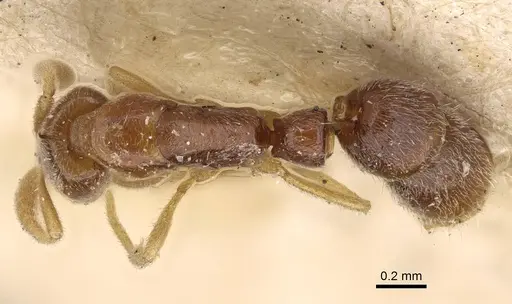
科学文献
正在加载分布地图...正在加载商品...