
Formica cinereofusca
- 学名
- Formica cinereofusca
- 族
- Formicini
- 亚科
- Formicinae
- 命名者
- Karavaiev, 1929
- 地理分布
- 分布于 0 个国家/地区
物种引言
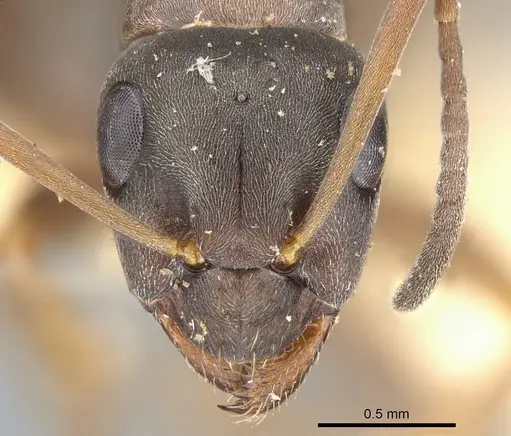
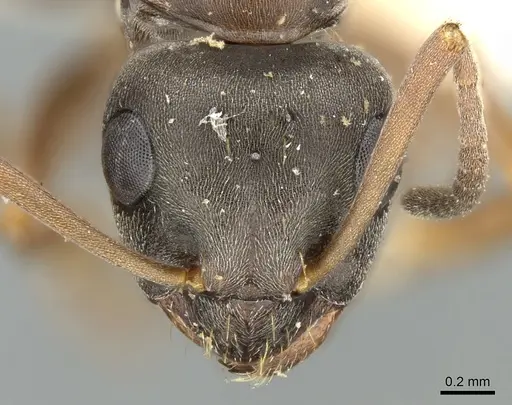
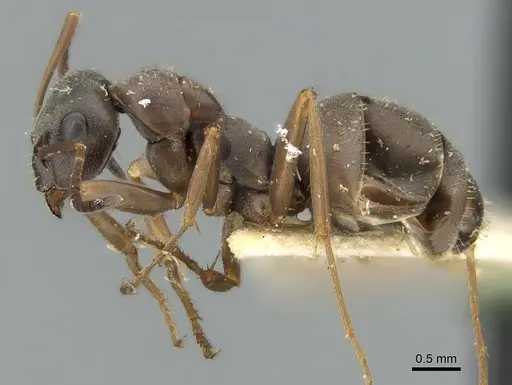
Formica cinereofusca is a rare montane ant from the Formicinae subfamily. Originally described as a variety of Formica cinerea in 1929,it was raised to full species status in 1967 . Its distribution is patchy across the Palaearctic: the Carpathian Mountains in Ukraine, the Caucasus region (Georgia, Armenia, Azerbaijan, Russian North Caucasus), and parts of Turkey . It is considered a Tertiary relict, meaning it has survived from ancient warmer periods in cool high-altitude refuges . This ant is notable for its strong mutualistic relationship with aphids – it tends and protects over 30 aphid species in exchange for honeydew . However, virtually no biological data exist on its colony structure, founding behavior, or development . It remains one of the least studied Formica species, making its care in captivity highly experimental.
Quick Summary
- Difficulty: Unknown
- Origin & Habitat: Native to montane regions of the Palaearctic including the Carpathian Mountains (Ukraine), Caucasus (Georgia, Armenia, Azerbaijan, Russian Federation), and European Turkey. Found in high-altitude meadows of the Greater and Lesser Caucasus ranges [2][7][6]. A rare species considered a Tertiary relict [2].
- Colony Type: Unknown – no data on queen number (single- or multi-queen) available [6]. As a Formica species, it likely forms single-queen colonies (monogyne), but this is unconfirmed.
- Size & Growth:
- Queen: Unknown – no direct measurements available
- Worker: Unknown – no direct measurements available
- Colony: Unknown – no data on maximum colony size [6]
- Growth: Unknown
- Development: Unknown – no specific development data. Based on related Formica species, estimate 6-10 weeks at optimal temperature. (Development timeline has not been studied for this species. Estimates are based on typical Formica genus patterns.)
- Antkeeping:
- Temperature: Keep at room temperature (18-22°C) as a starting point. As a montane species from cool Caucasus habitats, it likely prefers cooler conditions than tropical ants. Provide a temperature gradient so the colony can choose its preferred zone.
- Humidity: Moderate humidity typical of temperate ants. Keep the nest substrate slightly moist but not waterlogged. Montane meadows experience seasonal moisture variation.
- Diapause: Likely requires hibernation (diapause) given its temperate montane distribution. Provide a cold period around 5-10°C for 3-4 months during winter, similar to other European Formica species.
- Nesting: In the wild, this species nests in soil and under stones in mountain meadows [6]. For captivity, use a standard formicarium with soil or plaster substrate plus a separate foraging area. Provide a shallow water source and sugar station.
- Behavior: Typical Formica behavior – docile, non-aggressive, and active foragers. Their main diet in the wild is aphid honeydew, so sugar water or diluted honey should form the dietary base. They spray formic acid for defense (no sting). Escape risk is moderate – standard formicarium barriers are sufficient.
- Common Issues: no colony foundation data exists – introducing a wild-caught queen may be the only option, but success rates are unknown, extremely limited biological data means keepers must rely on genus-typical care patterns for everything, as a rare montane species, wild populations are fragile – avoid collecting from the wild if possible, no information on whether this species accepts sugar water – test with diluted honey or sugar water and observe, cold sensitivity is unknown – monitor colony response to temperature carefully
Natural History and Distribution
Formica cinereofusca is a montane ant species found across the Caucasus region and adjacent areas. In Ukraine, it is known only from the Carpathian Mountains, where it is considered rare – only single or few specimens have been recorded [2][7]. The species is classified as part of the montane zoogeographic complex associated with coniferous forest zones and is thought to be a Tertiary relict [2].
In the Caucasus (Georgia, Armenia, Azerbaijan, and the Russian North Caucasus), it occurs in high-altitude meadows of the Greater and Lesser Caucasus ranges [6]. The Turkish population is recorded from the Thrace region in European Turkey [4]. This patchy, montane distribution explains why it is rarely encountered and poorly studied.
Association with Aphids
One of the few well-documented aspects of Formica cinereofusca is its mutualistic relationship with aphids. Research shows that Formica is the ant genus most highly associated with aphids globally, and this species has documented relationships with over 30 different aphid species including Aphis aurantii, Aphis craccivora, Aphis fabae, Aphis gossypii, and many Cinara species [5].
In captivity, you should replicate this by providing honeydew sources. Offer sugar water (1:4 ratio with water) or diluted honey in a test tube with a cotton wick. Occasionally offer small live prey like fruit flies or small crickets for protein, but honeydew or sugar should form the dietary foundation. The ants will 'farm' any aphids you place in their outworld, so be careful not to introduce unwanted pests.
Housing and Nest Setup
Since this species nests in soil and under stones in its natural habitat, a naturalistic setup with a soil chamber works well. Use a standard formicarium with a soil or plaster nest chamber and a separate foraging area. The nest should have moderate moisture – montane meadows are not waterlogged, so keep the substrate slightly moist but never wet.
For the foraging area, provide a shallow water dish with a cotton wick (to prevent drowning) and offer sugar or honey water. Because this species is associated with aphids on vegetation, consider adding artificial plants or a small branch for them to explore – but this is optional.
Temperature should be kept at room temperature (18-22°C) as a starting point. Since it is a montane species from cool regions, avoid overheating. A slight gradient (warm side ~22°C, cool side ~18°C) allows the colony to self-regulate. [6]
Seasonal Care and Hibernation
Given its distribution in temperate montane regions with cold winters, this species almost certainly requires a hibernation period. Provide a cold period of 3-4 months during winter, with temperatures around 5-10°C. This can be achieved by moving the colony to an unheated garage, basement, or refrigerator during the winter months.
Reduce feeding during hibernation and keep the nest slightly moist (not dry, not wet). Most Formica species become dormant during cold months, so expect reduced activity or complete inactivity. Resume normal feeding and temperatures gradually in spring.
The timing of nuptial flights is unknown for this species [6], but based on typical Formica patterns in temperate regions, they likely occur in late summer. If you maintain a colony, watch for winged reproductives in late July through September.
Frequently Asked Questions
How long does it take for Formica cinereofusca to develop from egg to worker?
The development timeline has not been studied for this specific species. Based on typical Formica genus patterns, expect approximately 6-10 weeks from egg to first worker at optimal temperature (around 20°C). However, this is an estimate – actual development time may vary.
What do Formica cinereofusca ants eat?
This species is highly associated with aphids and feeds primarily on honeydew. In captivity, offer sugar water (1:4 ratio) or diluted honey as a constant food source. Occasionally offer small live prey like fruit flies or small crickets for protein. Avoid overfeeding sugar sources as it can attract mold.
What temperature is best for Formica cinereofusca?
Keep them at room temperature (18-22°C) as a starting point. As a montane species from cool Caucasus habitats, they likely prefer cooler conditions than many tropical ants. Provide a slight temperature gradient so the colony can choose its preferred zone.
Does Formica cinereofusca need hibernation?
Yes, given its temperate montane distribution, hibernation is almost certainly required. Provide a cold period of 3-4 months during winter at temperatures around 5-10°C. This mimics the natural seasonal cycle in its native Carpathian and Caucasus habitat.
How big do Formica cinereofusca colonies get?
The maximum colony size is unknown – this species has not been studied in detail [6]. Based on related Formica species, colonies likely reach several hundred to a few thousand workers. However, since it is considered a rare species in the wild, expect smaller colony sizes than more common Formica species.
Is Formica cinereofusca a good species for beginners?
This species is not recommended for beginners due to the complete lack of biological data. Almost every aspect of their care (founding, development, colony size, exact temperature/humidity needs) must be inferred from genus-typical patterns. They are best suited for experienced keepers who can adapt care based on colony response and are willing to experiment.
Can I keep multiple Formica cinereofusca queens together?
No data exists on whether this species is monogyne (single queen) or polygyne (multiple queens) [6]. Until more information is available, it is safest to keep only one queen per colony. Combining unrelated queens is not recommended without documented evidence that they can coexist.
Where is Formica cinereofusca found in the wild?
This species is native to montane regions of the Palaearctic: the Carpathian Mountains in Ukraine, the Caucasus region (Georgia, Armenia, Azerbaijan, Russian North Caucasus), and parts of Turkey. It is considered a rare species and a Tertiary relict, surviving in cool high-altitude habitats [2][3].
Why is Formica cinereofusca so poorly documented?
This species is rare in the wild (known from only single or few specimens in most areas) and lives in remote montane habitats that are difficult to access for research. Additionally, as a non-economic species with no significant impact on agriculture or ecosystems, it has received little scientific attention [2][6].
Report an Issue
The current care sheet is based fully on literature. See inconsistencies, or something that's incorrect? Please , it will be resolved after review from an admin. Contributing to the blogs tab also helps providing information, to make us be able to further improve the caresheets. Thank you for your support!
References

此饲养指南授权协议为 CC BY-SA 4.0 .
社区博客
CASENT0906315
在 AntWeb 上查看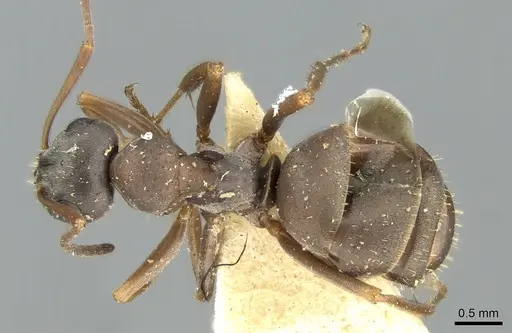
科学文献
正在加载分布地图...正在加载商品...