
Euponera haratsingy
- 学名
- Euponera haratsingy
- 族
- Ponerini
- 亚科
- Ponerinae
- 命名者
- Rakotonirina & Fisher, 2013
- 地理分布
- 分布于 0 个国家/地区
物种引言
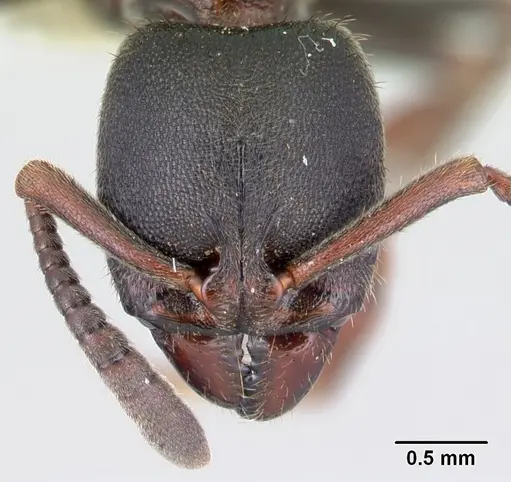
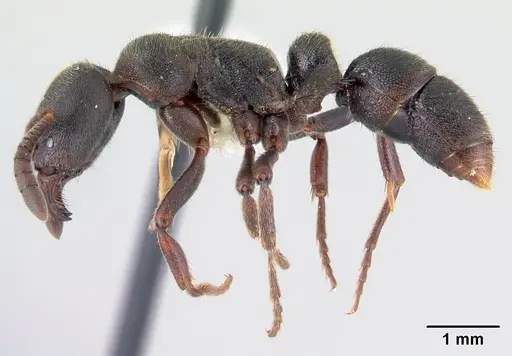
Euponera haratsingy is a small, dark brown ponerine ant native to the dry forests of northwestern Madagascar. Workers have a distinctive dark brown body with reddish-brown legs and a lighter-colored tip of the abdomen. The species is known for its finely sculptured head and petiole, giving it a textured appearance under magnification. This ant was discovered in the Ankarana Reserve, a region of limestone karst formations and dry deciduous forest in northern Madagascar. Only a single worker has ever been collected, making this one of the rarest and least studied ants in the world. The genus Euponera belongs to the Ponerinae subfamily, which contains many predatory ants that hunt small invertebrates on the forest floor.
Quick Summary
- Difficulty: Expert
- Origin & Habitat: RS Ankarana in northwestern Madagascar, found at 150m elevation in dry deciduous forest leaf litter [1][2]
- Colony Type: Unknown, only a single worker has ever been documented [1]
- Size & Growth:
- Queen: Size data unavailable, queen has never been described
- Worker: Size data unavailable, only head width (1.51mm) and mesosoma length (2.37mm) measurements exist, not total body length [2]
- Colony: Unknown, only one worker ever collected
- Growth: Unknown, no colony data exists
- Development: Unknown, no development data exists for this species (Development timeline must be estimated from related Ponerinae species)
- Antkeeping:
- Temperature: Estimated 22-26°C based on Madagascar lowland forest habitat, provide a gentle thermal gradient and monitor colony activity
- Humidity: Estimated 60-80%, these ants live in leaf litter in a seasonal dry forest, so they likely tolerate some variation but need access to moisture
- Diapause: Unknown, no seasonal data available for this species
- Nesting: Likely prefers humid, dark spaces like a Y-tong or plaster nest with moist substrate. In nature they forage through leaf litter, so a naturalistic setup with substrate depth works well.
- Behavior: Behavior is unconfirmed due to the lack of observations. Based on related Ponerinae, they are likely predatory on small invertebrates. As a Ponerinae ant, they have a functional stinger for subdueing prey. Escape risk is moderate given their size, standard barriers should suffice. Their cryptic lifestyle in leaf litter suggests they prefer dark, humid environments and may be shy rather than aggressive.
- Common Issues: this species is known from a single worker, captive colonies may not exist and wild collection is unlikely, no established care guidelines exist, you will be essentially pioneering husbandry for this species, slow growth is likely given the ponerinae pattern, patience is essential, high humidity requirements can lead to mold problems if ventilation is inadequate, predatory diet means you must commit to providing regular live prey
Why Euponera haratsingy Is a Challenge
This species represents one of the most challenging ants to keep because virtually nothing is known about its biology in captivity. The entire scientific knowledge base consists of a single worker collected from leaf litter in Madagascar in 1990. No queens have ever been found, no colonies have been observed, and no breeding or development data exists. This means you cannot rely on established care sheets, you will essentially be discovering how to keep this species through your own experimentation. This makes it an expert-level species only suitable for experienced antkeepers who enjoy the process of figuring out new species. If you want a guaranteed success, choose a better-documented species instead. [1][2]
Housing and Nest Preferences
Based on the natural habitat (leaf litter in a dry forest at low elevation in Madagascar), these ants likely prefer humid, dark environments with access to moist substrate. A Y-tong nest or plaster nest with built-in water reservoir works well for Ponerinae species. The nest should have chambers scaled appropriately for this ant, not too large, as these ants prefer tight spaces. Provide a moisture gradient by keeping one side slightly damp and allowing the other to be marginally drier so the ants can choose their preferred zone. The outworld should include a layer of substrate or leaf litter material where they can forage, mimicking their natural leaf-litter environment. [1]
Feeding and Diet
As a Ponerinae ant, Euponera haratsingy is likely predatory on small invertebrates like springtails, booklice, and other micro-arthropods. Ponerinae ants typically have a functional stinger and subdue prey with venom, so they need live prey items they can successfully tackle. Offer small live prey such as flightless fruit flies, small crickets, mealworms, and most importantly, micro-prey like springtails or isopods. Sugar sources may or may not be accepted, some Ponerinae will take honey or sugar water, while others are strictly predatory. Offer sugar occasionally but do not rely on it as a primary food source. Feed protein prey 2-3 times per week, adjusting based on colony consumption.
Temperature and Seasonal Care
Given the origin in northwestern Madagascar at 150m elevation, these ants come from a warm, seasonal dry forest environment. Aim for temperatures in the range of 22-26°C, with a slight gradient allowing the ants to regulate their own temperature. A heating cable on one side of the nest can create this gradient, place it on top of the nest to warm the chambers gently. No specific diapause requirements are documented, but related species from similar latitudes may show reduced activity during the cooler months. Monitor your colony, if they become less active in winter, reduce feeding and allow a cool period around 18-20°C.
Obtaining This Species
Euponera haratsingy is extremely unlikely to be available in the antkeeping hobby. Only a single specimen has ever been collected by scientists, and the species has never been documented in captivity. There are no known established breeder colonies. If you do obtain this species, it would likely be from a very rare wild collection attempt in Madagascar, which raises significant ethical and legal concerns. Most antkeepers interested in rare species should consider better-documented Ponerinae like Cryptothrix, Brachyponera, or other species that have established breeding histories in captivity. [1][2]
Frequently Asked Questions
Is Euponera haratsingy available for purchase?
No, this species is virtually unavailable in the antkeeping hobby. Only a single worker has ever been documented in scientific literature, and no captive colonies exist. You will not find this species for sale from any major ant farm or breeder.
How do I care for Euponera haratsingy?
No established care guidelines exist because this species has never been kept in captivity. Any care advice would be speculative extrapolation from related Ponerinae species. If you somehow obtain this species, you would need to experiment with temperature (22-26°C), humidity (60-80%), and live prey feeding to discover what works.
How big do Euponera haratsingy colonies get?
Unknown, colony size has never been documented. Based on related Ponerinae species in the genus, colonies are likely small, possibly reaching dozens to a few hundred workers at most.
What does Euponera haratsingy eat?
Likely predatory on small invertebrates based on Ponerinae biology. Probably accepts springtails, small insects, and other micro-arthropods. Sugar acceptance is uncertain, some Ponerinae take honey while others do not.
Where is Euponera haratsingy found?
Only known from the RS Ankarana reserve in northwestern Madagascar, at approximately 150m elevation. This is a limestone karst region with dry deciduous forest.
Is Euponera haratsingy a good species for beginners?
Absolutely not, this is an expert-level species that should only be kept by very experienced antkeepers, and only if captive colonies ever become available. The complete lack of any care history means you would be pioneering husbandry for a species we know almost nothing about.
Do I need to hibernate Euponera haratsingy?
Diapause requirements are unknown. Given the Madagascar origin (near the equator at low elevation), seasonal temperature variations are modest. Related species from similar latitudes may not require true hibernation but may reduce activity in cooler months.
How long does it take for Euponera haratsingy to develop from egg to worker?
Unknown, no development data exists for this species. Related Ponerinae species typically take 6-12 weeks from egg to worker at optimal temperatures, but this is purely speculative for E. haratsingy.
Can I keep multiple queens of Euponera haratsingy together?
Unknown, colony structure has never been documented. The genus Euponera shows variation in colony structure across species, but no data exists for this specific species. Combining unrelated queens is not recommended without evidence they will tolerate each other.
Report an Issue
The current care sheet is based fully on literature. See inconsistencies, or something that's incorrect? Please , it will be resolved after review from an admin. Contributing to the blogs tab also helps providing information, to make us be able to further improve the caresheets. Thank you for your support!
References

此饲养指南授权协议为 CC BY-SA 4.0 .
社区博客
CASENT0195184
在 AntWeb 上查看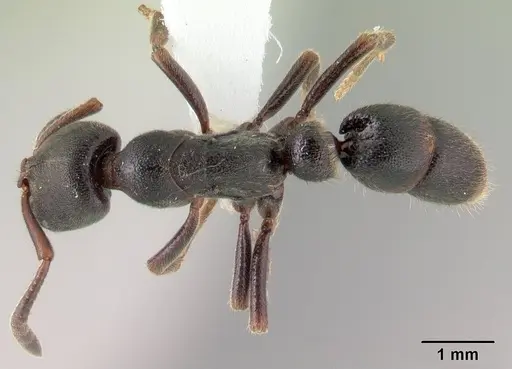
科学文献
正在加载分布地图...正在加载商品...