
Echinopla serrata
- 学名
- Echinopla serrata
- 族
- Camponotini
- 亚科
- Formicinae
- 命名者
- Smith, 1859
- 地理分布
- 分布于 0 个国家/地区
物种引言
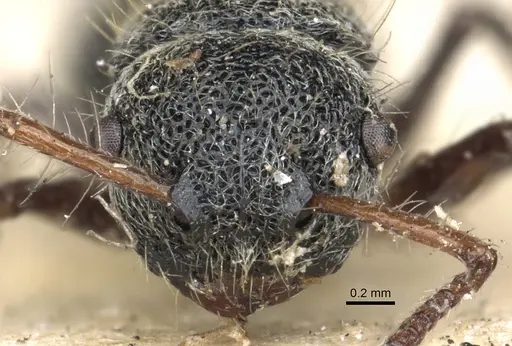
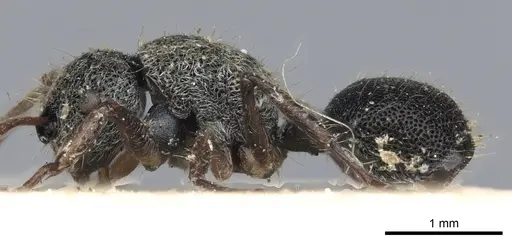
Echinopla serrata is an ant species native to Indonesia, originally described by Frederick Smith in 1859 from specimens collected in the Aru Islands. Workers have a distinctive black body with brownish-yellow mandibles, antennae, and legs. The species belongs to the serrata-group within the genus Echinopla, characterized by their densely pitted (cribrate) surface texture on the head and gaster, and a strongly convex mesosoma dorsum. These ants are found throughout the Indomalaya region, particularly in Indonesian islands including the Moluccas. [AntWiki]
Quick Summary
- Difficulty: Unknown, limited data available
- Origin & Habitat: Tropical Indonesia (Aru Islands and Moluccas) in the Indomalaya region. Natural habitat consists of lowland tropical forests [1][2].
- Colony Type: Colony structure is unconfirmed.
- Size & Growth:
- Queen: Size data unavailable, no specific measurements exist for this species
- Worker: Size data unavailable, the original worker description does not include exact measurements [3]
- Colony: Unknown for this species
- Growth: Unknown
- Development: Unknown, specific development data for this species is unavailable (Development time is unknown for E. serrata)
- Antkeeping:
- Temperature: Keep at 24-28°C (tropical room temperature). Avoid temperatures below 22°C as this is a tropical species.
- Humidity: Maintain moderate to high humidity (60-80%), typical of tropical forest ants. Keep nest substrate slightly moist but not waterlogged.
- Diapause: No, this is a tropical species from Indonesia and does not require hibernation or winter dormancy.
- Nesting: In nature, they likely nest in rotting wood, under bark, or in soil cavities in tropical forest settings. For captivity, a Y-tong (AAC) nest, plaster nest, or naturalistic setup with moist substrate works well.
- Behavior: Behavior is not well-documented for this species. Based on genus-level observations, Echinopla ants are typically moderate in activity level with workers that forage individually or in small groups. They are not particularly aggressive but will defend their nest if threatened. Escape prevention should be moderate, their size means standard barriers work well, but they are agile climbers.
- Common Issues: limited availability, this species is rarely kept in captivity and seldom available from suppliers, lack of species-specific care information, no documented care protocols exist for this species, slow to establish, founding colonies may take longer than more common species, humidity management, tropical species can struggle in dry captive environments, potential shipping stress, wild-caught colonies from Indonesia may arrive in poor condition
Origin and Distribution
Echinopla serrata was originally described in 1859 by Frederick Smith from specimens collected in the Aru Islands, part of the Indonesian archipelago. The species has been recorded throughout the Indomalaya region, with documented distribution in Indonesia including the Moluccas (Maluku Islands) and surrounding areas [1]. The type specimen was collected from Aru Island, which lies in the southeastern part of the Indonesian archipelago. These ants inhabit tropical lowland forests where the climate is warm and humid year-round. The species belongs to the serrata-group within the genus Echinopla, a classification based on specific morphological characteristics including the pattern of pits (cribrate sculpture) on the head and gaster.
Appearance and Identification
The body of Echinopla serrata workers is predominantly black, while the mandibles, antennae, and legs are brownish-yellow, creating a striking contrast. The species has a distinctive surface texture characterized by dense, regular, circular pits (cribrate sculpture) on the head and gaster. In lateral view, the dorsum of the mesosoma is strongly convex, and the propodeal declivity slopes steeply. The mesosoma is notably narrowed posteriorly, with the propodeum distinctly narrower than the pronotum. Standing hairs are sparse on the mesosoma dorsum, and the gaster lacks pubescence. These morphological features distinguish E. serrata from other Echinopla species and help confirm identification [3].
Nest Preferences and Housing
In their natural tropical forest habitat, Echinopla serrata likely nests in rotting wood, under loose bark, or in soil cavities, typical nesting sites for forest-dwelling Formicinae ants. For captive keeping, provide a nest that maintains humidity while allowing some ventilation. Y-tong (AAC) nests work well as they provide a dark, humid environment with chambers sized appropriately for this medium-sized ant. Plaster nests or naturalistic setups with moist soil or substrate are also suitable. The outworld should include areas for foraging, and you can add natural materials like small stones or pieces of wood. Keep the nest area away from direct sunlight and drafts. Since this is a tropical species, avoid environments that become dry or cool.
Feeding and Diet
Like other Formicinae ants, Echinopla serrata is likely omnivorous with a diet consisting of honeydew, nectar, and small insects. In captivity, offer a varied diet including sugar water or honey as an energy source, and protein sources such as small crickets, mealworms, or other appropriately-sized insects. Feed sugar sources continuously (replace every few days) and offer protein prey 2-3 times per week. Remove uneaten prey after 24-48 hours to prevent mold. Since this species comes from a tropical environment with year-round access to various food sources, maintain consistent feeding throughout the year without seasonal reduction.
Temperature and Seasonal Care
As a tropical species from Indonesia, Echinopla serrata requires warm conditions year-round. Maintain temperatures between 24-28°C in the nest area. A slight temperature gradient (warmer on one side) allows the colony to regulate its own conditions. Room temperature in most homes may be insufficient, consider using a heating cable or heating mat on one side of the nest if your room temperature falls below 24°C. Do not hibernate this species, they do not experience cold winters in their native habitat. Consistent warmth year-round supports normal colony development and activity. Avoid temperature drops below 22°C as prolonged cool conditions can weaken or kill colonies.
Colony Development
The colony founding behavior of Echinopla serrata has not been directly documented. Based on being a member of the Formicinae subfamily, it is likely claustral, meaning the queen seals herself in a chamber after mating and survives entirely on stored fat reserves while raising the first brood. The first workers (nanitics) will be smaller than mature workers and help the colony expand. Development from egg to worker is not documented for this specific species. Colonies probably grow to several hundred workers over time, though maximum colony size is not documented. Be patient with founding colonies, they may develop slower than many common ant species.
Frequently Asked Questions
How long does it take for Echinopla serrata to produce first workers?
This is unknown. Specific development data for this species is not available.
What temperature do Echinopla serrata ants need?
Keep them at 24-28°C. This tropical species from Indonesia requires warm conditions year-round. Room temperature may be sufficient if your home is warm, otherwise use a heating cable on one side of the nest.
Do Echinopla serrata ants need hibernation?
No. As a tropical species from Indonesia, they do not require hibernation or winter dormancy. Keep them warm year-round without temperature drops.
What do Echinopla serrata ants eat?
They are omnivorous like most Formicinae. Offer sugar water or honey continuously for energy, and small insects (crickets, mealworms) 2-3 times per week for protein. Remove uneaten prey after a day or two.
Is Echinopla serrata good for beginners?
This species is not recommended for beginners. It is rarely available in the antkeeping hobby, and there is no documented species-specific care information. If you're interested in this species, it's best to have experience with other Formicinae ants first.
How big do Echinopla serrata colonies get?
Colony size is not well-documented for this species. Growth rate is unknown.
Can I keep multiple Echinopla serrata queens together?
Colony structure is unconfirmed for this species. Combining unrelated queens is not recommended as it has not been studied and could result in fighting.
What type of nest is best for Echinopla serrata?
Y-tong (AAC) nests, plaster nests, or naturalistic setups with moist substrate work well. The key is maintaining moderate to high humidity (60-80%) while providing a dark nest chamber. Avoid completely dry environments.
Where does Echinopla serrata come from?
This species is native to Indonesia, specifically the Aru Islands and surrounding areas in the Indonesian archipelago including the Moluccas. They inhabit tropical lowland forests in the Indomalaya region.
Report an Issue
The current care sheet is based fully on literature. See inconsistencies, or something that's incorrect? Please , it will be resolved after review from an admin. Contributing to the blogs tab also helps providing information, to make us be able to further improve the caresheets. Thank you for your support!
References

此饲养指南授权协议为 CC BY-SA 4.0 .
社区博客
CASENT0903467
在 AntWeb 上查看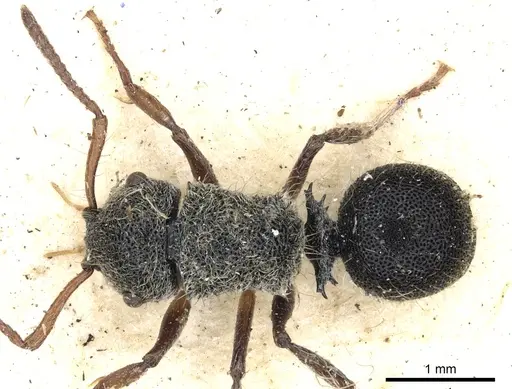
科学文献
正在加载分布地图...正在加载商品...