
Dilobocondyla yamanei
- 学名
- Dilobocondyla yamanei
- 族
- Crematogastrini
- 亚科
- Myrmicinae
- 命名者
- Bharti & Kumar, 2013
- 地理分布
- 分布于 0 个国家/地区
物种引言
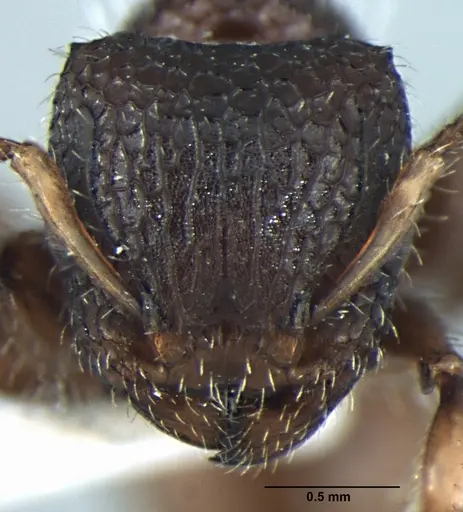
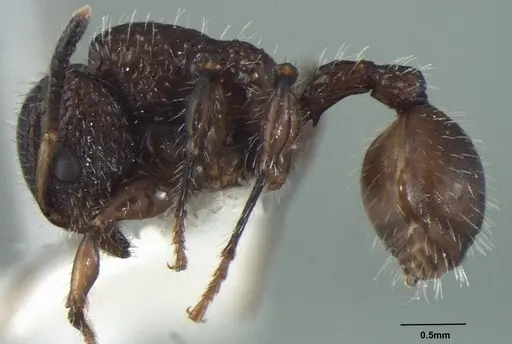
Dilobocondyla yamanei is a rare ant species known only from a single worker collected in Ulu Gombak, Malaysia. Workers measure 4.83mm in total length, making them relatively large for the genus. The body has a distinctive rusty-brown (ferruginous) color with the clypeus, mandibles, and sternites showing a yellowish tinge. The head is broader than long with sharply pointed posterior corners, and the entire body has an opaque appearance covered in abundant long whitish hairs. A key identifying feature is the presence of exactly 9 ridges (rugae) between the frontal carinae at eye level. The petiole is notably long—about twice as long as broad—which helps distinguish it from similar species like D. karnyi . This species was described in 2013 and remains one of the rarest Dilobocondyla species in existence. The single known specimen was collected in secondary forest at 418m elevation in the Malay Peninsula, an area with rough terrain and steep hillsides. As a recently described species with only one known record, much of its biology—both in the wild and in captivity—remains completely unknown [AntWiki].
Quick Summary
- Difficulty: Unknown, insufficient data for assessment
- Origin & Habitat: Ulu Gombak, Malay Peninsula, Malaysia at 418m elevation. Found in secondary forest with rough topography and steep hillsides [1][2].
- Colony Type: Unconfirmed, colony structure has not been documented for this species.
- Size & Growth:
- Queen: Unknown, only workers have been described
- Worker: 4.83mm total length [1]
- Colony: Unknown, no colony data available
- Growth: Unknown
- Development: Unknown, no development data exists for this species (Based on typical Myrmicinae patterns, expect 6-10 weeks at optimal temperature, but this is an estimate only)
- Antkeeping:
- Temperature: Start around 24-26°C and observe colony activity. No specific thermal data exists for this species, but its Malaysian origin suggests it prefers warm, stable conditions.
- Humidity: Keep nest substrate moderately moist. The secondary forest habitat indicates preference for damp but not waterlogged conditions. Provide a moisture gradient so ants can choose their preferred level.
- Diapause: Unknown, no seasonal data available. Malaysian species may not require true hibernation but may slow down during cooler periods.
- Nesting: No specific nesting data exists. Based on genus patterns, they likely prefer dark, humid nests like Y-tong or plaster setups with tight chambers scaled to their medium size.
- Behavior: Behavior is unstudied in captivity. Based on genus-level observations, expect moderate activity levels and typical Myrmicinae foraging patterns. As members of the Crematogastrini tribe, these ants have a modified stinger used to smear venom rather than pierce, though this defense mechanism is too small to affect human skin. Escape risk is moderate given their size, standard barriers should suffice but fine mesh is recommended. No aggression data is available for this species.
- Common Issues: no captive husbandry data exists, this will be a pioneering species for antkeepers, very limited availability, only known from a single wild specimen, all care parameters are estimates based on genus-level patterns rather than species-specific research, growth and development timelines are unknown and may differ from typical Myrmicinae, no information on queen founding behavior or colony structure
Discovery and Taxonomy
Dilobocondyla yamanei was described in 2013 by Himender Bharti and Rakesh Kumar based on a single worker specimen collected on May 30,2000 by Professor Seiki Yamane, after whom the species is named. The type locality is Ulu Gombak in the Malay Peninsula of West Malaysia, at an elevation of 418 meters. The area consists of secondary forest with rough topography, primarily steep hillsides. This species remains known only from this single specimen, making it one of the rarest Dilobocondyla species in existence. The description was published in the journal Zoo Keys with detailed measurements and morphological comparisons to related species [1].
Identification and Distinguishing Features
Workers measure 4.83mm in total length, making them relatively large for the genus. The body is ferruginous (rusty reddish-brown) except for the clypeus, mandibles, and sternites which have a yellowish tinge. The head is broader than long with the posterior corners forming sharp teeth pointing outward. A key distinguishing feature is the presence of exactly 9 rugae (ridges) between the frontal carinae at the level of the eyes. The entire body has an opaque appearance rather than shiny, and is covered with abundant long whitish hairs. The petiole is notably long, about twice as long as broad, which separates it from the similar D. karnyi species. The eyes are large and placed at midlength of the head [1].
Natural Habitat and Distribution
This species is known only from Ulu Gombak in the Malay Peninsula of Malaysia. The collection site is at 418m elevation in an area of secondary forest with rough topography consisting mainly of steep hillsides. The Malay Peninsula experiences a tropical climate with high year-round humidity. Based on this habitat information, the species appears to be a forest-floor dweller typical of the genus Dilobocondyla. The limited distribution data means this species may have specialized habitat requirements that are not yet understood. No other records of D. yamanei exist in the scientific literature [1][2].
Housing and Nesting
Since no specific nesting data exists for this species, recommendations must be based on typical Dilobocondyla genus behavior and the habitat description. The secondary forest origin suggests preference for humid, dark conditions. A Y-tong or plaster nest with good humidity retention would be a good starting point. Keep the nest substrate consistently moist but not waterlogged, the substrate should feel damp to the touch. Provide a humidity gradient by including both moister and slightly drier areas so the ants can self-regulate. Given their size, chambers should be appropriately scaled with narrow passages. Keep the nest in darkness as these are likely subterranean or forest-floor species. Standard escape prevention with smooth barrier tape should be sufficient given their moderate size.
Feeding and Diet
No specific dietary information exists for Dilobocondyla yamanei. The genus Dilobocondyla is typically considered predatory or omnivorous, similar to other Myrmicinae ants. Based on genus-level patterns, offer a varied diet including protein sources like small insects (fruit flies, small mealworms, crickets) and sugar sources like honey water or sugar water. Start with offering small live prey and observe acceptance. Given the Malaysian origin, they may have preferences for tropical prey items. Feed protein 2-3 times per week and keep sugar water constantly available. Remove uneaten prey after 24-48 hours to prevent mold.
Temperature and Seasonal Care
No specific temperature data exists for this species. The Malaysian origin (near the equator, low elevation) suggests preference for warm conditions. Start with temperatures around 24-26°C and observe colony behavior. If workers are consistently clustered near heat sources, increase slightly, if they avoid heated areas, reduce temperature. A gentle thermal gradient allowing the ants to choose their preferred zone is ideal. Use a heating cable on one side of the nest if room temperature is below 24°C. Since this is a tropical species, true hibernation is unlikely, but they may show reduced activity during cooler periods. Maintain stable temperatures year-round, avoiding sudden fluctuations.
Frequently Asked Questions
How long does it take for Dilobocondyla yamanei to develop from egg to worker?
The egg-to-worker development time is unknown for this species, no research has been published on their development. Based on typical Myrmicinae patterns, expect approximately 6-10 weeks at optimal temperature (around 24-26°C), but this is purely an estimate. Antkeepers pioneering this species will need to document their own observations.
What do Dilobocondyla yamanei ants eat?
Diet is unconfirmed for this species. Based on genus-level patterns, they likely accept small insects (fruit flies, small mealworms) as protein and sugar water or honey as carbohydrates. Offer a varied diet and observe what they accept. Remove uneaten food after 24-48 hours.
Is Dilobocondyla yamanei a good species for beginners?
This species cannot be recommended for beginners due to the complete lack of captive husbandry data. This will be a pioneering species where antkeepers must develop care protocols through experimentation. Only experienced antkeepers willing to document their findings should attempt this species.
What temperature should I keep Dilobocondyla yamanei at?
No specific temperature requirements exist for this species. Based on its Malaysian origin, start around 24-26°C and observe colony behavior. Provide a thermal gradient so ants can choose their preferred zone. Avoid temperatures below 20°C or above 30°C until more is known.
Do Dilobocondyla yamanei ants sting?
Stinging behavior has not been documented for this species. As Myrmicinae ants in the Crematogastrini tribe, they possess a modified stinger used to smear venom rather than pierce. However, it is likely too small to penetrate human skin effectively. Handle with normal precautions.
How big do Dilobocondyla yamanei colonies get?
Maximum colony size is unknown. No colony data has been published for this species. Related Dilobocondyla species typically form colonies of several hundred workers, but this is speculative for D. yamanei.
What type of nest should I use for Dilobocondyla yamanei?
No specific nesting data exists. Based on genus patterns and habitat, use a humid nest like Y-tong or plaster with consistently moist substrate. Keep the nest dark. Scale chambers to their size with appropriately narrow passages.
Does Dilobocondyla yamanei need hibernation or diapause?
Diapause requirements are unknown. As a Malaysian species near the equator, true hibernation is unlikely. They may show reduced activity during cooler periods but probably do not need a dedicated diapause period. Maintain stable warm conditions year-round.
Can I keep multiple Dilobocondyla yamanei queens together?
Colony structure is unconfirmed, we don't know whether this species is single-queen (monogyne) or multi-queen (polygyne). Combining unrelated queens is not recommended since this has not been documented and could result in aggression.
Where does Dilobocondyla yamanei come from?
This species is known only from Ulu Gombak in the Malay Peninsula of Malaysia, collected at 418m elevation in secondary forest with steep hillsides. It was described in 2013 and remains one of the rarest Dilobocondyla species [1].
Report an Issue
The current care sheet is based fully on literature. See inconsistencies, or something that's incorrect? Please , it will be resolved after review from an admin. Contributing to the blogs tab also helps providing information, to make us be able to further improve the caresheets. Thank you for your support!
References

此饲养指南授权协议为 CC BY-SA 4.0 .
社区博客
ANTWEB1008030
在 AntWeb 上查看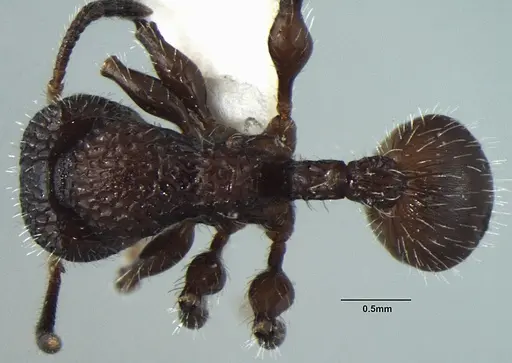
科学文献
正在加载分布地图...正在加载商品...