
Diacamma holzschuhi
- 学名
- Diacamma holzschuhi
- 族
- Ponerini
- 亚科
- Ponerinae
- 命名者
- Laciny <i>et al.</i>, 2015
- 地理分布
- 分布于 0 个国家/地区
物种引言
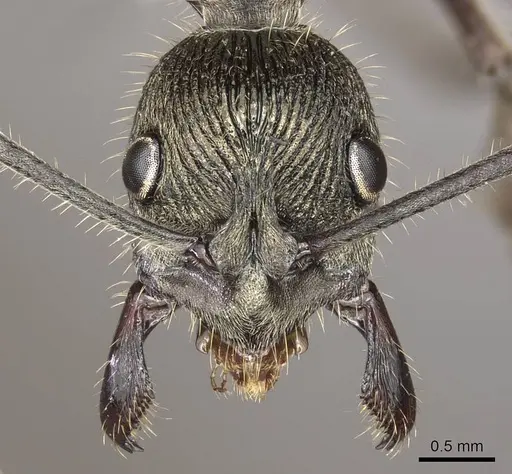
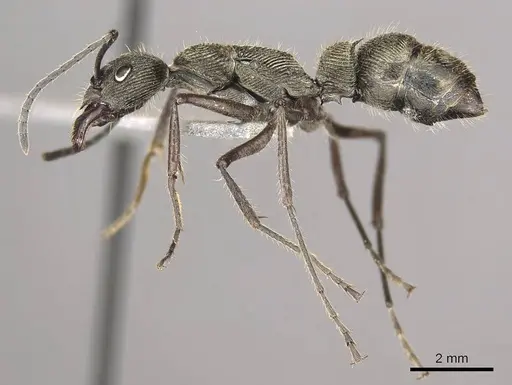
Diacamma holzschuhi is a relatively small Ponerine ant measuring 10.5-11.7mm in total length . Workers have a black body without metallic sheen, with dark brown to black mandibles and legs . The head is short with strongly convex sides, and the body is coarsely striated from the genae to the first gaster segment . This species belongs to the Diacamma rugosum species group and was described in 2015 from specimens collected in the mountains of northern Laos . This is one of the newest described Diacamma species, and virtually nothing is known about its biology in the wild. What we can infer comes from its montane forest habitat in Hua Phan Province at 1300-1900m elevation . As a Ponerine ant, it likely shares traits with related species - these ants are predatory hunters with functional stingers, and many Diacamma species have unique social structures including gamergate reproduction where workers can become reproductives [AntWiki].
Quick Summary
- Difficulty: Expert
- Origin & Habitat: Northern Laos (Hua Phan Province, Ban Saleui, Phou Pan Mountains) at 1300-1900m elevation, montane forest habitat [1]
- Colony Type: Queenless, no distinct queen caste, reproduction by gamergates (reproductive workers).
- Queen Status: Queenless Colony
- Size & Growth:
- Queen: Queenless species, reproduction by gamergate (reproductive worker) instead of a distinct queen caste.
- Worker: 10.5-11.7mm total length [1]
- Colony: Unknown, no colony data available
- Growth: Unknown, no development data available
- Development: Unconfirmed, estimated 2-4 months based on typical Ponerine development patterns (No species-specific data exists.)
- Antkeeping:
- Temperature: Estimated: 24-28°C based on montane tropical habitat, provide gentle warmth with gradient
- Humidity: Estimated: High humidity (70-85%) based on montane forest environment
- Diapause: Unknown, likely reduced activity during cooler months but no direct data
- Nesting: Estimated: Likely nests in soil or rotting wood under stones, naturalistic setup with moist substrate recommended
- Behavior: Likely predatory like other Diacamma species, active hunters with functional stingers. Ponerines are typically defensive and may sting if threatened. Escape prevention important given moderate size. Likely forages individually for prey.
- Common Issues: no biological data exists, all care is inferred from genus patterns, likely requires live prey, may not accept commercial ant foods, stinger present, can sting if provoked, montane origin suggests specific humidity needs that differ from lowland tropicals, expert-level species due to lack of captive breeding data
Species Discovery and Taxonomy
Diacamma holzschuhi was described in 2015 by Laciny, Pal, and Zettel from specimens collected in the Phou Pan Mountains of northern Laos [1]. The species is named in honor of Dr. Carolus Holzschuh, who collected the type series between 1300-1900m elevation in April 2014 and 2015 [1]. It belongs to the Diacamma rugosum species group, which is characterized by coarse sculpturing on the body [1]. This species can be distinguished by its short head, absence of metallic sheen, and the specific pattern of striation on the gaster [1]. The limited distribution and recent discovery highlight how little we still know about the ant fauna of Southeast Asia.
Natural Habitat and Distribution
This species is currently known only from the Phou Pan Mountains in Hua Phan Province, northeastern Laos [1][3]. The collection elevation of 1300-1900m places it in montane forest habitat, which is cooler and more humid than lowland tropical areas [1]. The mountains in this region feature dense forest cover and significant rainfall. Based on this habitat, replicate cooler tropical conditions with good humidity rather than hot, dry conditions. The limited distribution means this species may have specific microclimate requirements not shared by other Diacamma.
Inferred Care Requirements
Since no captive biology data exists for this species, care must be inferred from the genus and related Ponerines. Diacamma are predatory ants that typically hunt small invertebrates, offer live prey such as small crickets, mealworms, or other insects appropriate to their size [2]. They likely have high humidity needs given their montane forest origin, keep the nest substrate consistently moist but not waterlogged. Temperature should be warm but not extreme, aim for 24-28°C with a slight gradient so ants can choose their preferred zone. Ponerines have functional stingers, so handle with care and use appropriate escape prevention despite their moderate size.
Social Structure and Reproduction
Many Diacamma species feature unique social structures including gamergates, workers that can reproduce and become replacement egg-layers without needing a queen [2]. Whether D. holzschuhi has this trait is unknown. The colony structure (single queen vs. multiple) is also unconfirmed. If you obtain a colony, observe for signs of queen loss, if the queen dies and gamergates are present, the colony may continue functioning. Ponerine colonies are typically smaller than Formicines, often with fewer than 100 workers in founding colonies. Growth is likely slower than many common ant species due to the smaller colony sizes typical of the genus.
Frequently Asked Questions
How long does it take for Diacamma holzschuhi to develop from egg to worker?
This has not been documented. Based on typical Ponerine development, expect 2-4 months from egg to worker at optimal warm temperatures. The lack of any captive data means this is purely an estimate.
What do Diacamma holzschuhi ants eat?
No species-specific feeding data exists. Based on genus patterns, they are predatory and likely hunt small insects. Offer live prey such as small crickets, fruit flies, or mealworms. Sugar sources may be accepted but should not be the primary food.
Are Diacamma holzschuhi ants dangerous?
Diacamma are Ponerine ants with functional stingers. While not typically aggressive, they will defend the nest if threatened and can sting. The sting is not medically significant for healthy humans but can be painful.
What temperature and humidity do Diacamma holzschuhi need?
Estimated requirements based on montane Laos habitat: keep at 24-28°C with high humidity (70-85%). Provide a moisture gradient so ants can self-regulate. The montane origin suggests they may prefer slightly cooler conditions than lowland tropical Ponerines.
Can I keep Diacamma holzschuhi in a test tube setup?
A test tube setup can work for founding colonies, but maintain humidity and temperature carefully. For established colonies, a naturalistic setup with moist substrate is likely better given their probable humidity needs. Monitor for mold and drying.
How big do Diacamma holzschuhi colonies get?
Unknown, no colony size data exists. Based on related species, colonies are likely smaller than many common ants, probably under 100-200 workers at maturity. Ponerine colonies typically remain relatively modest in size.
Do Diacamma holzschuhi queens need to forage during founding?
Unconfirmed for this species. Many Ponerines have semi-claustral founding where the queen must leave to hunt. If your queen appears active outside the nest searching for prey, this is normal behavior for the genus.
Is Diacamma holzschuhi suitable for beginners?
No, this is an expert-level species. There is absolutely no captive biology data, all care must be inferred from genus patterns, and they likely have specific humidity and dietary needs that make them challenging. Consider starting with better-documented species.
Does Diacamma holzschuhi have gamergates?
Unknown for this specific species, but many Diacamma species have gamergate reproduction where workers can become reproductives. If your colony loses its queen, observe for worker reproduction, this may be a natural adaptation in this species.
Where is Diacamma holzschuhi native to?
Only known from the Phou Pan Mountains in Hua Phan Province, northern Laos, at 1300-1900m elevation. This is a very restricted distribution in montane forest habitat.
Report an Issue
The current care sheet is based fully on literature. See inconsistencies, or something that's incorrect? Please , it will be resolved after review from an admin. Contributing to the blogs tab also helps providing information, to make us be able to further improve the caresheets. Thank you for your support!
References

此饲养指南授权协议为 CC BY-SA 4.0 .
社区博客
CASENT0915963
在 AntWeb 上查看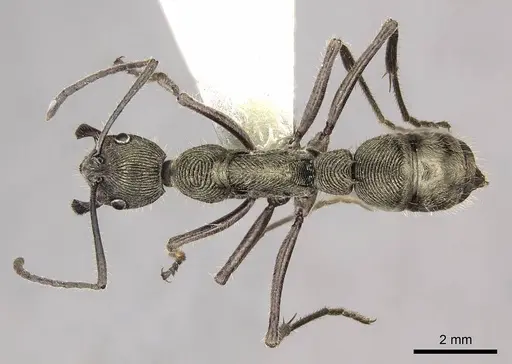
科学文献
正在加载分布地图...正在加载商品...