
Colobopsis aruensis
- 学名
- Colobopsis aruensis
- 族
- Camponotini
- 亚科
- Formicinae
- 命名者
- Karavaiev, 1933
- 地理分布
- 分布于 0 个国家/地区
物种引言
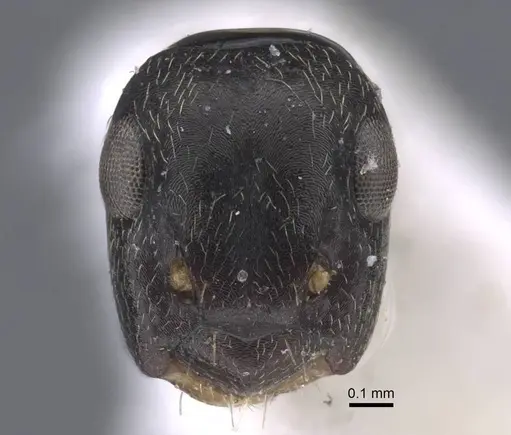
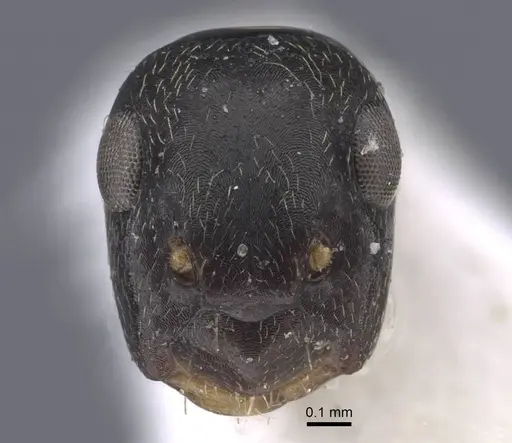
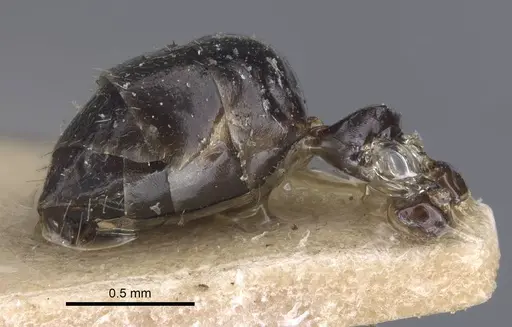
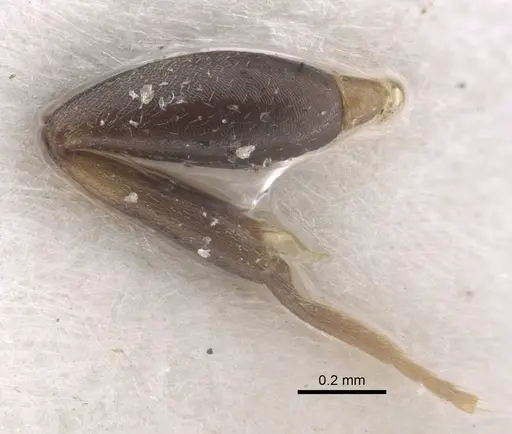
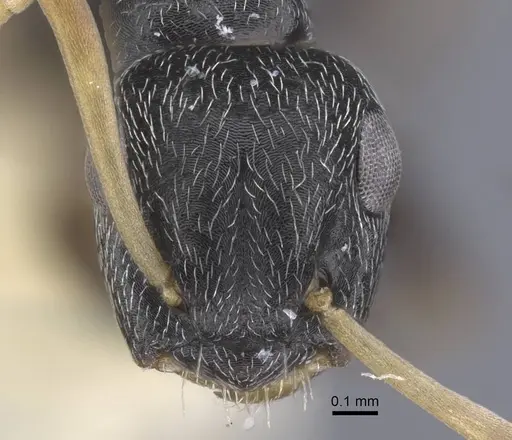
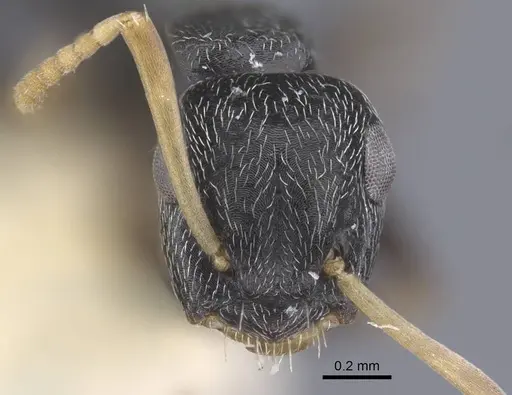
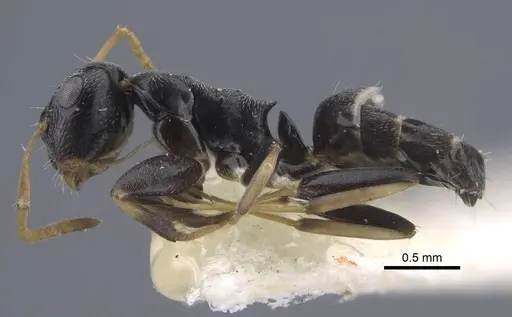
Colobopsis aruensis is a small, dimorphic arboreal ant native to the Australasian region, found throughout Indonesia's Aru Islands and Papua New Guinea. Workers have a mostly black body with contrastingly light yellow to brown appendages, making them easy to identify. This species shows a strong preference for nesting in dead, dry hollow branches, twigs, and lianas in the forest canopy, typically between 5 and 21 meters above ground. Colonies are relatively small, usually containing fewer than 500 workers, and this ant is more commonly found in secondary forest than primary forest. A notable feature is their phragmosis - major workers have a distinctly shaped head with the anterior portion flattened, which they use to block nest entrances .
Quick Summary
- Difficulty: Medium
- Origin & Habitat: Native to the Australasian region, specifically Indonesia (Aru Islands) and Papua New Guinea. This species inhabits tropical rainforest canopies, with a strong preference for secondary forest where dead, dry hollow branches and lianas are more readily available. Nests are found in trees at heights ranging from 5 to 21 meters above ground [1].
- Colony Type: Colonies are small to moderate, typically not exceeding 500 workers. The species is dimorphic, producing distinct major and minor worker castes. Colony structure is unconfirmed.
- Size & Growth:
- Queen: Size data unavailable, the research provides head measurements only, not total body length. Based on Colobopsis genus patterns, queens are likely in the 6-8mm range.
- Worker: Major workers are larger with distinctly shaped heads, minor workers are smaller. Size data unavailable, the research provides head measurements only, not total body length.
- Colony: Colonies usually do not exceed 500 workers [1]. This is confirmed from field studies.
- Growth: Moderate
- Development: Development time is unconfirmed for this species. (Development time is inferred from genus-level data, as species-specific development has not been studied.)
- Antkeeping:
- Temperature: As a tropical species from Papua New Guinea, keep them warm at 24-28°C. A gentle temperature gradient is recommended, with the nest area at the warmer end. Room temperature within this range is acceptable.
- Humidity: Moderate humidity of 60-80% is appropriate. Since they nest in dry dead wood in nature, the nest substrate should be kept relatively dry, avoid excessive moisture. Provide a water tube for drinking but do not saturate the nesting material.
- Diapause: No, this is a tropical species that does not require hibernation. Maintain consistent warm temperatures year-round.
- Nesting: This is an arboreal species that naturally nests in dead, dry hollow branches, twigs, and lianas. In captivity, a Y-tong (AAC) nest or plaster nest with narrow chambers works well. The key is providing dry nesting cavities, avoid damp substrates. A naturalistic setup with cork or dried wood branches can also work. Ensure the nest has small entrance holes that majors can block with their specialized heads (phragmosis).
- Behavior: Workers are generally calm and not aggressive. They are arboreal foragers, typically foraging in the canopy. Minor workers handle most foraging duties while majors defend the nest using their phragmotic head shape to block entrances. They do not sting, as Formicinae ants, they lack a functional sting and instead may spray formic acid or bite. Escape prevention should be moderate, while not tiny, they can climb smooth surfaces, so standard barrier methods work well. They show some mutualistic behavior with other ant species when foraging for honeydew from scale insects [1].
- Common Issues: dry nesting requirement, too much moisture will cause mold and colony decline., small colony size means growth is slow and colonies may appear stagnant for months., arboreal nature requires vertical space and appropriate nest entrances., lack of documented captive breeding means founding colonies can be challenging., tropical temperature requirements mean room temperature may be too cold in some climates.
Housing and Nest Setup
Colobopsis aruensis requires an arboreal-style setup that mimics their natural nesting preferences in dead, dry wood. In the wild, they nest exclusively in dead and dry hollow branches, twigs, and lianas, typically high in the canopy. For captivity, a Y-tong (AAC) nest or plaster nest with narrow chambers works well. The key principle is DRY, these ants naturally avoid moist nesting material. Avoid test tube setups with water chambers as the constant moisture will harm the colony. Provide nest chambers appropriately sized for their small colony size (under 500 workers). The entrance should be small enough that major workers can use their phragmotic head shape to block it, this is one of their natural defense behaviors. An outworld with some vertical space allows for natural foraging behavior [1].
Feeding and Diet
Like other Camponotus species, Colobopsis aruensis is omnivorous with a preference for sugary foods and protein. In their natural habitat, workers foraged with other ant species (Technomyrmex albipes) to access scale insect colonies in the canopy, suggesting they feed on honeydew. In captivity, offer sugar water or honey regularly, along with protein sources such as small insects (fruit flies, small mealworms, crickets). They are not specialized predators, so standard ant feeding protocols apply. Feed protein 1-2 times per week and keep a constant sugar source available. Remove uneaten prey after 24-48 hours to prevent mold [1].
Temperature and Climate Control
This is a tropical species from Papua New Guinea, so warm temperatures are essential. Maintain the nest area at 24-28°C. Since they nest in the canopy, they are adapted to stable, warm conditions. A heating cable on one side of the nest can create a gentle gradient if your room temperature falls below this range. Place the heating element on top of the nest to avoid evaporating moisture into the nest chamber. Do not allow temperatures to drop below 22°C for extended periods. Unlike temperate species, they do not require any cooling period or diapause, maintain consistent warmth year-round. [1]
Understanding Their Unique Biology
Colobopsis aruensis exhibits several interesting biological traits that inform their care. They are dimorphic, meaning they have two distinct worker sizes, majors and minors. The major workers have a remarkable head shape adapted for phragmosis, where they can block nest entrances with their flattened head. This is a defensive adaptation seen in some arboreal ants. Their colony size is relatively small compared to many Camponotus species, typically maxing out around 500 workers. They show a preference for secondary forest over primary forest, suggesting they adapt well to disturbed habitats. In the wild, they share their environment with other ant species and occasionally forage alongside them to access honeydew from scale insects [1].
Colony Founding
Founding behavior is unconfirmed for this species. For antkeepers, a claustrum setup is recommended, a small container with a single chamber just large enough for the queen, with a water tube connected but the chamber itself kept dry. The queen should be kept in darkness and undisturbed. First workers (nanitics) will typically be smaller than normal workers and will begin foraging once they emerge. Growth is slow initially, colonies may take several months to reach a dozen workers.
Frequently Asked Questions
How long does it take for Colobopsis aruensis to produce first workers?
Development time is unconfirmed for this species. Based on typical Camponotus development, expect several months from egg to first worker at optimal temperature (24-28°C). Initial growth is slow, colonies may remain small for several months.
What is the best nest type for Colobopsis aruensis?
A Y-tong (AAC) nest or plaster nest with dry chambers works best. This is an arboreal species that naturally nests in dead, dry wood, avoid damp test tube setups. The nest chambers should be appropriately sized for their small colony size.
How big do Colobopsis aruensis colonies get?
Colonies are relatively small, typically not exceeding 500 workers in natural populations. This is confirmed from field studies in New Guinea [1].
Do Colobopsis aruensis need hibernation?
No, this is a tropical species from Papua New Guinea and does not require hibernation or diapause. Maintain warm temperatures (24-28°C) year-round.
What do Colobopsis aruensis eat?
They are omnivorous like other Camponotus species. Offer sugar water or honey regularly, along with small insects (fruit flies, small mealworms) for protein. They also feed on honeydew in the wild [1].
Are Colobopsis aruensis good for beginners?
This species is rated as Medium difficulty. While not the most challenging, their specific arboreal nesting requirements (dry wood) and tropical temperature needs make them better suited for keepers with some experience. Their slow growth and small colony size require patience.
Can I keep multiple queens together?
Not recommended. Colony structure is unconfirmed for this species, but like most ants, combining unrelated queens would likely result in fighting.
Why are my major workers dying?
Major workers in Colobopsis have a specialized role as nest defenders. If they are dying, check for poor nest conditions (too much moisture), temperature stress, or disease. Some majors dying is normal as colonies age, but sudden die-offs indicate a problem.
When should I move them to a formicarium?
Keep founding colonies in a simple claustrum setup until they have 20-30 workers. Moving too early can stress the colony. Once the test tube or founding setup becomes crowded, transfer to a proper nest (Y-tong or plaster) with dry chambers.
Report an Issue
The current care sheet is based fully on literature. See inconsistencies, or something that's incorrect? Please , it will be resolved after review from an admin. Contributing to the blogs tab also helps providing information, to make us be able to further improve the caresheets. Thank you for your support!
References

此饲养指南授权协议为 CC BY-SA 4.0 .
社区博客
CASENT0917202
在 AntWeb 上查看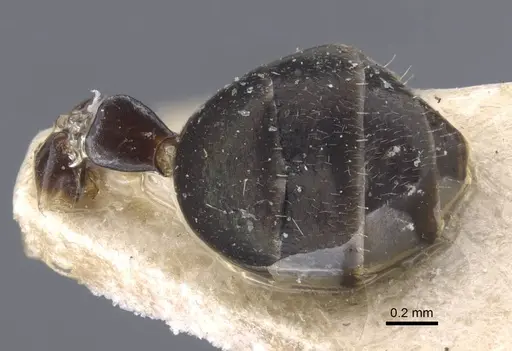
CASENT0917203
在 AntWeb 上查看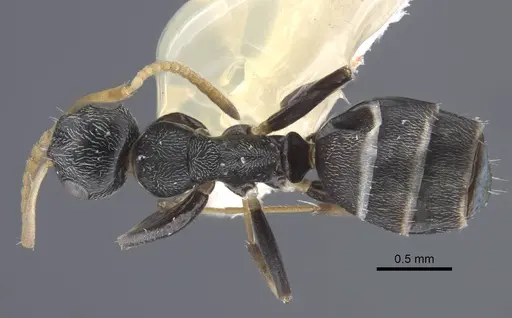
科学文献
正在加载分布地图...正在加载商品...