
Carebara globularia
- 学名
- Carebara globularia
- 族
- Crematogastrini
- 亚科
- Myrmicinae
- 命名者
- Fernández, 2004
- 地理分布
- 分布于 0 个国家/地区
物种引言
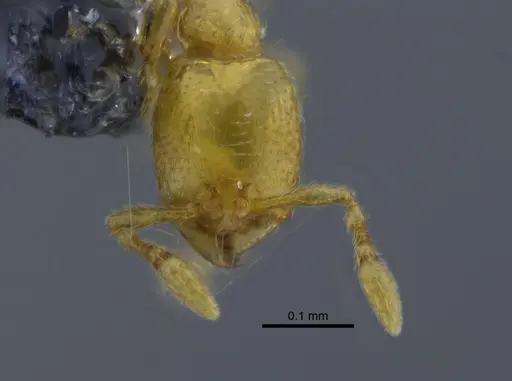
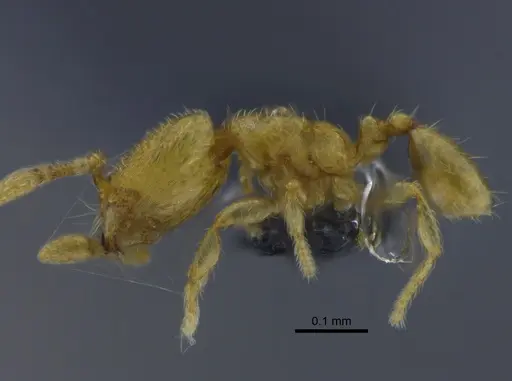
Carebara globularia is an exceptionally tiny ant species from the Amazon region of Colombia and Ecuador. Workers measure just over 1mm in total length, making them one of the smallest ants in the world . They belong to the Carebara lignata species complex and have a yellow-brown coloration with a smooth, shining body. The postpetiole (the segment behind the waist) is notably rounded and larger than the petiole, giving them a distinctive appearance . These ants live in leaf litter in lowland tropical forests at elevations between 280-700 meters . Only the worker caste has been described - no queens or males have been documented . This species is extremely rare in ant collections due to its tiny size and the specialized habitat it occupies.
Quick Summary
- Difficulty: Expert
- Origin & Habitat: Lowland tropical rainforests in the Amazon region of Colombia (Amazonas, Caquetá, Nariño) and Ecuador (Napo). They live in leaf litter and forest soil at elevations of 280-700 meters [4][5][3].
- Colony Type: Unknown. Only the worker caste has been described, no queens or males have been documented [1]. The colony structure (single queen vs multiple queens) is unconfirmed.
- Size & Growth:
- Queen: Unknown, queens have not been described [1]
- Worker: 1.04-1.07mm total length, making them among the smallest ants in the world [1][2]
- Colony: Unknown, no colony size data exists
- Growth: Unknown
- Development: Unknown, development has not been studied (No data available on egg-to-worker timeline.)
- Antkeeping:
- Temperature: Keep warm, typical for tropical lowland species (24-28°C range is reasonable). Use a heating cable on one side of the nest to create a gentle gradient if room temperature is below this range.
- Humidity: High humidity is essential. These ants live in leaf litter in tropical rainforests where conditions are constantly damp. Keep the nest substrate consistently moist but not waterlogged.
- Diapause: No, as a tropical species, they do not require hibernation. Maintain warm, stable conditions year-round.
- Nesting: Use a test tube setup with very small water reservoirs, or a small Y-tong (AAC), plaster, or soil nest with micro-chambers scaled to their tiny size. The chambers must be extremely small, standard formicarium passages would be cavernous to these ants. A thin layer of moist coco coir or peat works well as substrate.
- Behavior: Behavior is unstudied. Based on their morphology and habitat (leaf litter foragers), they likely hunt small micro-arthropods. Their tiny size means escape prevention is absolutely critical, they can squeeze through gaps invisible to the human eye. Use fine mesh barriers and seal all openings meticulously.
- Common Issues: escape prevention is critical, they are so small they can slip through standard barrier setups, extreme difficulty in providing appropriately sized prey, standard ant feeders are too large, lack of basic biological data makes proper care challenging, risk of crushing or losing them during colony maintenance due to their microscopic size, wild-caught colonies may be nearly impossible to establish due to stress and unknown requirements
Why Carebara globularia Is an Expert-Only Species
Carebara globularia presents extraordinary challenges that make it suitable only for very experienced antkeepers. At just over 1mm in length, these are not your typical ants, they are microscopic by ant standards [1]. The worker caste is the only form that has ever been described, meaning we have no information about queens, males, nuptial flights, or colony founding [1]. This species was described in 2004 and remains poorly studied in the scientific literature. You will essentially be pioneering husbandry techniques for a species that has never been kept in captivity. This is not a species for someone wanting a straightforward ant-keeping experience, it is for the specialist who enjoys the challenge of working with poorly understood species.
Housing and Escape Prevention
Housing Carebara globularia requires thinking on a completely different scale than typical antkeeping. Standard test tube setups may work, but the water reservoir must be very small to prevent flooding in the tiny space. Y-tong (AAC), plaster, or soil nests work best with chambers scaled to their minute size, think passages just 1-2mm wide. Escape prevention is absolutely non-negotiable. These ants are so small they can slip through gaps that appear sealed to the human eye. Use fine mesh (at least 0.5mm or finer) on all ventilation holes. Apply fluon or similar barriers to all rim edges. When observing or working with the colony, do so in a contained area, a single escaped worker is nearly impossible to find. Some keepers use sealed plastic boxes with tiny air holes as outworlds.
Feeding Challenges
Feeding Carebara globularia is perhaps the biggest practical challenge. Standard ant feeders offering crickets, mealworms, or other common feeder insects are completely inappropriate, these prey items would be like offering a cow to a mouse. You will need to culture micro-prey: springtails (Collembola), minute soil mites, and other tiny arthropods. Fruit flies (Drosophila) may be accepted, though their size might still be borderline. Sugar sources are unlikely to be important, these appear to be predatory litter ants based on their morphology and habitat. Do not expect to feed them anything you would feed a typical Camponotus or Formica colony. The prey must be truly microscopic.
Temperature and Humidity Requirements
As a lowland tropical species from the Amazon basin, Carebara globularia requires warm, humid conditions year-round. Maintain temperatures in the 24-28°C range, room temperature is likely insufficient in most homes. A small heating cable placed on one side of the nest creates an appropriate thermal gradient. Humidity should be high, mimicking the damp conditions of tropical forest floor litter. The nest substrate should remain consistently moist but never waterlogged. A small water reservoir attached to the nest (like a test tube water feeder) helps maintain humidity through evaporation. Avoid any temperature drops or dry conditions, this species has no adaptation to cooler or drier habitats.
The Mystery of Colony Structure
One of the most intriguing aspects of Carebara globularia is that we simply do not know how their colonies are organized. Only workers have ever been collected and described [1]. No queens, no males, no dealate females have been documented in the scientific literature. This means we do not know if they are monogyne (single queen), polygyne (multiple queens), or something else entirely. We do not know how new colonies are founded. We do not know when or how nuptial flights occur. If you obtain wild-caught workers, you may be observing a fragment of a larger colony with no reproductive individuals present. This fundamental lack of biological data makes captive breeding extremely challenging and perhaps currently impossible.
Acquiring This Species
Carebara globularia is not a species you will find at typical ant suppliers. It has never been cultured in captivity to any documented degree. The only way to obtain this species would be through field collection in its native range (Colombia or Ecuador), which presents significant challenges. Collecting requires permits, knowledge of the species' microhabitat, and the ability to extract tiny ants from leaf litter samples using Winkler extractors or similar methods [3]. Even if you successfully collect workers, you face the problem of not knowing if you have any reproductive individuals. This species is truly a frontier species in antkeeping, it represents the cutting edge of what we do not yet know.
Frequently Asked Questions
Can I keep Carebara globularia in a test tube?
Yes, but with modifications. Standard test tubes may work, but the water reservoir must be very small to prevent flooding the tiny space. The cotton barrier should be snug but not so tight that it creates gaps. You will need to check frequently for flooding since even small water volumes can be problematic at this scale.
How big do Carebara globularia colonies get?
Unknown. No colony size data exists for this species.
What do Carebara globularia ants eat?
They likely eat micro-arthropods (springtails, mites, tiny insects) found in leaf litter. Standard feeder insects are far too large. You would need to culture springtails and other micro-prey. Sugar acceptance is uncertain but unlikely to be important for this predatory litter species.
Do Carebara globularia ants sting?
Given their microscopic size (just over 1mm), any sting would be completely imperceptible to humans. They are far too small to penetrate human skin or cause any pain.
Are Carebara globularia good for beginners?
No. This is an expert-only species. We have almost no biological data about them, no described queens, no known colony structure, no documented care requirements. They are among the smallest ants in the world, requiring specialized micro-prey and meticulous escape prevention. This is a species for experienced keepers interested in pioneering husbandry of poorly studied species.
Do Carebara globularia need hibernation?
No. As a tropical lowland species from the Amazon basin, they do not require hibernation or any cooling period. Keep them warm year-round.
How long until first workers appear?
Unknown. The development timeline has never been studied for this species.
Can I keep multiple queens together?
Unknown. Queens have never been described for this species, so we do not know if they are monogyne, polygyne, or what their colony structure looks like. There is no data to guide this question.
Why are my Carebara globularia dying?
Without basic biological data, diagnosing problems is extremely difficult. Common issues likely include: prey items being too large (they cannot tackle standard insects), temperature being too low, humidity being too low (they need damp conditions), or escape (they can slip through tiny gaps). This species may simply not survive in captivity with our current knowledge.
Report an Issue
The current care sheet is based fully on literature. See inconsistencies, or something that's incorrect? Please , it will be resolved after review from an admin. Contributing to the blogs tab also helps providing information, to make us be able to further improve the caresheets. Thank you for your support!
References

此饲养指南授权协议为 CC BY-SA 4.0 .
社区博客
CASENT0902397
在 AntWeb 上查看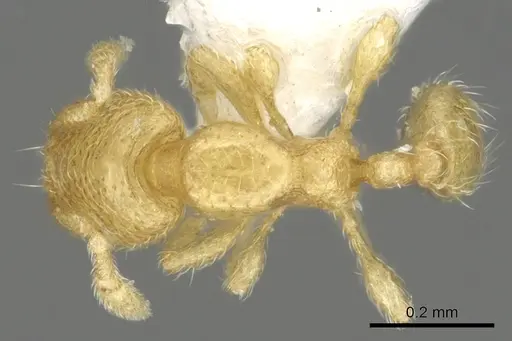
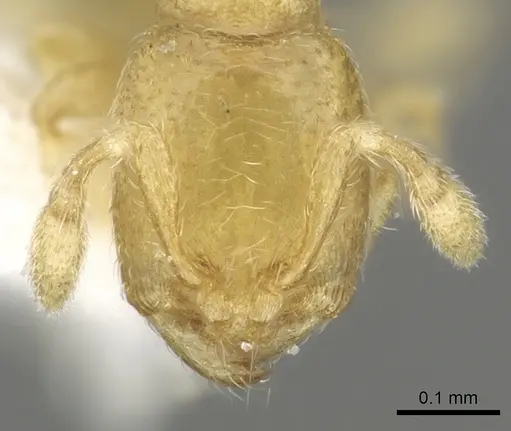
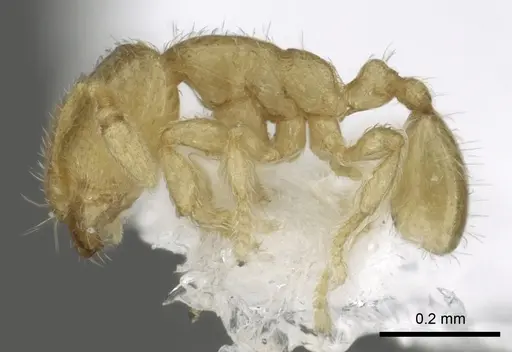
CBUMAGENT41707
在 AntWeb 上查看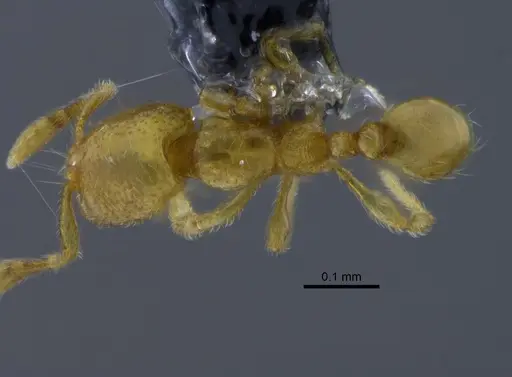
科学文献
正在加载分布地图...正在加载商品...