
Camponotus mendax
- 学名
- Camponotus mendax
- 亚属
- Orthonotomyrmex
- 族
- Camponotini
- 亚科
- Formicinae
- 命名者
- Forel, 1895
- 地理分布
- 分布于 0 个国家/地区
物种引言
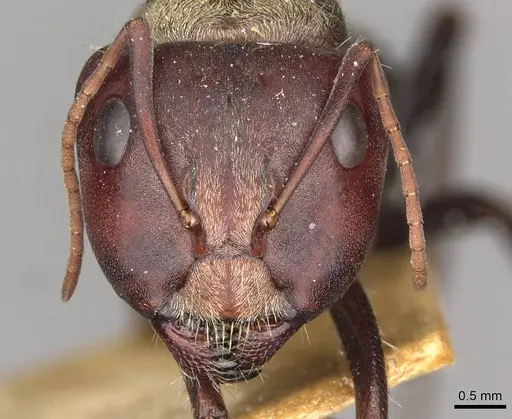
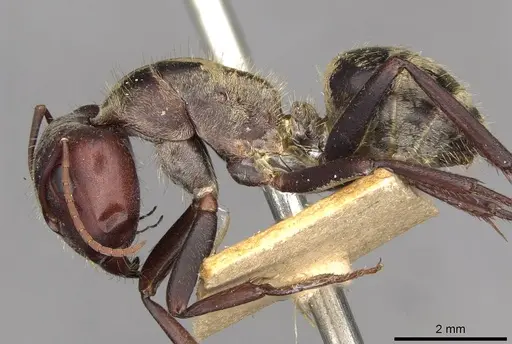
Camponotus mendax is a medium-sized ant species native to India and Sri Lanka. Workers are polymorphic, with major workers having notably larger heads than minors. The species belongs to the subfamily Formicinae and was originally described as a variety of Camponotus sericeus before being raised to full species status in 1903. This ant is part of the Camponotus genus, which was the most abundant genus in some Indian habitat studies . In the wild, they inhabit agricultural areas including banana and coconut plantations, suggesting they adapt well to modified landscapes . The species has two recognized subspecies: the nominal C. mendax mendax and C. mendax integer.
Quick Summary
- Difficulty: Medium
- Origin & Habitat: India (Karnataka, West Bengal) and Sri Lanka. Found in agricultural plantations including banana and coconut farms [1]. Tropical to subtropical climate.
- Colony Type: Colony structure is unconfirmed, specific studies on C. mendax colony organization are lacking. Based on typical Camponotus patterns, likely single-queen colonies (monogyne).
- Size & Growth:
- Queen: Size data unavailable, inferred from typical Camponotus queen size range (~12-15mm)
- Worker: Size data unavailable, inferred from typical polymorphic Camponotus worker size range (minor ~6-8mm, major ~9-12mm)
- Colony: Size data unavailable, inferred from typical Camponotus colony sizes (several hundred workers)
- Growth: Moderate, inferred from tropical Camponotus patterns
- Development: Development time unconfirmed for this species, estimated 6-8 weeks at optimal tropical temperatures based on genus patterns (Tropical species may develop faster than temperate relatives.)
- Antkeeping:
- Temperature: Keep at 24-28°C. Tropical species from India and Sri Lanka requires warm conditions [1]. A heating cable on one side of the nest creates a gentle gradient.
- Humidity: Moderate humidity around 50-70%. These ants from agricultural plantations can tolerate varied conditions but avoid extremes. Keep nest substrate slightly moist.
- Diapause: Not required. As a tropical species from southern India and Sri Lanka, they do not experience true hibernation. Some reduced activity in cooler months may occur.
- Nesting: Use a Y-tong (AAC) or plaster nest. Provide typical Camponotus-style chambers with moderate space. They may accept test tube setups for founding colonies.
- Behavior: Generally calm and not overly aggressive. Like most Camponotus, they are moderate foragers and will explore their outworld for food. Escape risk is moderate, use standard barriers but they are not particularly escape-prone like some tiny species. Workers are polymorphic with distinct major and minor castes. As Formicinae, they lack a functional sting but can bite and spray formic acid from their acidopore.
- Common Issues: tropical species may struggle in cool rooms below 22°C, monitor temperature closely, colonies can be slow to establish initially, patience is needed during founding phase, wild-caught colonies may carry parasites, quarantine and observe new colonies, moderate humidity needs mean both drying out and waterlogging are risks, major workers are large but not aggressive, still use proper escape prevention
Origin and Natural Habitat
Camponotus mendax originates from the Indomalaya region, specifically India and Sri Lanka. The type locality is Mysore (now Mysuru) in Karnataka, India, where the species was first described in 1895 [2]. It has been recorded from multiple Indian states including Karnataka and West Bengal [3]. In Sri Lanka, the species has been found across the island, historically recorded from Ceylon [4].
In the wild, these ants inhabit agricultural plantations including banana and coconut farms [1]. This suggests they are adaptable to modified landscapes and can thrive in human-altered environments. The genus Camponotus was found to be the most abundant ant genus in some Indian habitat studies, indicating these ants play important ecological roles in their native ecosystems [1]. The tropical to subtropical climate of their range means they are accustomed to warm temperatures year-round.
Nest Preferences and Housing
In captivity, Camponotus mendax does well in standard ant keeping setups designed for medium-sized Camponotus species. A Y-tong (AAC) nest or plaster formicarium works well, these provide the dark, slightly humid environment ants prefer. The chambers should be appropriately sized for their moderate colony size.
For founding colonies, a standard test tube setup with a water reservoir works fine. The queen will seal herself in a chamber and need no food until her first workers emerge. Once the colony reaches 20-30 workers, you can consider moving them to a larger nest if needed.
These ants are not particularly demanding about nest materials. Avoid very dry setups or overly wet conditions, aim for a balance. A small water tube for drinking access is appreciated once workers emerge.
Feeding and Diet
Like other Camponotus species, Camponotus mendax is omnivorous and will accept a variety of foods. Protein sources are important for brood development, offer small insects like fruit flies, small crickets, or mealworms. Sugar sources are also readily accepted, you can provide honey water, sugar water, or small pieces of fruit.
Feed protein roughly twice per week for established colonies. Offer sugar water or honey continuously, replace every few days to prevent mold. Remove any uneaten prey after 24-48 hours to maintain hygiene.
These ants are moderate foragers. They will send workers out to collect food but are not hyperactive like some species. Major workers can tackle larger prey items thanks to their powerful mandibles.
Temperature and Seasonal Care
As a tropical species from India and Sri Lanka, Camponotus mendax requires warm conditions. Keep the nest area at 24-28°C for optimal brood development. Temperatures below 22°C may slow their activity and development significantly.
Use a heating cable or heating mat on one side of the nest to create a gentle temperature gradient. This allows ants to regulate their temperature by moving between warmer and cooler areas. Place the heating on top of the nest, not underneath, to avoid excessive drying.
Unlike temperate species, these ants do not require true hibernation or diapause. However, they may show reduced activity during cooler months in your region. Simply maintain normal temperatures if you want year-round activity, or allow a slight reduction (down to around 20°C) in winter if your room naturally cools.
Colony Development and Growth
Camponotus mendax follows typical Camponotus colony development. The queen is claustral, she seals herself in a chamber and raises her first brood alone, living off her stored fat reserves. No feeding is needed during this founding phase.
First workers (nanitics) are typically smaller than mature workers. As the colony grows, larger major workers will appear. The colony expands gradually over several months to years, reaching several hundred workers at maturity.
Development from egg to first worker takes approximately 6-8 weeks at optimal temperatures, based on typical Camponotus development patterns. Warmer temperatures within the safe range can speed this up slightly. Be patient during the founding phase, colonies can take several months to become established.
Frequently Asked Questions
How long does it take for Camponotus mendax to produce first workers?
First workers typically emerge in 6-8 weeks at optimal temperatures (24-28°C). This is based on typical Camponotus development patterns since specific timing for C. mendax has not been documented.
What temperature do Camponotus mendax ants need?
Keep them at 24-28°C. As a tropical species from India and Sri Lanka, they need warm conditions. Temperatures below 22°C may slow their activity and development.
Do Camponotus mendax ants need hibernation?
No, hibernation is not required. As a tropical species from southern India and Sri Lanka, they do not experience cold winters that would trigger diapause.
How big do Camponotus mendax colonies get?
Colonies likely reach several hundred workers at maturity, based on typical Camponotus colony sizes. They are moderate-sized ants.
What do Camponotus mendax ants eat?
They are omnivorous. Offer protein like small insects (fruit flies, small crickets, mealworms) twice weekly, and provide sugar sources like honey water or sugar water continuously.
Are Camponotus mendax ants aggressive?
No, they are generally calm and not particularly aggressive. Like most Camponotus, they are more docile than some genera. They will defend their nest if threatened but are not chronic biters.
Can I keep Camponotus mendax in a test tube?
Yes, test tubes work well for founding colonies. Use a standard test tube setup with a water reservoir. Once the colony reaches 20-30 workers, you can consider moving to a larger nest.
Is Camponotus mendax good for beginners?
They are rated Medium difficulty. They are more forgiving than some species but require warm temperatures year-round. Beginners should have some basic antkeeping experience before trying this species.
Where is Camponotus mendax found?
They are native to India and Sri Lanka in the Indomalaya region. In India, they have been recorded from Karnataka and West Bengal.
Report an Issue
The current care sheet is based fully on literature. See inconsistencies, or something that's incorrect? Please , it will be resolved after review from an admin. Contributing to the blogs tab also helps providing information, to make us be able to further improve the caresheets. Thank you for your support!
References

此饲养指南授权协议为 CC BY-SA 4.0 .
社区博客
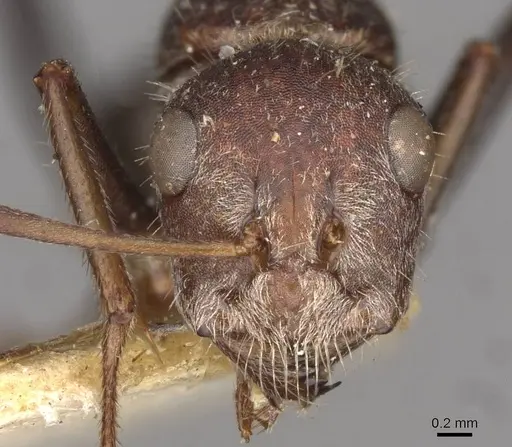
CASENT0910447
在 AntWeb 上查看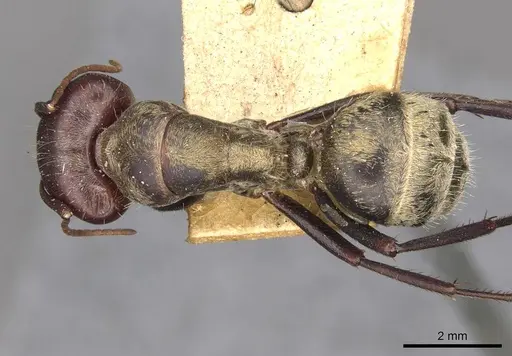
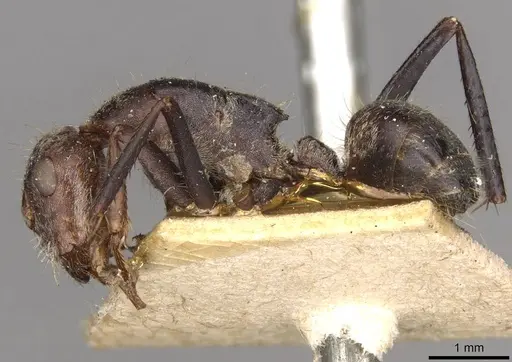
CASENT0910448
在 AntWeb 上查看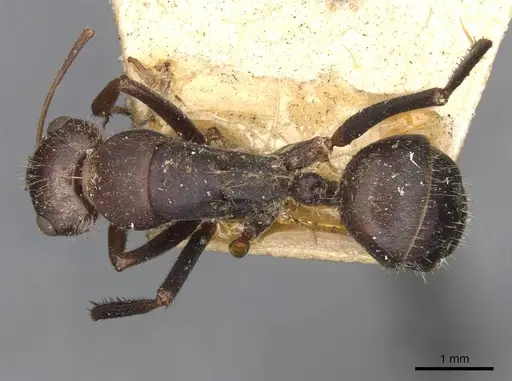
科学文献
正在加载分布地图...正在加载商品...