
Camponotus himalayanus
- 学名
- Camponotus himalayanus
- 亚属
- Myrmentoma
- 族
- Camponotini
- 亚科
- Formicinae
- 命名者
- Forel, 1893
- 地理分布
- 分布于 0 个国家/地区
物种引言
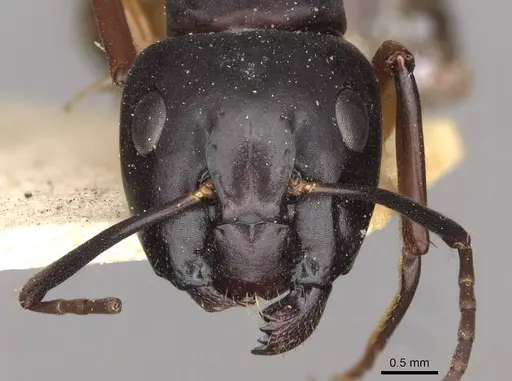
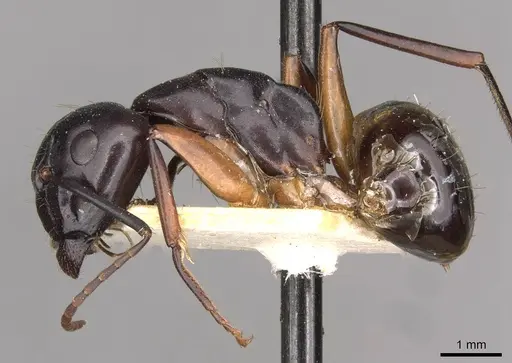
Camponotus himalayanus is a carpenter ant that lives high in the Himalayas. You can find it in northern India (Himachal Pradesh and Jammu & Kashmir) and Nepal, especially the Solukhumbu district . It's a high‑altitude species, recorded between 2 000 and 3 500 m above sea level . The workers have orange coxae and femora (the upper leg segments) and a coarse, semi‑matte sculpture on the head and thorax, which sets them apart from similar species like Camponotus fallax . They belong to the subgenus Myrmentoma .
Quick Summary
- Difficulty: Medium
- Origin & Habitat: Himalayas of northern India and Nepal, at elevations of 2 000-3 500 m [3][4][2]. Endemic to this mountain range.
- Colony Type: Not confirmed, based on typical Camponotus patterns it's likely monogyne (single queen), but that's an educated guess.
- Size & Growth:
- Queen: Size data unavailable
- Worker: Size data unavailable
- Colony: Unknown, estimated to be several hundred to a few thousand workers based on typical Camponotus, but no wild data exist.
- Growth: Unknown, likely slow, as many Camponotus grow slowly, but no specific information is available.
- Development: No data, for comparison, many Camponotus take 6-10 weeks at good temperatures, but this species hasn't been studied. (Because it comes from a cool climate, development may be slower than tropical Camponotus.)
- Antkeeping:
- Temperature: Unknown, based on its high‑altitude home, aim for cool room temperatures (18-22 °C) and avoid anything over 25 °C. Watch how the colony behaves and adjust.
- Humidity: Unknown, a moderate, well‑drained nest with a damp spot should work. These ants live in a dry mountain climate, so don't over‑wet.
- Diapause: Likely yes, high‑altitude Himalayan ants need a cold winter rest. Try 3-4 months at 5-10 °C each year, but note this hasn't been tested with captive colonies.
- Nesting: In the wild they probably nest in rotting wood or under stones. In captivity, Y‑tong (AAC), plaster, or test‑tube setups are worth trying. They like dark, enclosed spaces and don't need soil.
- Behavior: Almost nothing is on record. As a Camponotus, they probably spray formic acid when threatened (no sting). They are likely calm, medium‑sized ants with moderate escape risk, standard barriers like Fluon should be enough.
- Common Issues: almost no captive care data exists, treat this as an experimental species and research more before starting, may need cooler temperatures than most carpenter ants, overheating could kill them, winter dormancy might be required, but no one knows for sure, if skipped, the colony may weaken, slow growth compared to fast‑breeding ants can test your patience, wild‑caught colonies may come with parasites or mites, so quarantine them first
Origin and Distribution
Camponotus himalayanus is only known from the Himalayan mountains. It's been collected in the Indian states of Himachal Pradesh and Jammu & Kashmir [1], and in Nepal's Solukhumbu district (Thansindu,3 500 m) [2]. Elevation records range from 2 000 m [3] to 3 500 m [2][4]. The species was originally described by Forel in 1893 and is currently treated as a valid species [6][5].
Identification and Morphology
Workers of Camponotus himalayanus have bright orange coxae and femora (the upper leg segments), which along with a coarser, semi‑matte head and thorax set them apart from the similar Camponotus fallax [5]. The clypeus (the face plate above the mandibles) has a broadly rounded front corner and a clearly notched free margin, a key character of the subgenus Myrmentoma [7].
Natural History and Behaviour
Almost nothing is published about the biology of this species. As a Camponotus, it probably nests in dead wood or under stones in its cool mountain habitat. The subfamily Formicinae lacks a functional sting, instead Camponotus ants (tribe Camponotini) bite and spray formic acid from the tip of the abdomen. Given the high‑altitude, seasonal climate, these ants likely experience a winter dormancy period, but this has never been documented.
Captive Care (Experimental)
Because no formal captive‑care studies exist, everything here is a guess based on the ant's native environment and the biology of related Camponotus. Keep the nest cool (18-22 °C range) and avoid letting it get over 25 °C. Provide a humidity gradient, a drier main chamber with one slightly damp area. A winter rest of 3-4 months at 5-10 °C is probable, but watch for signs of stress. For nesting, start with a test tube or a small Y‑tong nest, these ants should be comfortable in dark, enclosed spaces. Feed them sugar‑water or honey and protein insects (e.g., small crickets, mealworms) 2-3 times a week. Remove leftovers after 24 h to stop mold. Treat this as an experimental species, note everything and share your observations with the ant‑keeping community.
Frequently Asked Questions
How long does it take for Camponotus himalayanus to produce first workers?
No data exist. Typical Camponotus take 6-10 weeks from egg to worker, but this species hasn't been studied, it may be slower due to its cool origin. Be patient and don't disturb a founding queen.
Do Camponotus himalayanus need hibernation?
Probably yes, being from a high‑altitude Himalayan climate, they are used to cold winters. A 3-4 month rest at 5-10 °C is the best guess, but no one has tested it. If you see the colony slowing down in winter, try cooling them gradually.
What temperature should I keep Camponotus himalayanus at?
Keep them in the 18-22 °C range, like a cool room. Avoid temperatures above 25 °C. A small gradient (warmer one side, cooler the other) lets the colony choose what they like.
Are Camponotus himalayanus good for beginners?
Not really. There is very little known about their care, and they probably need cool conditions and winter dormancy. They grow slowly, and if you get the temperature or humidity wrong you might lose them. Only try this species if you are ready to experiment and research as you go.
What do Camponotus himalayanus eat?
Like other Camponotus, they are likely omnivorous. Offer sugar‑water or honey constantly, and small insects (crickets, mealworms) 2-3 times per week. Try different foods and see what they accept.
How big do Camponotus himalayanus colonies get?
That's unknown. Based on typical carpenter ants, a mature colony might hold several hundred to a few thousand workers, but no one has recorded a wild nest.
Can I keep multiple Camponotus himalayanus queens together?
Probably not, most Camponotus are single‑queen (monogyne). There is no evidence that this species accepts multiple queens, so it's safest to keep one queen per colony.
When should I move Camponotus himalayanus to a formicarium?
Wait until the colony has at least 15-20 workers before moving them from a test tube. Use a Y‑tong, plaster, or 3D‑printed nest with dark chambers. Move them gently, use a connecting tube so they can choose to move on their own.
Where is Camponotus himalayanus found in the wild?
Only in the Himalayas, northern India (Himachal Pradesh, Jammu & Kashmir) and Nepal, at high elevations of 2 000-3 500 m [1][2][3].
Report an Issue
The current care sheet is based fully on literature. See inconsistencies, or something that's incorrect? Please , it will be resolved after review from an admin. Contributing to the blogs tab also helps providing information, to make us be able to further improve the caresheets. Thank you for your support!
References

此饲养指南授权协议为 CC BY-SA 4.0 .
社区博客
CASENT0910419
在 AntWeb 上查看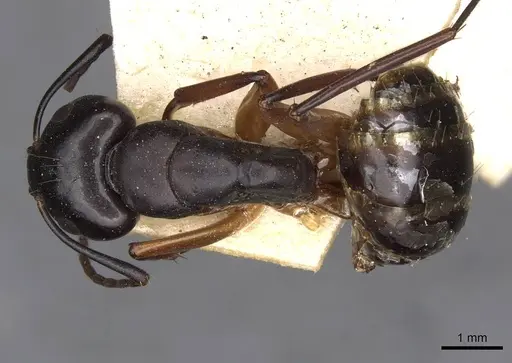
科学文献
正在加载分布地图...正在加载商品...