
Camponotus flavocrines
- 学名
- Camponotus flavocrines
- 亚属
- Thlipsepinotus
- 族
- Camponotini
- 亚科
- Formicinae
- 命名者
- Donisthorpe, 1941
- 地理分布
- 分布于 0 个国家/地区
物种引言
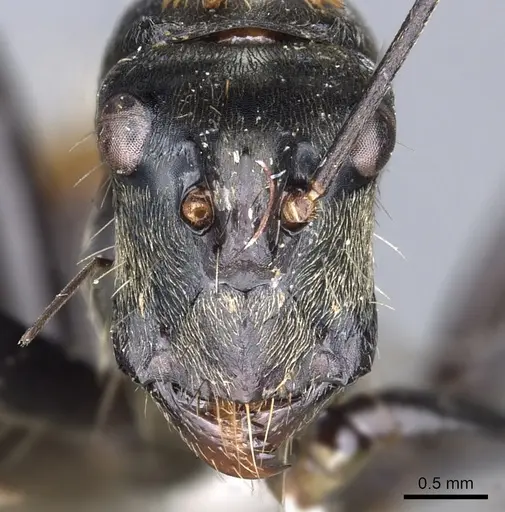
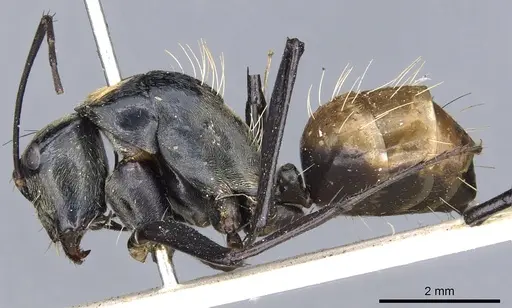
Camponotus flavocrines is a carpenter ant known only from a single specimen collected in Papua New Guinea. Workers are black with a distinctive golden yellow to dark yellow coloring on the rear two-thirds of their abdomen, giving them a striking two-toned appearance. They belong to the Camponotus aureopilus species group, characterized by their very long antennae that extend well past the back of the head and distinctive enlarged yellow-white hairs arranged in a band across the middle of the pronotum. This species remains one of the most poorly known ants in the world, with no described queen, major worker, or documented colonies ever observed. The entire scientific knowledge comes from one minor worker collected in 1941.
Quick Summary
- Difficulty: Expert
- Origin & Habitat: Papua New Guinea (St. Joseph River, Madew, 2000-3000 ft elevation). The known specimen was collected in a tropical highland area. As a member of the Camponotus aureopilus species group, they likely inhabit forest environments typical of New Guinean ants [1][2].
- Colony Type: Unknown, only a single minor worker has ever been collected. Based on genus patterns, likely single-queen colonies like most Camponotus species, but this is unconfirmed.
- Size & Growth:
- Queen: Unknown, no queen has been described in scientific literature
- Worker: size data unavailable, no specific body measurements exist in the literature
- Colony: Unknown, no colony has ever been documented
- Growth: Unknown, no development data exists
- Development: Unknown, no direct observations exist for this species. (No species-specific development data exists.)
- Antkeeping:
- Temperature: Keep warm, roughly 24-28°C. This species comes from tropical Papua New Guinea, so they likely prefer warm, stable conditions.
- Humidity: Moderate to high humidity. Tropical forest ants typically need moisture. Keep the nest substrate consistently moist but not waterlogged.
- Diapause: Unknown, no seasonal data exists for this species. Tropical ants from Papua New Guinea may not require true hibernation.
- Nesting: No specific nesting data exists. Most Camponotus species in New Guinea nest in rotting wood, under bark, or in hollow twigs. A Y-tong (AAC) nest or plaster nest with some moisture retention works well for tropical Camponotus.
- Behavior: Behavior is unstudied. Based on genus patterns, they are likely moderate foragers with typical Camponotus temperament, not particularly aggressive but will defend the nest. Workers are probably nocturnal or crepuscular like many tropical ants. Escape risk is moderate, use standard Camponotus escape prevention. This species lacks a functional sting, like other Formicinae, they spray formic acid from their acidopore when threatened.
- Common Issues: this species has never been kept in captivity, no established care protocols exist, only a single worker specimen exists in scientific collections, making wild colonies essentially uncollectable, no queen has ever been described, so captive breeding from wild colonies is not possible, tropical origin means temperature and humidity must be carefully maintained, without known food preferences, establishing a successful feeding regimen requires experimentation
Why This Species Is Extremely Rare in Captivity
Camponotus flavocrines represents one of the most poorly documented ant species in the world. Since its original description in 1941, only ONE specimen has ever been collected, a single minor worker from the St. Joseph River in Papua New Guinea. This means no queen, no major worker, no colony structure, and no ecological observations have ever been published. The species has never been observed in the wild since its initial collection. For antkeepers, this means there are no established care protocols, no documented feeding preferences, no known nuptial flight timing, and effectively no way to obtain a living colony. This species exists primarily in museum collections rather than in any antkeeper's formicarium [1][3][2].
Taxonomy and Identification
This species belongs to the Camponotus aureopilus species group, a small cluster of related ants found primarily in New Guinea and surrounding regions. The species group is characterized by several distinctive features: a strongly arched mesonotum creating a curved back profile, very long antennae that extend well past the head, and distinctive enlarged hairs on the pronotum. C. flavocrines can be identified by its black body combined with the golden yellow to dark yellow coloring on the rear two-thirds of the abdomen, along with the band of enlarged yellow-white hairs across the middle of the pronotum. Only minor workers have been described, the queen and major worker castes remain unknown to science [1][4].
Natural Habitat and Distribution
The only known specimen was collected from Madew on the St. Joseph River in Papua New Guinea, at an elevation of 2000-3000 feet. This places the collection site in a tropical highland environment, warm, humid, and likely forested. Papua New Guinea hosts incredible ant diversity, with hundreds of species yet to be described. The island's tropical rainforests provide ideal conditions for Camponotus species, which typically nest in rotting wood, under bark, or in hollow twigs. Without additional specimens, the full distribution of this species remains unknown, it may be rare, or it may simply be overlooked due to limited research in the region [1][2].
Inferred Care Requirements
Since no species-specific care information exists, keepers must rely on inferences from the genus Camponotus and the known habitat. These ants likely prefer warm, humid conditions typical of tropical Papua New Guinea. Keep the nest at 24-28°C with humidity around 60-80%. Like most Camponotus, they are likely claustral founders, the queen seals herself in a chamber and lives off stored fat until her first workers emerge. Feed a typical Camponotus diet: sugar sources (honey, sugar water) and protein (insects, mealworms). However, without confirmed specimens or established protocols, any care advice remains experimental at best. The biggest challenge is simply obtaining a colony, no wild colonies have ever been documented, and the species has not been observed since 1941.
The Challenge of Poorly Studied Species
Camponotus flavocrines serves as a reminder that most ant species remain completely unstudied by science. Of the approximately 15,000 described ant species, only a handful have any ecological or behavioral research. Many species are known from a single specimen collected decades ago, their biology remaining a complete mystery. For antkeepers interested in rare species, this highlights the importance of documentation and sharing observations. If a colony of an unstudied species were ever discovered, careful observation of behavior, development, and preferences would represent genuine scientific contribution. However, for practical purposes, keepers should focus on species with established captive protocols, the learning curve for completely unknown species is steep and success is uncertain.
Frequently Asked Questions
Can I keep Camponotus flavocrines in captivity?
Practically speaking, no, this species has never been documented in captivity and no living colony has ever been observed. The only known specimen was collected in 1941, and no additional specimens have been found since. There is no established care protocol, and more importantly, there is no known source to obtain a colony.
Where can I find a Camponotus flavocrines queen?
It is extremely unlikely you will find this species. Only a single worker has ever been collected in nearly 84 years, and no queen has ever been described. The species appears to be either very rare, very localized, or both. Even professional myrmecologists working in Papua New Guinea have not documented additional specimens.
How long does it take for Camponotus flavocrines to develop from egg to worker?
This is completely unknown, no colony has ever been observed, so no development timeline exists.
What do Camponotus flavocrines eat?
Unknown, no feeding observations exist. Based on genus patterns, they likely accept typical carpenter ant fare: sugar sources (honey, sugar water) and protein (insects, mealworms). However, without confirmed specimens, this remains speculative.
Are Camponotus flavocrines good for beginners?
No. This species is not only extremely difficult to obtain, but also completely unstudied with no established care protocols. Even experienced antkeepers would be starting from scratch with no reference material. Beginners should choose species with well-documented care requirements like Camponotus novaeboracensis, Lasius niger, or Messor barbarus.
Do Camponotus flavocrines need hibernation?
Unknown, no seasonal data exists. As a tropical species from Papua New Guinea, they likely do not require true hibernation, though they may slow down during cooler periods. Most tropical ants do best with year-round warm conditions rather than a winter dormancy period.
What is the best nest type for Camponotus flavocrines?
No specific data exists, but based on typical Camponotus preferences and their likely New Guinean forest habitat, a Y-tong (AAC) nest or moist plaster nest would be appropriate. Provide a water tube for humidity and ensure the nest can maintain moderate warmth.
How big do Camponotus flavocrines colonies get?
Unknown, no colony has ever been documented. Most Camponotus species form colonies ranging from hundreds to several thousand workers. Without any data on this specific species, colony size cannot be estimated.
Can I keep multiple Camponotus flavocrines queens together?
Unknown, no colony structure data exists for this species. Most Camponotus are monogyne (single queen), but some species can be polygynous. Without any observations of wild colonies, colony structure cannot be determined.
Report an Issue
The current care sheet is based fully on literature. See inconsistencies, or something that's incorrect? Please , it will be resolved after review from an admin. Contributing to the blogs tab also helps providing information, to make us be able to further improve the caresheets. Thank you for your support!
References

此饲养指南授权协议为 CC BY-SA 4.0 .
社区博客
CASENT0903561
在 AntWeb 上查看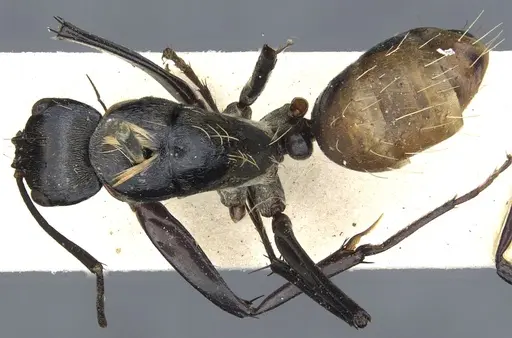
科学文献
正在加载分布地图...正在加载商品...