
Camponotus arabicus
- 学名
- Camponotus arabicus
- 亚属
- Tanaemyrmex
- 族
- Camponotini
- 亚科
- Formicinae
- 命名者
- Collingwood, 1985
- 地理分布
- 分布于 0 个国家/地区
物种引言
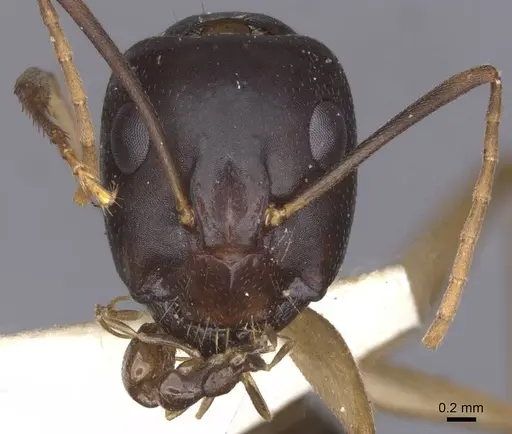
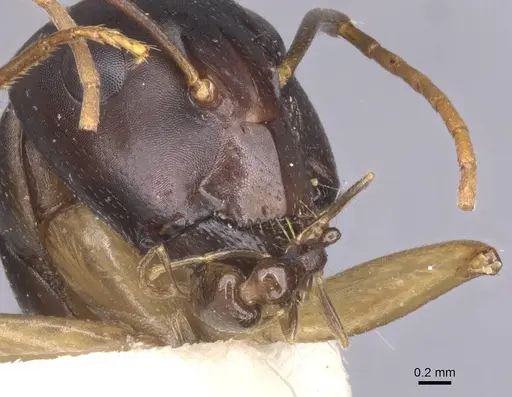
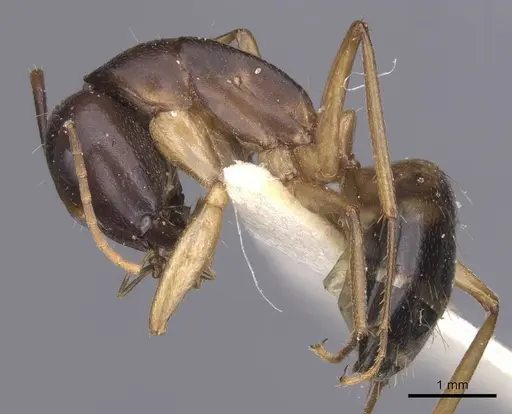
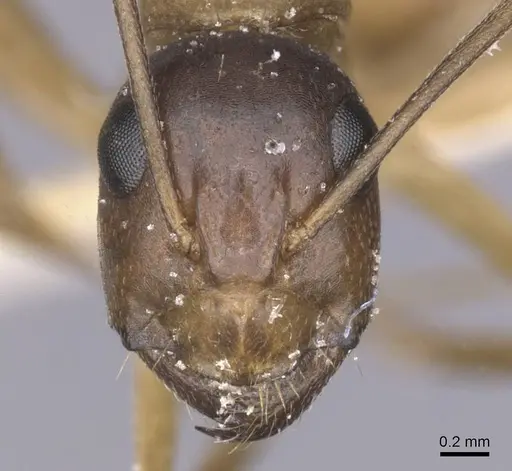
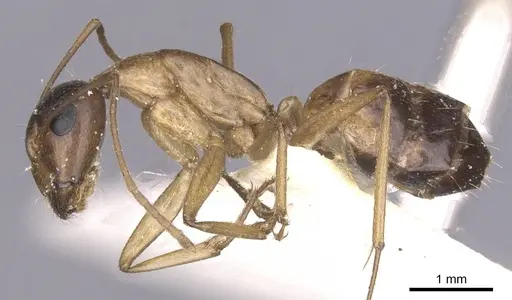
Camponotus arabicus is a large carpenter ant species native to the Arabian Peninsula, specifically found in Saudi Arabia and Oman [AntWiki]. This species belongs to the Tanaemyrmex subgenus. Workers come in two sizes: major workers are robust and significantly larger, while minor workers are more slender. The species was described by Collingwood in 1985 from specimens collected in Riyadh, Saudi Arabia [AntWiki]. Queens are substantial in size, typical of Tanaemyrmex species. This is a desert-adapted species from hot, arid regions.
Quick Summary
- Difficulty: Medium
- Origin & Habitat: Saudi Arabia and Oman, hot, arid desert and semi-desert environments [1][2]
- Colony Type: Colony structure is unconfirmed. Based on typical Tanaemyrmex patterns, likely single-queen colonies.
- Size & Growth:
- Queen: Size data unavailable, estimated 16-20mm based on Tanaemyrmex genus patterns
- Worker: Size data unavailable, minor workers estimated 6-9mm, major workers estimated 12-15mm based on genus patterns
- Colony: Likely reaches several thousand workers at maturity, inferred from typical Camponotus growth patterns
- Growth: Moderate, typical for large carpenter ants
- Development: Estimated 6-8 weeks at optimal temperature based on typical Camponotus development (Development time is estimated from genus-level data, direct measurements for this species are not available.)
- Antkeeping:
- Temperature: Keep nest area at 24-28°C with a slight gradient. These ants come from hot desert regions and tolerate higher temperatures well.
- Humidity: Low to moderate humidity, desert-adapted species. Provide a water tube but avoid overly damp nests.
- Diapause: Diapause requirements are unconfirmed. Based on geographic range (hot desert region), likely minimal or no true diapause required. A slight reduction to around 18-20°C during winter may be beneficial but is not mandatory.
- Nesting: Y-tong (AAC) nests work well due to their large size. Plaster nests or naturalistic setups with flat stones over soil can mimic natural nesting under rocks.
- Behavior: Generally calm and not overly aggressive for a Camponotus species. They are primarily nocturnal foragers in the wild. Major workers serve as defenders. They are not known to be escape artists but their large size means standard barriers are necessary. They readily accept sugar water and protein sources.
- Common Issues: colonies grow slowly in early stages, avoid disturbing the queen during founding, large size requires appropriately sized enclosures and passages, test tube setups can become cramped as colonies expand, monitor for space needs, dry climate preference means overwatering can cause fungal problems, queen can be sensitive during founding, minimize vibrations and disturbances
Housing and Nest Setup
Camponotus arabicus requires spacious housing due to their large size. A Y-tong (AAC) nest is an excellent choice, the narrow chambers prevent the ants from feeling exposed while providing adequate space. For founding colonies, use a test tube setup with a water reservoir, but be prepared to move them to a larger formicarium once the colony reaches 30-50 workers. The nest should be kept in a dark, quiet location with minimal vibration. Provide an outworld area large enough for major workers to move around comfortably. Escape prevention is straightforward with standard barriers, their large size means they cannot squeeze through gaps that would allow smaller ants to escape. [1]
Feeding and Diet
Like most Camponotus species, C. arabicus is omnivorous and readily accepts both sugar and protein sources. Offer sugar water, honey, or diluted maple syrup as a constant carbohydrate source. For protein, provide insects such as mealworms, crickets, or other appropriately sized prey. They are not picky eaters and will typically accept most offered foods. Feed protein prey 2-3 times per week, and ensure sugar water is always available. Remove uneaten prey after 24-48 hours to prevent mold. In the wild, these desert ants would opportunistically scavenge and hunt for protein while also tending to aphids for honeydew.
Temperature and Seasonal Care
These ants are adapted to hot desert conditions and tolerate temperatures that would stress many other species. Keep the nest area at 24-28°C during the active season. A heating cable placed on top of the nest can provide additional warmth if your room temperature runs cool. They can tolerate temperatures into the low 30s°C briefly. During winter, a slight reduction to around 18-20°C is acceptable but true hibernation is not required for this species. Avoid keeping them in consistently cold conditions. The key is stability, sudden temperature swings stress the colony. Room temperature in most homes (20-24°C) is generally suitable for this species.
Colony Development and Growth
C. arabicus likely follows typical Camponotus development patterns. After mating, the queen seals herself in a chamber and lays her first eggs without leaving to forage. She survives on stored fat reserves and wing muscles. The first brood takes an estimated 6-8 weeks to develop into workers at optimal temperature. These first workers are typically smaller than normal workers but can already begin foraging for food to support the growing colony. Growth is moderate, expect the colony to reach 50-100 workers within the first year under good conditions. Large colonies can eventually reach several thousand workers over several years.
Behavior and Temperament
This species is generally calm and not particularly aggressive compared to some other Camponotus. They are primarily nocturnal foragers, though they may show activity during cooler daytime hours. Major workers are impressive defenders but are typically slow-moving and non-confrontational unless the nest is directly threatened. They communicate through chemical trails and will recruit nestmates to good food sources. Unlike some tropical species, they do not exhibit extreme aggression or painful stings. Their large size makes them fascinating to observe, and they are generally considered a rewarding species for intermediate antkeepers.
Frequently Asked Questions
How long does it take for Camponotus arabicus to produce first workers?
First workers typically appear in an estimated 6-8 weeks after the queen lays eggs, assuming temperatures around 24-28°C. This is typical for large Camponotus species. The exact timing depends on temperature and feeding.
Can I keep Camponotus arabicus in a test tube?
Yes, test tubes work well for founding colonies. Use a standard test tube with a water reservoir and cotton plug. The queen will seal the chamber herself. Move the colony to a larger formicarium once worker count reaches 30-50 or when the test tube becomes cramped.
What do Camponotus arabicus eat?
They are omnivorous. Offer sugar water, honey, or maple syrup constantly for carbohydrates. For protein, provide insects like mealworms, crickets, or other appropriately sized prey 2-3 times per week.
What temperature do Camponotus arabicus need?
Keep them at 24-28°C in the nest area. They tolerate higher temperatures well due to their desert origin. A slight temperature gradient allows the ants to choose their preferred zone.
Do Camponotus arabicus need hibernation?
No, true hibernation is not required. These ants come from hot desert regions in Saudi Arabia and Oman where winters remain warm. A slight temperature reduction to 18-20°C during winter months is acceptable but not mandatory.
How big do Camponotus arabicus colonies get?
Mature colonies likely reach several thousand workers over several years. This is typical for large Camponotus species in the Tanaemyrmex subgenus.
Is Camponotus arabicus good for beginners?
This species is rated as medium difficulty. They are more forgiving than some tropical species due to their tolerance for temperature variation, but their slow initial growth and large size requirements make them better suited for keepers with some experience.
When should I move Camponotus arabicus to a formicarium?
Move them when the colony reaches 30-50 workers or when the test tube shows signs of crowding. Major workers should be present. Ensure the new nest provides appropriate chamber sizes, not too large or too small.
Can I keep multiple Camponotus arabicus queens together?
This is not recommended. While colony structure is not fully documented for this species, Camponotus are typically single-queen colonies. Combining unrelated queens typically results in fighting.
Report an Issue
The current care sheet is based fully on literature. See inconsistencies, or something that's incorrect? Please , it will be resolved after review from an admin. Contributing to the blogs tab also helps providing information, to make us be able to further improve the caresheets. Thank you for your support!
References

此饲养指南授权协议为 CC BY-SA 4.0 .
社区博客
CASENT0911902
在 AntWeb 上查看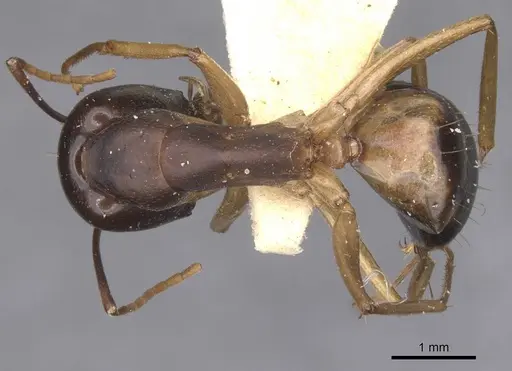
CASENT0911903
在 AntWeb 上查看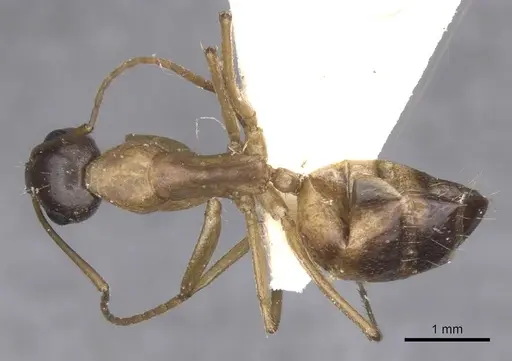
科学文献
正在加载分布地图...正在加载商品...