
Bothroponera cribrata
- 学名
- Bothroponera cribrata
- 族
- Ponerini
- 亚科
- Ponerinae
- 命名者
- Santschi, 1910
- 地理分布
- 分布于 0 个国家/地区
物种引言
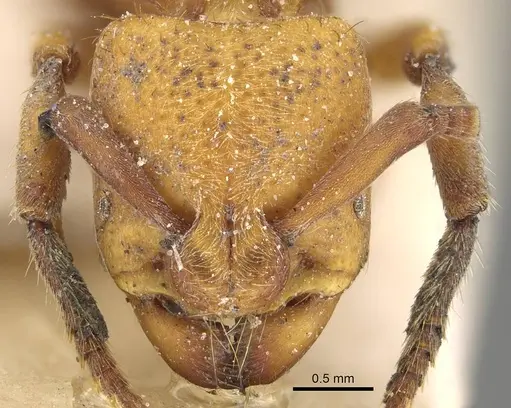
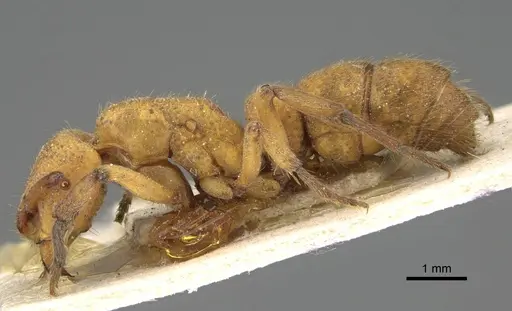
Bothroponera cribrata is a medium-sized African ponerine ant native to the Congo region. Workers measure approximately 9mm in total length and have a distinctive yellow to pale brown coloration, with the head, mandibles, clypeus, pronotum, mesonotum, mesopleuron, and propodeum appearing yellow, while the antennae, leg tips, and tarsi are pale brown . This species belongs to the Bothroponera talpa species complex and can be identified by its partially developed anapleural sulcus, a unique trait among related species in this group . The genus Bothroponera is known for being predatory, and these ants are typically found in forest and savanna grassland habitats in their native range .
Quick Summary
- Difficulty: Medium
- Origin & Habitat: Native to the Congo region, specifically Brazzaville in the Republic of the Congo. They inhabit forest and savanna grasslands in a region characterized by high humidity, with rainforests covering about 70% of the country. Mean annual temperatures range from 23°C to 27°C, with average annual rainfall around 137cm [1][2].
- Colony Type: Colony structure is unconfirmed. The species is in the Ponerinae subfamily, which typically forms single-queen colonies, but specific data for B. cribrata is not available. Female (queen) and male castes have not been described in scientific literature [1].
- Size & Growth:
- Queen: Unknown, queen caste has not been described [1]
- Worker: 9.00 mm total length [1][2]
- Colony: Unknown, colony size data not available
- Growth: Unknown, no development data available for this species
- Development: Unknown, development has not been studied for this species (Based on typical Ponerinae patterns, expect development of 2-4 months at warm temperatures, but this is an estimate rather than confirmed data.)
- Antkeeping:
- Temperature: Keep nest area at 24-28°C, reflecting their native tropical habitat with mean temperatures of 23-27°C [2]. A slight gradient allowing warmer and cooler areas is recommended.
- Humidity: High humidity is essential, their native habitat has high rainfall (137cm annually) and rainforests. Keep substrate consistently moist but not waterlogged. Provide a water tube as a drinking source.
- Diapause: Unknown, no specific data on overwintering requirements. Given their tropical origin, they likely do not require true hibernation but may reduce activity during cooler periods.
- Nesting: In the wild they nest in soil in forest and savanna areas. In captivity, a moist plaster or acrylic nest works well. The 9mm worker size means moderately sized chambers are appropriate.
- Behavior: Bothroponera ants are predatory by nature, typical of the Ponerinae subfamily. They hunt small invertebrates and have a functional sting for defense, Ponerine stings inject potent, peptide-rich venom that can be painful to vertebrates. Workers are moderately large at 9mm, so escape prevention should be moderate, standard barriers work for this size. Ponerine ants are generally more defensive and will sting if threatened.
- Common Issues: lack of documented care information makes successful captive husbandry more challenging, humidity control is critical, dry conditions will likely cause colony failure, predatory diet requirements mean you must provide live prey regularly, queen and male castes are unknown, making colony establishment from wild catches uncertain, no data on nuptial flight timing makes captive breeding difficult
Natural History and Distribution
Bothroponera cribrata is endemic to the Congo region, specifically known from Brazzaville in the Republic of the Congo [1][2]. The type specimen was collected by A. Weiss in 1907. This species is part of the Bothroponera talpa species complex, which includes several African ponerine ants. The region is characterized by equatorial rainforests covering about 70% of the country, with high humidity and warm temperatures year-round. The type locality in Brazzaville experiences mean temperatures between 23°C to 27°C and receives approximately 137cm of rainfall annually [1][2].
Identification and Morphology
Workers of Bothroponera cribrata measure approximately 9mm in total length, making them medium-sized ants within the Ponerinae subfamily [1][2]. The head, mandibles, clypeus, pronotum, mesonotum, mesopleuron, and propodeum are yellow, while the scapes, funiculi, lower margins of frontal lobes, mandibular margins, and tibiae with tarsi are pale brown [1][2]. They have triangular mandibles with six teeth, and the scapes do not reach the posterior lateral corner of the head [2]. The most distinctive feature is the partially developed anapleural sulcus, which separates this species from other members of the B. talpa complex that lack this structure but have a well-developed mesometapleural suture instead [1]. Erect hairs up to 0.25mm in length are present on the head, pronotum, mesonotum, propodeum, petiole, and postpetiole [1].
Housing and Nesting
In captivity, Bothroponera cribrata should be provided with a moist nest environment that mimics their natural forest floor habitat. A plaster nest or acrylic formicarium with moisture chambers works well for this species. The nest should maintain consistently high humidity, think damp forest floor conditions rather than dry setups. Given the worker size of 9mm, chambers should be appropriately scaled with enough space for the colony to move around comfortably. An outworld area should be provided for foraging, and a water tube ensures the colony has access to drinking water. Escape prevention should be standard, these are medium-sized ants that cannot squeeze through typical barrier setups but may explore for weaknesses in lids.
Feeding and Diet
As a member of the Ponerinae subfamily, Bothroponera cribrata is expected to be predatory, similar to other ponerine ants. In captivity, offer small live prey such as fruit flies, small crickets, mealworms, and other appropriately sized invertebrates. Protein-rich foods are essential for brood development. Sugar sources such as honey or sugar water may be accepted but are not the primary diet for predatory species. Feed prey items 2-3 times per week, adjusting based on colony size and consumption rate. Remove uneaten prey after 24-48 hours to prevent mold issues.
Temperature and Humidity Requirements
Based on their native habitat in the Congo with mean annual temperatures of 23-27°C, maintain nest temperatures between 24-28°C [2]. This is a warm-environment species that will likely struggle if kept cool. A heating cable on one side of the nest can create a temperature gradient, allowing the colony to self-regulate. Humidity is critical, their natural habitat receives approximately 137cm of rainfall annually [2]. Keep the nest substrate consistently moist but not waterlogged, and provide a water tube. Mist the outworld occasionally to maintain ambient humidity. Poor humidity control is likely to cause colony stress or failure.
Colony Development and Reproduction
Bothroponera cribrata is a poorly studied species in terms of colony biology. Only the worker caste has been described, queen and male castes remain unknown [1]. This makes captive breeding challenging since there is no data on nuptial flight timing or colony founding behavior. If you obtain a wild-caught colony, expect slow growth typical of many ponerine species. Based on related species in the genus, development from egg to worker likely takes 2-4 months at optimal temperatures. Colonies probably remain relatively small compared to some myrmicine species, potentially reaching a few hundred workers at maturity.
Frequently Asked Questions
How long does it take for Bothroponera cribrata to produce first workers?
The egg-to-worker development time is unconfirmed for this species. Based on typical Ponerinae development patterns, expect approximately 2-4 months at optimal warm temperatures (24-28°C).
What do Bothroponera cribrata ants eat?
They are predatory ants that should be fed small live invertebrates like fruit flies, small crickets, and mealworms. Protein-rich prey is essential for brood development. Sugar water or honey may be accepted occasionally.
Are Bothroponera cribrata ants aggressive?
Ponerine ants are generally more defensive than many common ant genera. They have potent stings and may use them when threatened. Handle with care and use proper escape prevention.
What temperature should I keep Bothroponera cribrata at?
Keep them at 24-28°C, reflecting their native tropical habitat in the Congo where mean temperatures range from 23-27°C. A temperature gradient is recommended.
Do Bothroponera cribrata ants need hibernation?
Given their tropical origin in the Congo, they likely do not require true hibernation. They may reduce activity during cooler periods but should be kept warm year-round.
How big do Bothroponera cribrata colonies get?
Colony size data is not available for this species. Based on typical Ponerinae patterns, colonies likely reach a few hundred workers at maturity rather than the thousands seen in some other ant genera.
Is Bothroponera cribrata a good species for beginners?
This is not an ideal beginner species due to limited documented care information, high humidity requirements, and predatory diet needs. The lack of data on colony structure and reproduction also makes captive breeding challenging.
What size nest should I use for Bothroponera cribrata?
Use a moist nest setup (plaster or acrylic) with chambers appropriately sized for 9mm workers. The nest should maintain high humidity and have an outworld for foraging.
Where is Bothroponera cribrata found in the wild?
They are native to the Congo region, specifically Brazzaville in the Republic of the Congo. Their natural habitat consists of forest and savanna grasslands with high humidity and warm temperatures year-round [1][2].
Report an Issue
The current care sheet is based fully on literature. See inconsistencies, or something that's incorrect? Please , it will be resolved after review from an admin. Contributing to the blogs tab also helps providing information, to make us be able to further improve the caresheets. Thank you for your support!
References

此饲养指南授权协议为 CC BY-SA 4.0 .
社区博客
CASENT0922361
在 AntWeb 上查看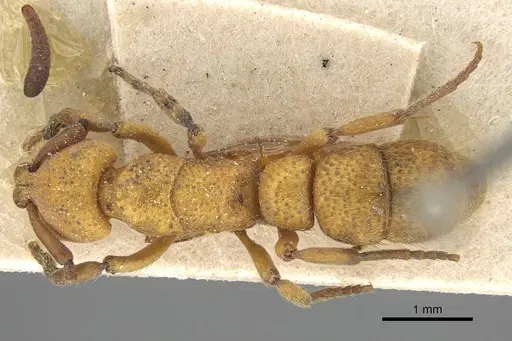
科学文献
正在加载分布地图...正在加载商品...