
Aphaenogaster equestris
- 学名
- Aphaenogaster equestris
- 族
- Stenammini
- 亚科
- Myrmicinae
- 命名者
- Borowiec & Salata, 2014
- 地理分布
- 分布于 0 个国家/地区
物种引言
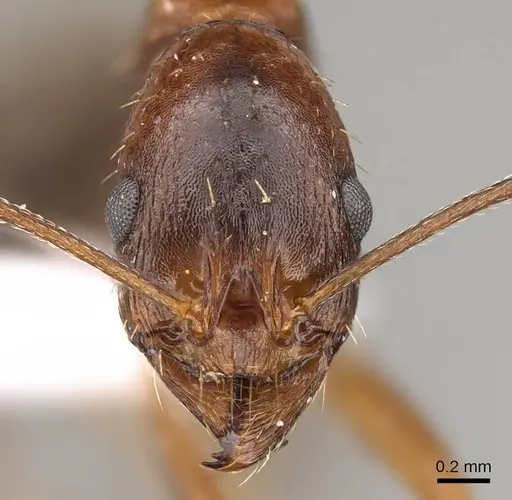
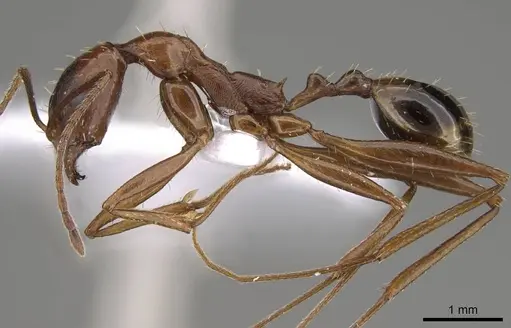
Aphaenogaster equestris is a small, rusty-yellow ant endemic to southwestern Turkey, specifically known only from the ancient city of Termessos in Antalya Province . Workers have a distinctive elongated appearance with very long legs and a brownish triangular patch on the head . The species was discovered in 2010 and formally described in 2014,making it one of the more recently described Mediterranean ants . What makes this species remarkable is its highly specific habitat: the type colony was discovered nesting in a rock crevice inside a deep cave, positioned directly beneath a famous ancient equestrian relief carved into the limestone . Workers were observed foraging on cave walls and adjacent limestone rocks, suggesting adaptation to cool, stable microclimates within rocky cavities. This extreme habitat specificity means they remain virtually unknown in captivity.
Quick Summary
- Difficulty: Expert
- Origin & Habitat: Southwestern Turkey, Antalya Province, limestone caves and rock crevices at approximately 1018m elevation in Mediterranean climate [1][2]
- Colony Type: Unknown, no queen has been described in scientific literature
- Size & Growth:
- Antkeeping:
- Temperature: Likely warm summers, cool winters based on Mediterranean location at 1000m elevation. Start around 22-25°C with winter cooling to 15-18°C
- Humidity: Moderate humidity, nest substrate should feel damp but not waterlogged, matching cave/rock crevice conditions [1]
- Diapause: Likely yes, temperate Mediterranean species from 36°N latitude at 1018m elevation probably require winter rest
- Nesting: Rock crevices and narrow gaps under stones, use Y-tong nests with small chambers or naturalistic setups with flat stones and tight spaces [1]
- Behavior: Behavior is not specifically documented. Based on typical Aphaenogaster patterns, they are likely generalist foragers and non-aggressive. Very long legs suggest agile climbing and fast movement on rock surfaces.
- Common Issues: extreme rarity in ant trade makes acquisition nearly impossible, only known from type locality in Turkey., unknown founding behavior means captive rearing from queen is completely untested., lack of biological data makes proper care difficult, most husbandry is guesswork based on genus patterns.
Natural History and Habitat
Aphaenogaster equestris was discovered in 2010 and described in 2014 from a single remarkable location: a cave in ancient Termessos, Turkey, famous for its 2000-year-old equestrian relief carved into the limestone wall [1]. The type nest sat in a rock crevice about 50cm above the ground, positioned directly beneath this historic carving inside a cave chamber roughly two meters from the entrance [1].
Workers were observed foraging on the cave walls between the nest and the entrance, with additional specimens collected on exposed limestone rocks outside the cave [1]. This suggests the species specializes in cool, stable rock microhabitats with moderate humidity, neither the deep dark zones of caves nor fully exposed surface conditions. The location at 1018 meters elevation in the Taurus Mountains experiences a Mediterranean climate with hot, dry summers and mild, wet winters, though cave interiors maintain more stable temperatures [1][2].
This species belongs to the Aphaenogaster cecconii group, which contains several Mediterranean species adapted to rocky habitats [1]. Within this group, A. equestris can be distinguished from similar species like Aphaenogaster phillipsi by its rusty-yellow coloration and the brownish triangular patch on the head [1].
Nesting Preferences
In nature, Aphaenogaster equestris nests in narrow rock crevices and under limestone flakes [1]. The type colony occupied a vertical crevice in a cave wall, suggesting they prefer tight, enclosed spaces that provide stable humidity and temperature.
For captive housing, replicate these conditions with narrow chambers and minimal open space. Y-tong (aerated concrete) nests with small, shallow chambers work well, as do naturalistic setups featuring flat limestone pieces stacked to create narrow gaps. Avoid tall, open spaces, these ants likely feel secure when pressed between surfaces. Provide a slight humidity gradient with one side slightly damper than the other, allowing the colony to choose their preferred microclimate [1].
Colony Founding
Founding behavior is completely unconfirmed for Aphaenogaster equestris, no queens have been described, and no observations of colony foundation exist [1]. Most Aphaenogaster species are claustral, meaning the queen seals herself in a chamber and lives off stored fat reserves until her first workers hatch. However, without direct evidence, this remains speculative for A. equestris.
If attempting to found a colony, provide the queen with a small, dark chamber in a test tube or similar setup with minimal disturbance. Offer a small drop of sugar water weekly in case she is semi-claustral and needs to forage, but do not disturb her unnecessarily. Success rates are unknown and likely low given the complete lack of captive breeding reports.
Temperature and Seasonal Care
The type locality at 36°N latitude and 1018m elevation experiences a Mediterranean climate with distinct seasons [1][2]. Summer temperatures likely reach 25-30°C in the region, while winter temperatures at this elevation probably drop to 5-10°C, with cave interiors remaining somewhat warmer and more stable.
Start colonies at around 22-25°C during the active season. If the colony shows signs of slowing down in winter (reduced activity, brood development stopping), provide a cooling period at 15-18°C for 3-4 months to simulate winter. This diapause period is likely necessary for long-term colony health, though it remains unconfirmed. Use a heating cable on one side of the nest to create a gentle gradient, allowing the ants to thermoregulate by moving to their preferred temperature.
Feeding and Diet
The diet of Aphaenogaster equestris has not been studied, but related Aphaenogaster species are generalist scavengers and predators [3]. They likely accept small dead insects, sugar water or honey water, and possibly seeds.
Offer small prey items such as fruit flies, tiny pieces of mealworm, or crushed insects. Provide a sugar source constantly, either honey water on a cotton ball or a test tube with sugar water. Observe acceptance carefully, as specific preferences are unknown. Remove uneaten food promptly to prevent mold growth in the humid nest environment. Protein should be offered 2-3 times weekly during the active season, less frequently during winter cooling.
Frequently Asked Questions
Can I keep Aphaenogaster equestris in a test tube?
Test tubes should work for founding if you can acquire a queen, though founding success is completely unconfirmed. Use a standard water test tube setup with a small chamber. For established colonies, move them to a Y-tong or naturalistic nest with narrow chambers that mimic their rock-crevice habitat.
How long until Aphaenogaster equestris gets its first workers?
The egg-to-worker timeline is unknown for this species. Based on related Aphaenogaster, expect roughly 6-10 weeks at 25°C, but this is purely speculative. Temperature and humidity will significantly affect development time.
Do Aphaenogaster equestris colonies need hibernation?
Probably yes, but unconfirmed. As a temperate Mediterranean species from Turkey at 1000m elevation, they likely experience cool winters and need a diapause period at 15-18°C for 3-4 months. Watch for reduced activity in winter as a cue to cool them down.
What do Aphaenogaster equestris eat?
Their natural diet is unknown, but they likely accept small dead insects, sugar water, and possibly seeds based on typical Aphaenogaster behavior. Offer fruit flies, tiny mealworm pieces, and honey water, adjusting based on what they accept.
How big do Aphaenogaster equestris colonies get?
Maximum colony size is unknown. Most Aphaenogaster species reach a few hundred to a thousand workers, but without field studies of mature colonies, this remains speculative.
Do Aphaenogaster equestris ants sting?
Like most Aphaenogaster, they probably possess a small stinger, but they are too small to penetrate human skin effectively. They are not considered dangerous to humans.
Where can I buy Aphaenogaster equestris?
You almost certainly cannot. This species is known only from a single cave in Turkey, described in 2014,and is not commercially available. It would require collection from the wild in Turkey, which is illegal without proper permits and environmentally irresponsible for such a restricted endemic species.
What is the best nest type for Aphaenogaster equestris?
Use nests that mimic rock crevices: Y-tong (aerated concrete) with narrow, shallow chambers, or naturalistic setups with stacked flat stones creating tight gaps. Avoid acrylic nests with tall, open chambers, they need tight, enclosed spaces to feel secure.
Report an Issue
The current care sheet is based fully on literature. See inconsistencies, or something that's incorrect? Please , it will be resolved after review from an admin. Contributing to the blogs tab also helps providing information, to make us be able to further improve the caresheets. Thank you for your support!
References

此饲养指南授权协议为 CC BY-SA 4.0 .
社区博客
CASENT0914408
在 AntWeb 上查看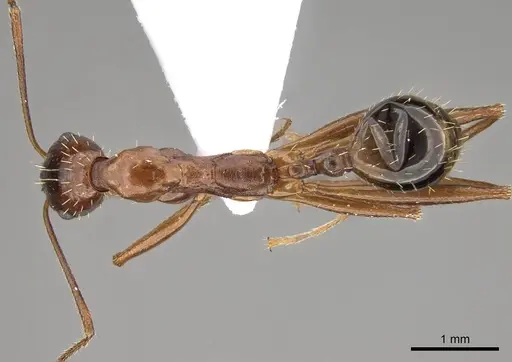
科学文献
正在加载分布地图...正在加载商品...