
Anochetus evansi
- 学名
- Anochetus evansi
- 族
- Ponerini
- 亚科
- Ponerinae
- 命名者
- Crawley, 1922
- 地理分布
- 分布于 0 个国家/地区
物种引言
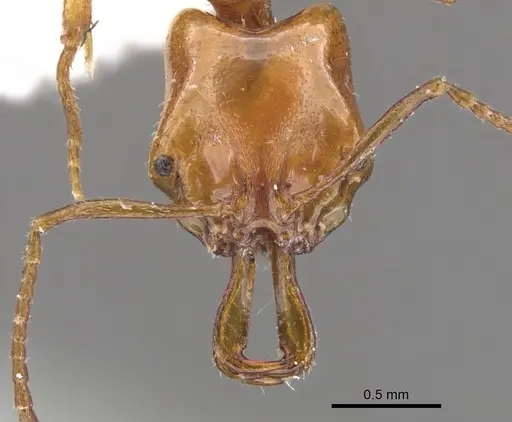
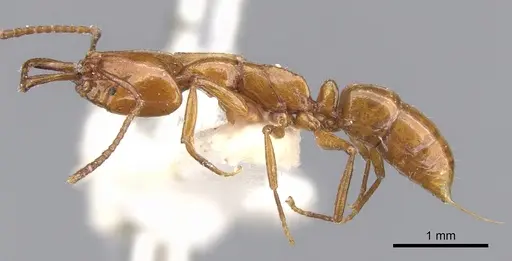
Anochetus evansi is a small trap-jaw ant endemic to northwest Iran, specifically the Sar-i-Pal region of Iranian Kurdistan . Workers measure approximately 3-4mm total length with distinctive toothless inner mandible margins and relatively small eyes . As a member of the evansi species group within the genus Anochetus, they possess the spring-loaded mandibles characteristic of trap-jaw ants, though their inner edges lack teeth . This species represents a rare example of a primarily tropical genus established in the Palaearctic region . These ants remain almost unknown in captivity. No studies have documented their colony size, founding behavior, or dietary needs . You will be keeping them based on general patterns from related Anochetus species, which means experimental care and close observation are essential.
Quick Summary
- Difficulty: Expert
- Origin & Habitat: Endemic to northwest Iran (Iranian Kurdistan), specifically recorded from Sar-i-Pal [1][2][3]. As a native member of a primarily tropical genus, they likely need warm, stable conditions [3].
- Colony Type: Unconfirmed, likely single-queen based on typical Anochetus patterns, but this has not been documented for this species.
- Size & Growth:
- Queen: Approximately 5-7mm, inferred from typical Anochetus proportions.
- Worker: Approximately 3-4mm total length, inferred from Anochetus genus patterns [4][5].
- Colony: Unknown, likely small (under 100 workers) based on typical Anochetus patterns.
- Growth: Unknown, likely slow to moderate.
- Development: Unknown, estimated 8-12 weeks based on related Anochetus species. (This is an estimate only. Development time has not been studied in this species.)
- Antkeeping:
- Temperature: Unknown, start around 24-26°C based on tropical genus origins [3]. Observe activity levels and adjust accordingly.
- Humidity: Unknown, moderate to high humidity likely needed. Keep nest material damp but not waterlogged.
- Diapause: Unknown, probably not required given tropical affinities, but this is unconfirmed.
- Nesting: Unknown, likely soil or leaf litter nesting based on genus habits. Small chambers required for their size.
- Behavior: Trap-jaw predatory behavior expected. Their small size (3-4mm) means you need excellent escape prevention. As Ponerinae, they possess a functional stinger and can deliver painful venom to predators [4].
- Common Issues: extremely limited biological data available, captive keeping is purely experimental., small size (3-4mm) means escapes are likely without fine mesh barriers and proper Fluon application., unknown dietary preferences, may require specialized small prey like springtails or micro-crickets., endemic to Iran, obtaining specimens legally is extremely difficult and they are not available in the ant trade.
Identification and Distribution
Anochetus evansi is known only from northwest Iran, specifically the Sar-i-Pal region of Iranian Kurdistan [1][2]. Workers are small, approximately 3-4mm total length [4][5]. You can identify them by their toothless inner mandible margins, unlike many trap-jaw ants, the inner edge lacks teeth [4][2]. Their eyes are also relatively small, measuring under 0.13mm in length [2]. The metanotum forms a regular convex curve with the propodeum, giving them a smooth profile [4].
These ants belong to the evansi species group within the genus Anochetus [6]. This group was considered to contain only A. evansi until the description of A. cryptus from India [4]. The species represents a significant range extension for the genus, which is primarily tropical and subtropical [3].
Housing and Nest Requirements
Since no one has documented the nesting habits of A. evansi in the wild, you must base housing on related Anochetus species. These ants need small, secure enclosures. With workers only 3-4mm long, they can squeeze through incredibly small gaps [4]. You must use fine mesh (stainless steel 0.5mm or smaller) or Fluon barriers on all openings.
For the nest itself, provide small chambers with tight dimensions. Test tubes work well for founding if the species proves to be claustral, but you should also offer a small foraging area with soil or leaf litter in case they are semi-claustral. Keep the nest material slightly damp, these ants likely come from sheltered, humid microhabitats given their tropical genus origins [3]. Avoid bright light, provide red film or keep them in dim conditions.
Feeding and Diet
Anochetus evansi likely hunts small live prey using their trap-jaw mandibles, but their specific diet is unknown [4]. Based on other Anochetus species, you should offer tiny live insects. Springtails, micro-crickets, and fruit flies are good starting points. The prey must be small enough for 3-4mm workers to handle [4].
You can offer sugar water or honey as a supplement, but many Anochetus species are primarily predatory. Watch whether your colony accepts liquid foods. Remove uneaten prey quickly to prevent mold, as these ants likely keep clean nests.
Temperature and Environment
As a member of a tropical genus living in Iran, A. evansi likely needs warm, stable temperatures [3]. Start with 24-26°C and observe activity. If workers appear sluggish, increase slightly, if they avoid heat sources, reduce temperature. You should provide a gentle heat gradient so the colony can self-regulate.
Humidity requirements are unknown, but you should keep the nest material consistently damp. These ants are not desert-dwellers. Place the heating element on top of the nest rather than underneath to avoid creating condensation that floods the chambers.
Legal and Conservation Status
Anochetus evansi is endemic to Iran, meaning it lives nowhere else in the world [2][3]. You cannot legally collect or export these ants without proper permits. They are not available in the commercial ant trade. If you are reading this caresheet, you likely encountered these ants in scientific literature or are researching rare species. Do not attempt to collect them from the wild without appropriate permissions from Iranian authorities.
Frequently Asked Questions
Can I buy Anochetus evansi?
No. These ants are endemic to Iran and are not available in the ant trade [2][3]. They are extremely rare in collections and cannot be legally exported without permits.
What do Anochetus evansi eat?
Their diet is unknown. Based on other Anochetus trap-jaw ants, they likely hunt small live prey like springtails, micro-crickets, and fruit flies [4]. Offer tiny live insects and observe what they accept.
How big do Anochetus evansi colonies get?
Colony size has never been documented. Based on related Anochetus species, they likely remain small, possibly under 100 workers.
Do Anochetus evansi need hibernation?
It is unknown. They belong to a tropical genus, so they probably do not need winter rest, but this has not been confirmed [3].
Are Anochetus evansi dangerous?
No. At only 3-4mm in length, they are too small to harm humans [4]. They can bite with their trap-jaw mandibles, but the effect would be minor.
How long until Anochetus evansi get their first workers?
Development time is unknown. Based on related Anochetus species, expect roughly 8-12 weeks from egg to worker, but this is only an estimate.
Can I keep Anochetus evansi in a test tube?
You can house them in test tubes, but their founding behavior (claustral vs semi-claustral) is unconfirmed. Provide a test tube setup but be prepared to offer food if the queen needs to forage.
Why is there so little information about Anochetus evansi?
The species was described in 1922 and has only been recorded from a few locations in Iran [1][2]. No biological studies have examined their colony structure, behavior, or life cycle.
Report an Issue
The current care sheet is based fully on literature. See inconsistencies, or something that's incorrect? Please , it will be resolved after review from an admin. Contributing to the blogs tab also helps providing information, to make us be able to further improve the caresheets. Thank you for your support!
References

此饲养指南授权协议为 CC BY-SA 4.0 .
社区博客
CASENT0902460
在 AntWeb 上查看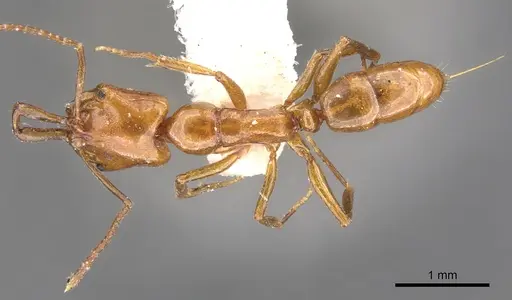
科学文献
正在加载分布地图...正在加载商品...