
Anochetus brevis
- 学名
- Anochetus brevis
- 族
- Ponerini
- 亚科
- Ponerinae
- 命名者
- Brown, 1978
- 地理分布
- 分布于 0 个国家/地区
物种引言
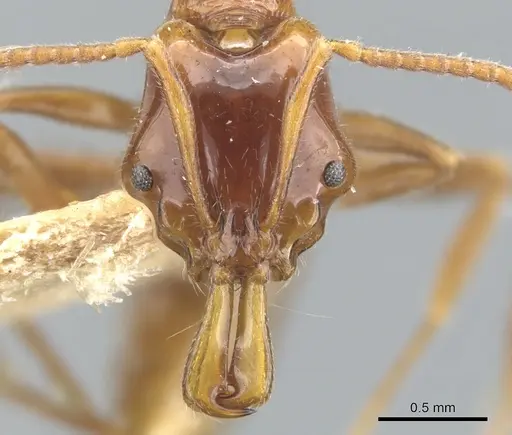
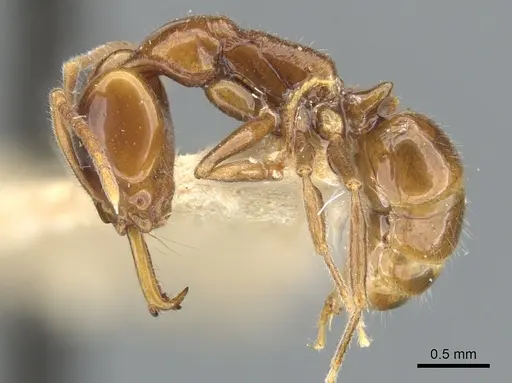
Anochetus brevis is a trap-jaw ant from the Philippines that exists as one of the rarest species in antkeeping - science has only ever collected two workers . These light reddish-brown ants measure about 5mm long and were found high on Mount Apo in Mindanao, at elevations between 1520 and 1830 meters . Unlike their famous trap-jaw relatives, they carry unusually short mandibles less than 0.7mm long . No queen has ever been seen , leaving their colony founding behavior a complete mystery. They belong to the risii species group within the genus .
Quick Summary
- Difficulty: Expert
- Origin & Habitat: Mount Apo, Mindanao, Philippines, montane forest at 1520-1830m elevation [1]
- Colony Type: Unknown, queens and males have never been observed [2]
- Size & Growth:
- Queen: Unknown, queens undiscovered [2]
- Worker: 4.4-5.2 mm [1]
- Colony: Unknown
- Growth: Unknown
- Development: Unknown for this species, based on typical Anochetus development patterns, likely 8-12 weeks at 24-26°C though this is unconfirmed (No brood development data exists, estimate inferred from genus patterns)
- Antkeeping:
- Temperature: Likely cool-temperate based on high elevation origin, start around 20-22°C and observe colony response
- Humidity: Likely high based on montane forest habitat, keep nest substrate consistently moist but not waterlogged
- Diapause: Unknown
- Nesting: Unknown in nature, likely soil or rotting wood based on genus patterns
- Behavior: Trap-jaw predatory behavior expected but modified by short mandibles. As a Ponerine ant, they possess a functional stinger for hunting and defense, though they are not aggressive toward humans. Likely cryptic and slow-moving. At 5mm they pose moderate escape risk, and like other Anochetus they probably climb well.
- Common Issues: only two specimens exist in scientific collections, making it effectively impossible to obtain a colony., queens have never been observed, founding behavior is completely unknown and likely unobserved in captivity., high elevation origin suggests need for cool temperatures that may be difficult to maintain in standard tropical antkeeping setups., trap-jaw hunting mechanisms require appropriate live prey to trigger properly, they may not accept pre-killed food.
Scientific Rarity and Availability
Anochetus brevis represents the ultimate challenge in antkeeping, a species that essentially does not exist in captivity. Only two workers have ever been collected, both from Mount Apo in 1978 [1]. No subsequent collections have been made, and the species is considered endemic to this single mountain location [1]. For antkeepers, this means you will almost certainly never encounter this species for sale or trade. Any care information here is theoretical, based on the two preserved specimens and general patterns from the genus Anochetus. The species remains known only from the type series housed in the Museum of Comparative Zoology and the Natural History Museum in London [2].
Morphology and the Short Mandible Adaptation
While most trap-jaw ants are famous for their long, spring-loaded mandibles that snap shut at incredible speeds, Anochetus brevis has taken a different evolutionary path. Their mandibles are notably short, measuring less than 0.7mm, and relatively broad toward the tips [1]. They also have minute eyes just 0.13-0.14mm long [1]. The workers are light brownish-red with yellowish mandibles and antennae, with smooth and shiny bodies except for some striations on the propodeum [1]. This morphology suggests they may hunt differently than their long-jawed relatives, possibly specializing on different prey or using different strike mechanics. They belong to the risii group characterized by specific morphological traits [3].
Inferred Care Guidelines
Since no living colonies have been observed, all care recommendations are educated guesses. Based on their collection at 1520-1830 meters elevation [1], they likely prefer cooler temperatures than lowland tropical ants, perhaps 20-22°C rather than 25-28°C. The montane forest habitat suggests high humidity requirements, with consistently moist substrate but good ventilation to prevent mold. For nesting, other Anochetus species typically prefer soil, rotting wood, or leaf litter, so a naturalistic setup with these materials would be the starting point. However, without knowing the queen's founding behavior, even basic setup recommendations are speculative. You would need to provide a temperature gradient and let the ants choose their preferred zone.
Feeding and Trap-Jaw Mechanics
As trap-jaw ants, they likely possess the spring-loaded mandible mechanism characteristic of the genus, though the shortened mandibles may affect prey capture range [1]. Anochetus species typically hunt small live prey using their mandibles as a striking weapon. If kept in captivity, they would likely require small live insects such as springtails, fruit flies, or very small crickets to trigger their hunting response. The short mandibles suggest they might hunt in tight spaces or specialize on specific prey types. They may also accept sugar water or honeydew sources, though this is unconfirmed for this specific species.
Frequently Asked Questions
Can I keep Anochetus brevis as a pet?
Effectively no. Only two specimens exist in scientific collections [1], and the species has never been kept in captivity. Even if available, the lack of knowledge about their queens and founding behavior makes them impossible to establish as a colony [2].
What is the egg to worker timeline for Anochetus brevis?
Unknown. No one has ever observed brood development in this species. Based on other Anochetus species, it likely takes 8-12 weeks at appropriate temperatures, but this is purely speculative.
What temperature do Anochetus brevis need?
Likely cooler than typical tropical ants due to their high mountain origin on Mount Apo at 1520-1830m elevation [1]. Start around 20-22°C and adjust based on activity levels, though specific requirements are unconfirmed.
How big do Anochetus brevis colonies get?
Unknown. Colony size has never been documented for this species since only two workers have ever been found [1].
What do Anochetus brevis eat?
Presumably small live prey typical of trap-jaw ants, such as springtails and tiny insects, though specific dietary preferences are unstudied [1]. They likely require live prey to trigger their hunting response.
Can I keep multiple Anochetus brevis queens together?
Unknown. Since queens have never been collected [2], no data exists on colony structure, queen number, or whether unrelated queens would tolerate each other.
What is the best nest type for Anochetus brevis?
Unknown. Based on genus patterns [1], a naturalistic setup with soil and rotting wood would be the starting point, but this is speculative. They would likely need small chambers appropriate for 5mm workers.
Report an Issue
The current care sheet is based fully on literature. See inconsistencies, or something that's incorrect? Please , it will be resolved after review from an admin. Contributing to the blogs tab also helps providing information, to make us be able to further improve the caresheets. Thank you for your support!
References

此饲养指南授权协议为 CC BY-SA 4.0 .
社区博客
CASENT0902439
在 AntWeb 上查看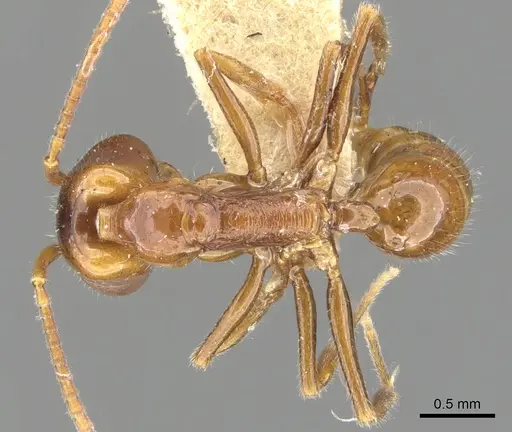
科学文献
正在加载分布地图...正在加载商品...