
Acanthostichus brevinodis
- 学名
- Acanthostichus brevinodis
- 亚科
- Dorylinae
- 命名者
- MacKay, 1996
- 地理分布
- 分布于 0 个国家/地区
物种引言
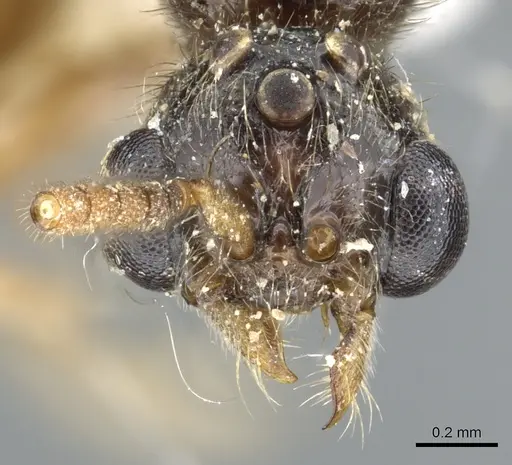
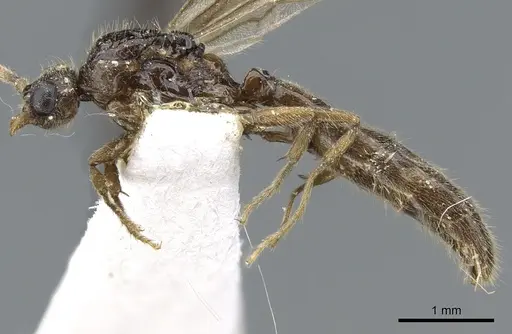
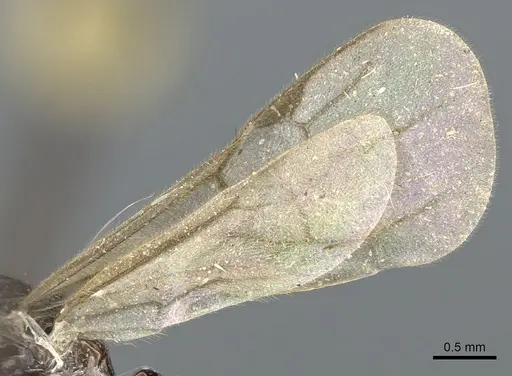
Acanthostichus brevinodis is a mysterious ant species known only from three male specimens collected in Brazil. Males are small with a distinctive very short petiole (the narrow waist segment) that appears truncated at the front, which easily separates them from similar species like Acanthostichus fuscipennis. They lack the bluish shine seen in that related species. All known specimens come from light traps in Mato Grosso, Brazil, collected in October 1974 . The most unusual thing about this ant is that scientists have never documented a worker, queen, or nest. Despite being described in 1996,researchers have found no females or living colonies, making this species a complete mystery in terms of behavior, diet, and social structure. This total lack of biological data means no one knows how to keep this species in captivity, or whether it is even possible.
Quick Summary
- Difficulty: Expert
- Origin & Habitat: Known only from Sinop, Mato Grosso, Brazil (12°31'S,55°37'W). The natural habitat is unknown because only males were collected in light traps [1][2].
- Colony Type: Unknown, species only known from male specimens, workers and queens have never been collected.
- Size & Growth:
- Queen: Unknown, no queens have ever been collected.
- Worker: Unknown, no workers have ever been collected.
- Colony: Unknown, no nests have ever been found.
- Growth: Unknown.
- Development: Unknown, no biological data exists for this species. (Development timeline is unconfirmed because the species has only been documented from male specimens.)
- Antkeeping:
- Temperature: Unknown, no data exists. The collection location in tropical Brazil suggests warm conditions, but specific requirements are unconfirmed.
- Humidity: Unknown, no data exists.
- Diapause: Unknown, no seasonal data available.
- Nesting: Unknown, nesting habits have never been observed.
- Behavior: Unknown, behavioral observations require workers or living colonies, which have never been found.
- Common Issues: the species is only known from male specimens, no workers or queens have ever been collected, making captive keeping impossible., no captive care information exists because the biology is completely unknown., availability is effectively zero, this species is not known to be kept in captivity and likely cannot be obtained., any attempt to keep this species would be speculative due to total lack of data on diet, nesting, and social structure.
Taxonomic Status and Known Specimens
Acanthostichus brevinodis was described by Mackay in 1996 based on just three male specimens collected in October 1974 near Sinop, Mato Grosso, Brazil. The holotype and two paratypes were caught in light traps, and one specimen had moth scales attached, suggesting these males were flying at night and attracted to lights. No females (queens or workers) have ever been collected, despite the species being described nearly three decades ago. This makes Acanthostichus brevinodis one of the many ant species known only from male type specimens, leaving its biology and ecology a complete blank [1][2].
Why This Species Cannot Currently Be Kept
You cannot keep Acanthostichus brevinodis because living colonies have never been found. Antkeeping requires workers to forage and tend brood, and queens to lay eggs, but this species has only been documented as dead male specimens in museum collections. Without knowing what the workers look like, what they eat, how they nest, or even if they are active during the day or night, providing care instructions is impossible. The species may be extremely rare, live underground, or have some other habit that makes detection difficult, but until researchers locate actual colonies, this ant remains unavailable to the hobby. [2]
Genus Context and Related Species
While Acanthostichus brevinodis itself is a mystery, the genus Acanthostichus belongs to the subfamily Dorylinae, which includes army ants. Other Acanthostichus species are known to be specialized predators of termites, living in small colonies and raiding termite nests. However, you should not assume Acanthostichus brevinodis behaves the same way. Each species has specific requirements, and without confirmation, applying general genus traits to this species would be guesswork. If you are interested in keeping Acanthostichus, you would need to work with a different species that has documented biology and available colonies. [2]
Frequently Asked Questions
Can I keep Acanthostichus brevinodis in captivity?
No. This species is only known from a few male specimens collected in Brazil in 1974. No workers, queens, or living colonies have ever been found, so there is no way to obtain or care for this species [2].
How do I care for Acanthostichus brevinodis?
Care instructions cannot be provided because the biology of this species is completely unknown. Scientists do not know what they eat, how they nest, or what temperatures they need.
What do Acanthostichus brevinodis eat?
Unknown. While other Acanthostichus species eat termites, this specific species has never been observed alive, so its diet is unconfirmed.
How big do Acanthostichus brevinodis colonies get?
Unknown. No nests have ever been found, so colony size data is unavailable.
Where does Acanthostichus brevinodis live?
The only known specimens came from Sinop in Mato Grosso, Brazil. The specific habitat type is unknown because the specimens were collected in light traps, not from nests [1][2].
How long until Acanthostichus brevinodis gets its first workers?
Unknown. Development time from egg to worker has never been documented for this species because queens and brood have never been collected.
Are Acanthostichus brevinodis dangerous?
Unknown. Since only male specimens exist, their defensive capabilities are unconfirmed.
Can I buy Acanthostichus brevinodis queens or colonies?
No. This species is not available in the ant trade because it has never been successfully collected as a living colony. It exists only as preserved museum specimens.
Report an Issue
The current care sheet is based fully on literature. See inconsistencies, or something that's incorrect? Please , it will be resolved after review from an admin. Contributing to the blogs tab also helps providing information, to make us be able to further improve the caresheets. Thank you for your support!
References

此饲养指南授权协议为 CC BY-SA 4.0 .
社区博客
CASENT0903673
在 AntWeb 上查看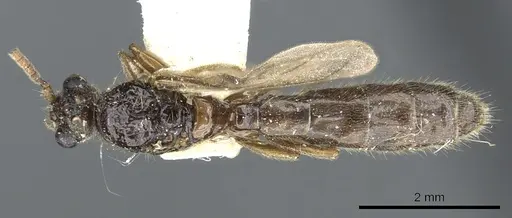
科学文献
正在加载分布地图...正在加载商品...